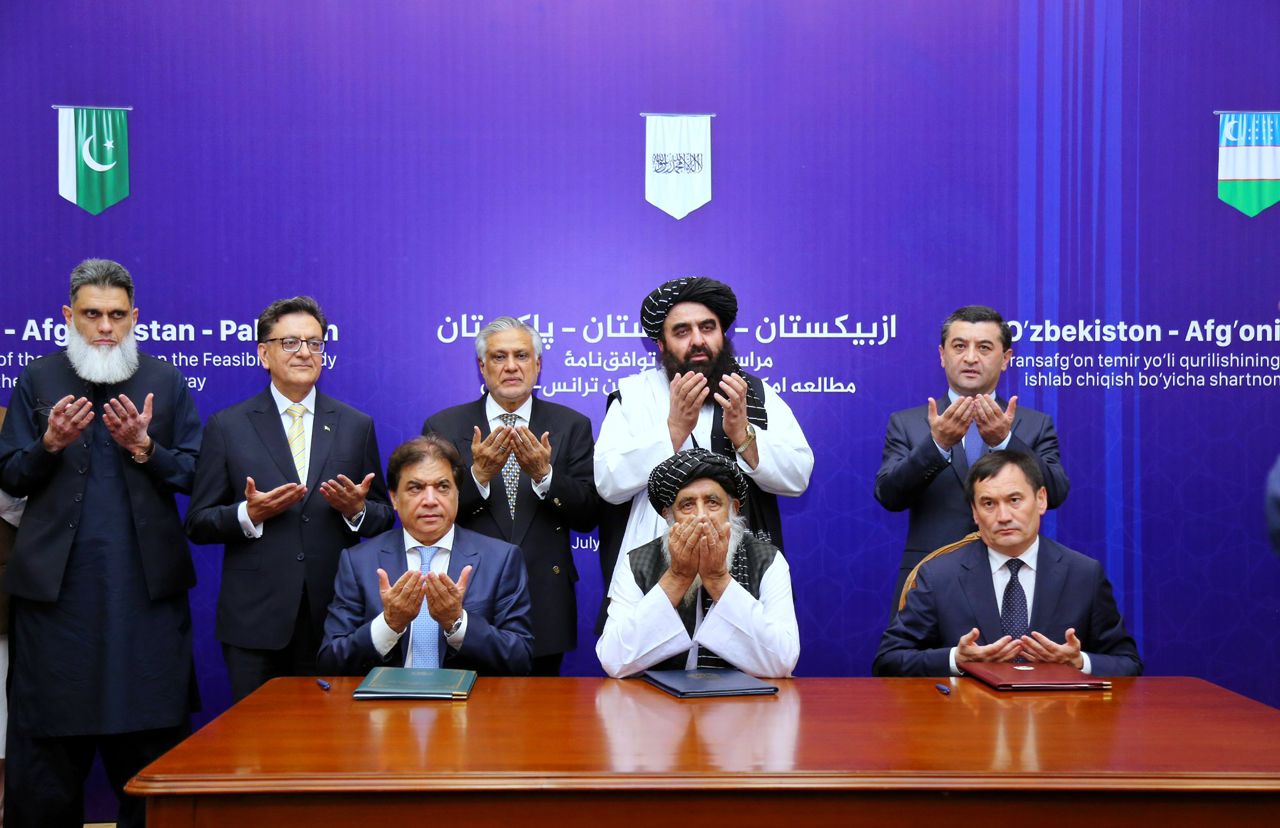
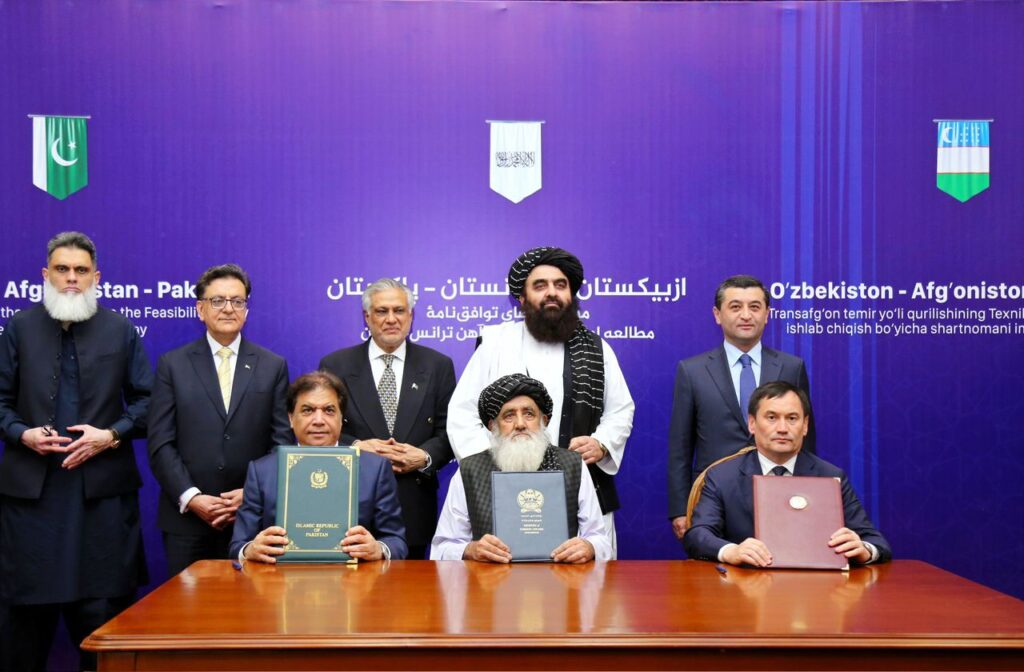
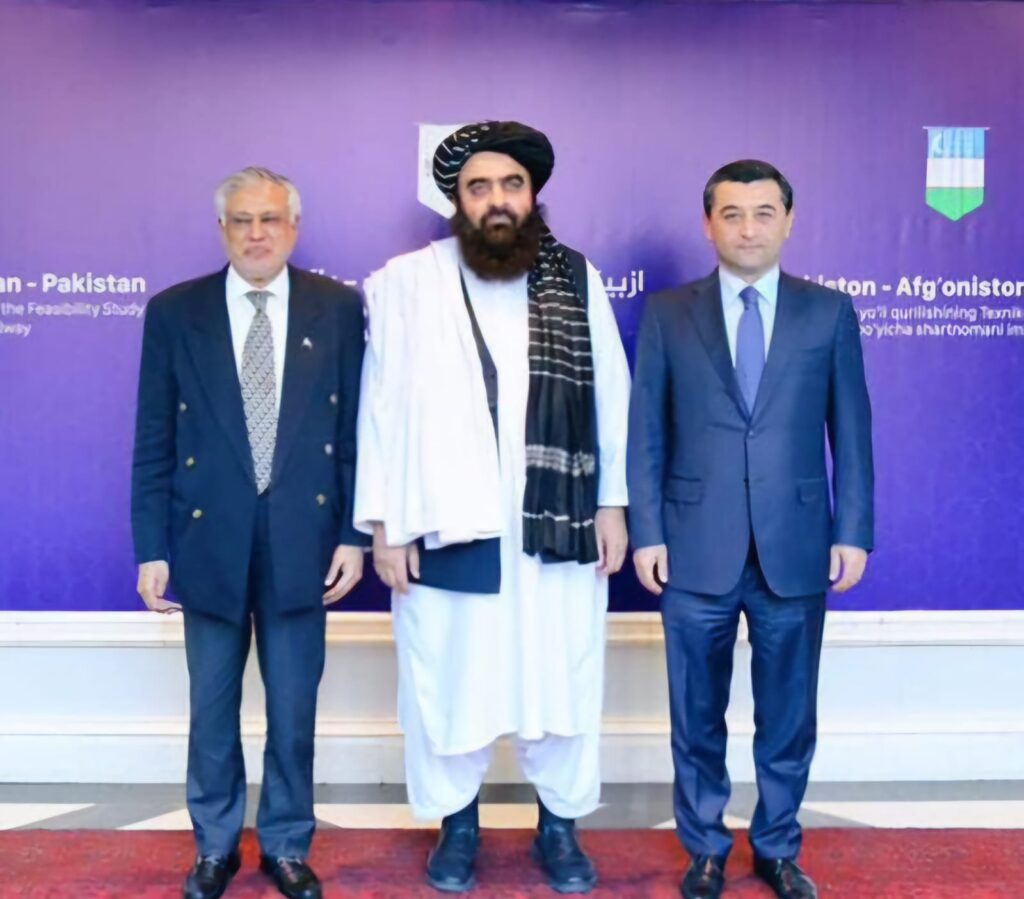
Kabul, Afghanistan – In a landmark development aimed at enhancing regional connectivity, Afghanistan, Pakistan, and Uzbekistan have signed a trilateral agreement to launch a feasibility study for the proposed Trans-Afghan Railway project. The signing ceremony took place in Kabul with senior officials from all three countries in attendance, marking a critical step toward the realization of a strategic transport corridor linking Central and South Asia.
A New Vision for Regional Integration
Pakistan’s Deputy Prime Minister and Foreign Minister Ishaq Dar announced in a post on X from Kabul,
“I congratulate the people and governments of Pakistan, Afghanistan, and Uzbekistan on the signing of the Framework Agreement on the Joint Feasibility Study for the Naibabad–Kharlachi rail link under the UAP Railway Corridor.
The agreement was signed between Afghanistan’s Ministry of Public Works, Uzbekistan’s Ministry of Transport, and Pakistan’s Ministry of Railways. It outlines technical collaboration for a comprehensive feasibility study of a cross-border railway line that would pass through Afghanistan, serving as a vital land bridge between Uzbekistan and Pakistan.
Afghanistan’s Acting Foreign Minister, Mawlawi Amir Khan Muttaqi, emphasized the transformational potential of the project during the signing ceremony. “This is not merely a transit route,” he said. “It is a strategic initiative, one that lays the foundation for deeper connectivity across our region.”
From Feasibility to Future Trade Corridors
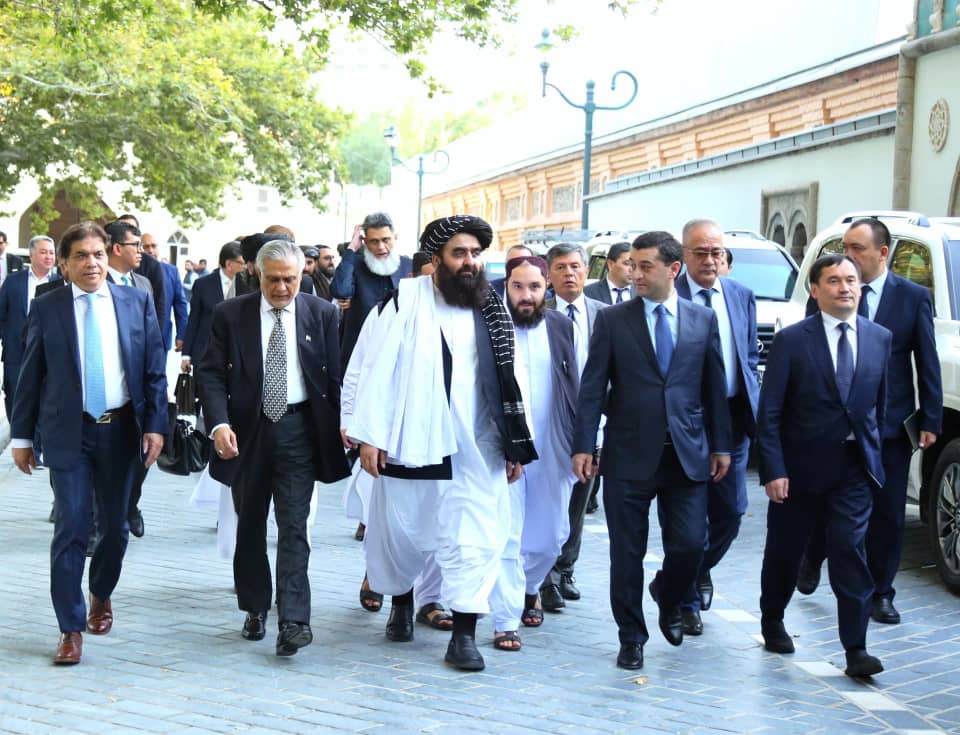
In 2023, the three countries agreed on the UAP Railway project to build a rail link that will pass through Termiz in Uzbekistan, Mazar-i-Sharif and Logar in Afghanistan, and enter Pakistan via the Kharlachi border crossing in Khyber Pakhtunkhwa. The project will facilitate regional, transit, and bilateral trade amongst participating countries, while supporting both passenger and freight services.
Technical teams from the three nations will now conduct surveys and technical assessments to map the railway’s potential path and evaluate its logistical, environmental, and financial viability.
High-Level Diplomatic Engagements in Kabul
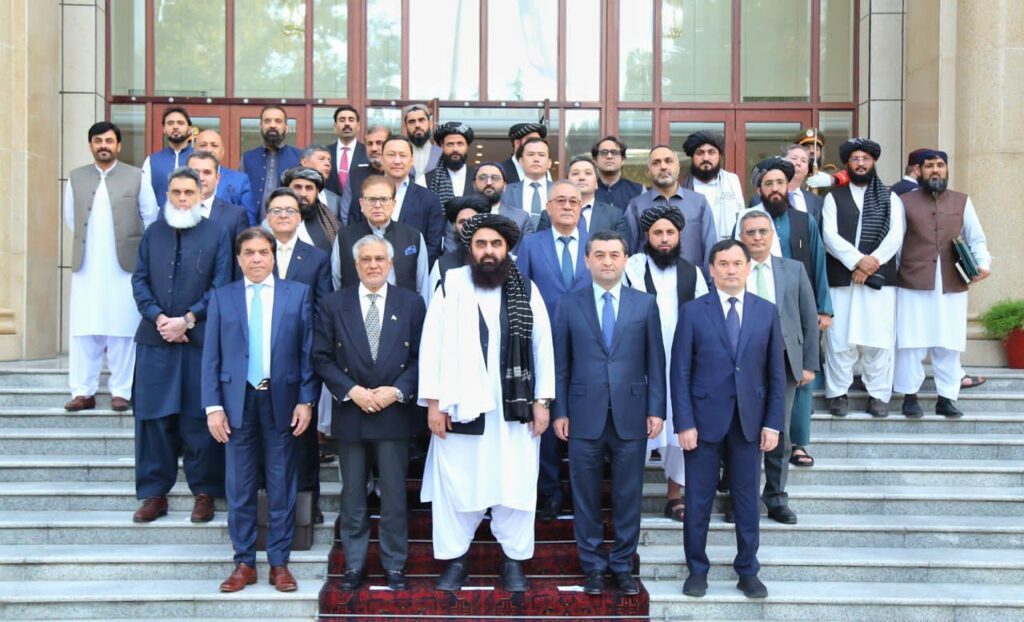
The trilateral signing was preceded by a political consultation meeting held in Kabul between the foreign ministers of the three countries. Participants reaffirmed their commitment to regional peace, sustainable economic development, and strengthened diplomatic ties.
In a parallel development, Pakistan’s Deputy Prime Minister and Foreign Minister, Muhammad Ishaq Dar, met with Afghanistan’s Acting Prime Minister, Mullah Mohammad Hassan Akhund, at the historic Gulkhana Palace. The two leaders discussed bilateral ties and regional cooperation, with a strong emphasis on transport and trade.
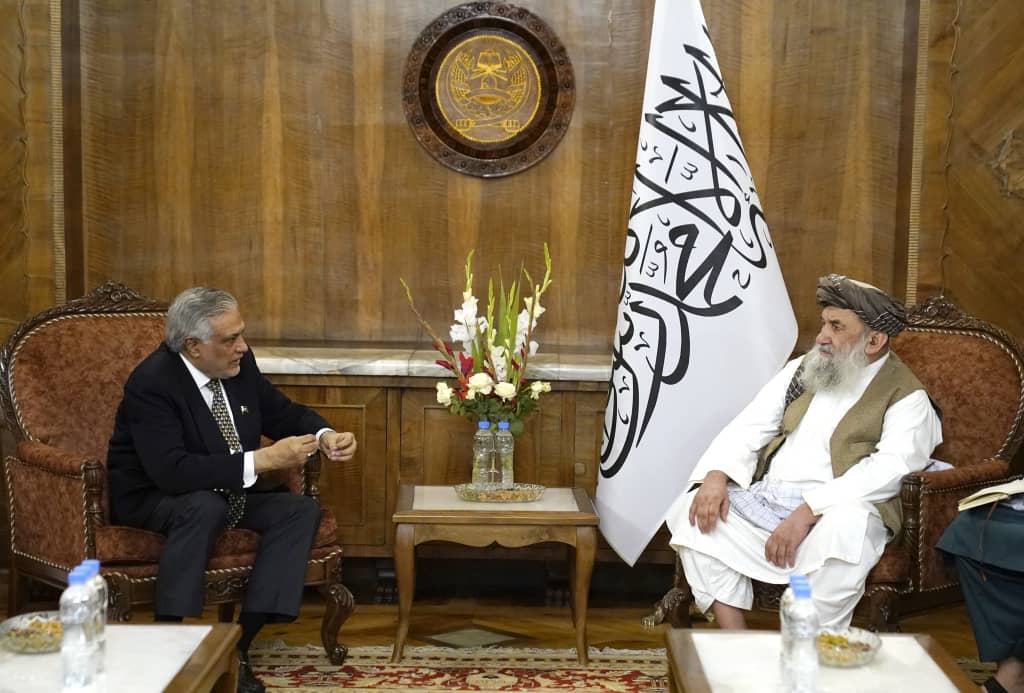
Dar welcomed the signing of the railway feasibility agreement, calling it a “historic achievement” that would boost regional trade. “During my recent visit to China,” he added, “I requested Beijing’s support for this railway initiative. We are encouraged by the positive signals.”
Strategic Potential and Regional Commitments
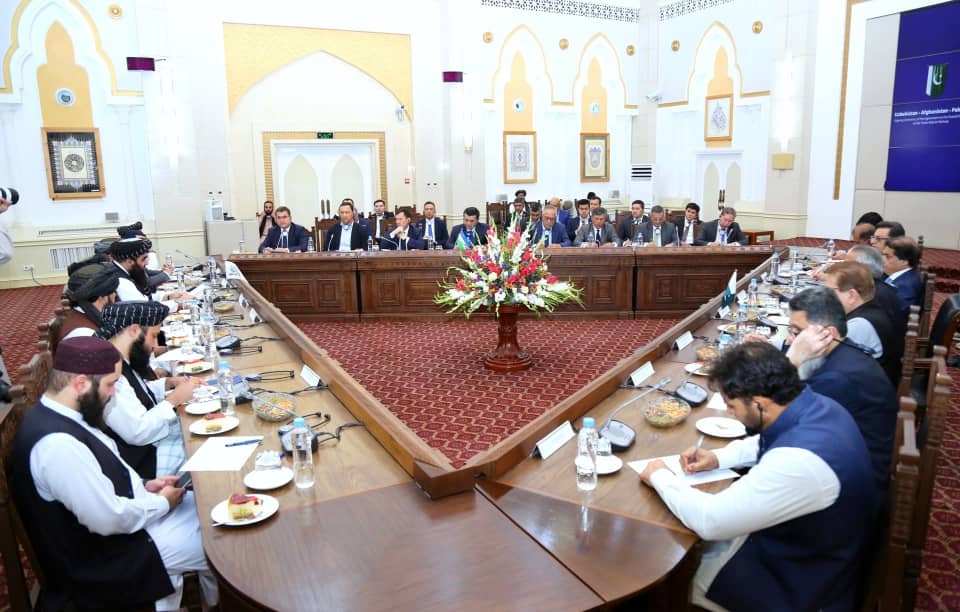
Both Uzbekistan and Pakistan’s foreign ministers reiterated their governments’ full support for economic projects that foster long-term peace and prosperity in Afghanistan.
Looking Ahead: Political Continuity and Shared Prosperity
After the meetings, officials stressed that the railway initiative, once realized, could serve as a cornerstone of a new regional order, where Afghanistan is not seen solely as a conflict zone but as a crucial partner in intercontinental connectivity. ST