
With Gaza under siege and famine looming, U.S. support for Israel is collapsing, triggering a political reckoning in Washington and shifting the global moral compass.
For decades, bipartisan support for Israel was a cornerstone of U.S. foreign policy. But as images of starvation, bombed hospitals, and mass displacement pour out of Gaza, public opinion is shifting, rapidly and dramatically.
A new Gallup poll reveals that support for Israel’s military actions has plunged to a historic low among Americans, with only 32% backing its war in Gaza. Among young voters, support has virtually collapsed.
As famine spreads and ceasefire talks stall, the humanitarian catastrophe in Gaza is reshaping how Americans and the world view the United States’ role in enabling war crimes and human suffering. The question echoing from Congress to college campuses is simple: Has Washington’s blind support for Israel gone too far?
It is for the first time in decades that American public support for Israel’s military actions is in sharp decline, according to a Gallup poll released this week. Only 32% of U.S. adults now support Israel’s assault on Gaza, the lowest recorded since the October 7, 2023, Hamas-led attacks.
Among young Americans aged 18 to 34, support has dropped to just 9%, revealing a generational rejection of Israel’s conduct and a growing alignment with human rights narratives that highlight the famine, mass displacement, and relentless bombardment in Gaza.
The poll’s findings underscore a major political shift, with implications reaching into both Democratic and Republican power corridors. For Democrats, the numbers are stark: only 8% support Israel’s actions. Even among independents, support stands at just 25%, compared to 71% among Republicans.
Images of Gaza Starvation Fuel Outrage
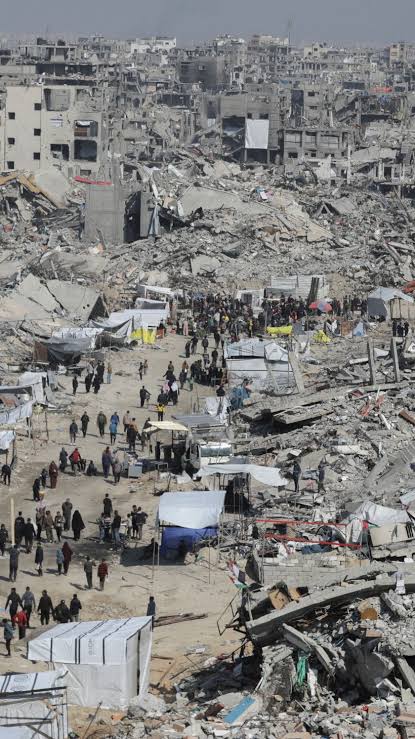
Footage of Palestinians scrambling for food aid, children dying of malnutrition, and bombed-out hospitals has deeply impacted American public perception. The United Nations now warns that over 500,000 Gazans are facing famine-like conditions, and 39% of the population is going days without eating.
U.S. leaders who once gave Israel unconditional backing are facing internal revolts, especially from young voters, progressive lawmakers, and even key figures in pro-Israel circles.

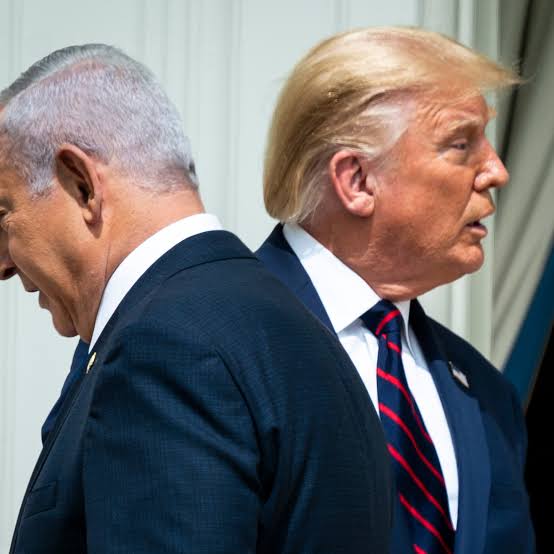
“That’s real starvation stuff,” President Donald Trump admitted this week, publicly challenging Israeli Prime Minister Benjamin Netanyahu’s false claim that there is “no starvation in Gaza.”
MAGA Movement Splinters Over Gaza
Support for Israel has long been a staple of conservative politics in America, but that may be changing. Influential voices within the MAGA wing of the Republican Party are expressing unease or outright criticism of Israel’s military campaign.
Prominent Trump ally Marjorie Taylor Greene became the first Republican in Congress to call Gaza a genocide, saying:
“It’s the most truthful and easiest thing to say that Oct 7th in Israel was horrific and all hostages must be returned, but so is the genocide, humanitarian crisis, and starvation happening in Gaza.”
Even Steve Bannon, Trump’s former chief strategist, said there is “very little support for Israel” among the MAGA base under 30. He warned that traditional conservative consensus on Israel is “crumbling under the weight of Gaza.”
Democrats Face a ‘Mindset Shift’ on Israel

On the left, the Democratic Party is undergoing a seismic shift. Progressive lawmakers like Rep. Summer Lee and Rep. Rashida Tlaib are leading calls to end military aid to Israel, impose a permanent ceasefire, and demand full humanitarian access into Gaza.
Rep. Lee recently supported an amendment to strip $500 million in Israeli missile defense funding, stating:
“The United States has a responsibility to stop funding the bombs being dropped and demand a ceasefire now. It’s good policy, good politics, and the right thing to do.”
Even liberal establishment voices are joining in. Former Obama adviser Tommy Vietor said:
“We are not going back to the pre-October 7 status quo. There has to be a total mindset change in the Democratic Party.”
Israel’s Image Crisis Reaches Washington

Inside Washington, Israel’s actions are no longer viewed through the lens of security alone. Lawmakers and foreign policy veterans are raising alarms about the reputational damage to the U.S. for enabling what many now see as collective punishment and war crimes in Gaza.
Rep. Brad Sherman, a staunch pro-Israel Democrat, warned:
“Israel has to ask: what are its military objectives, and what casualties is it willing to incur? National security includes your image around the world.”
Israel’s dismissive attitude toward civilian suffering, and the Netanyahu government’s far-right rhetoric, are alienating even longtime allies, as countries like the UK, France, and Canada announce their intent to recognize Palestine if Israel refuses to shift course.
A Global and Domestic Reckoning
What was once a fringe view, that the U.S. is complicit in Israel’s war on Gaza, has become mainstream political discourse. The Gallup poll signals not just discontent, but a realignment of American values on foreign policy, centered on human rights, justice, and accountability.
The shift is particularly detrimental to U.S. influence abroad. As Israel’s military brutality dominates global headlines, Washington is increasingly seen as isolated, clinging to an ally that no longer reflects the values of American voters or the global community.
Conclusion: America’s Israel Policy at a Breaking Point
The war in Gaza has not only devastated Palestinian lives, but it has also exposed the moral contradictions at the heart of American foreign policy. Backing a siege that starves children, flattens hospitals, and displaces entire cities is proving to be political poison, especially among young Americans who will define the country’s future.
If the U.S. continues on its current path, it risks not only losing global credibility but also tearing its political fabric, as support for Israel fractures across both major parties.
The question is no longer whether America’s support for Israel is shifting; it’s how long Washington can afford to ignore the rising tide of humanity demanding: enough.
ST