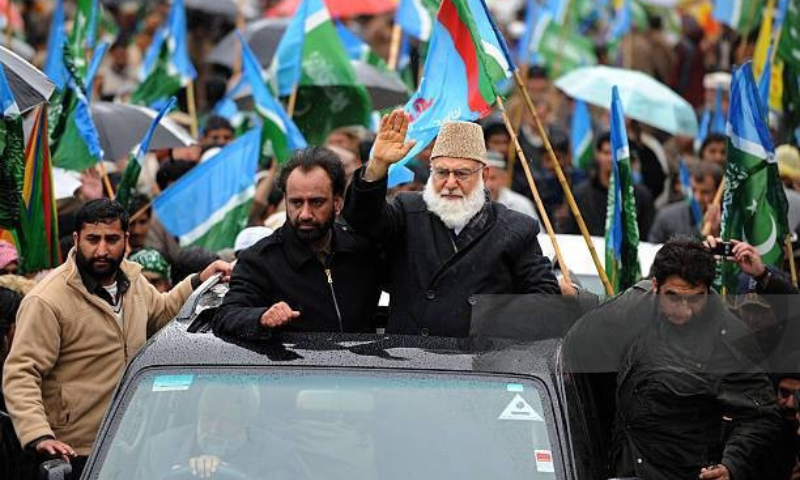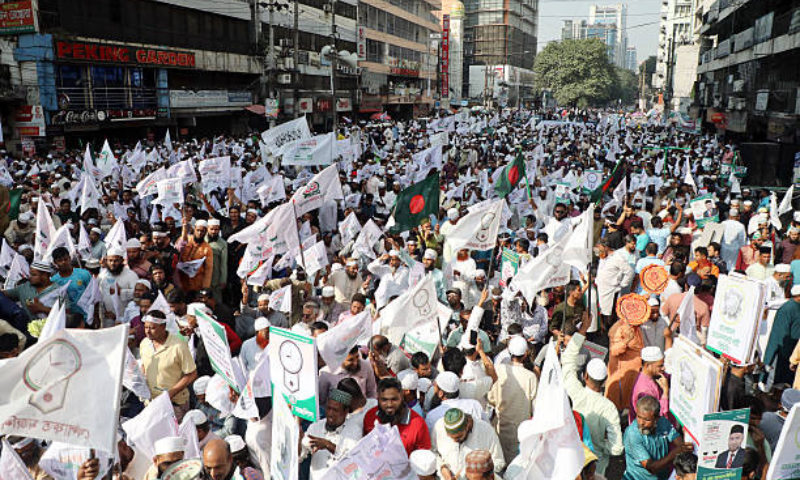

Hundreds of thousands of supporters of Pakistan’s main Islamic party, Jamaat-e-Islami (JI), are expected to converge on Lahore in November for what the party says will be the largest public gathering in the country’s history.
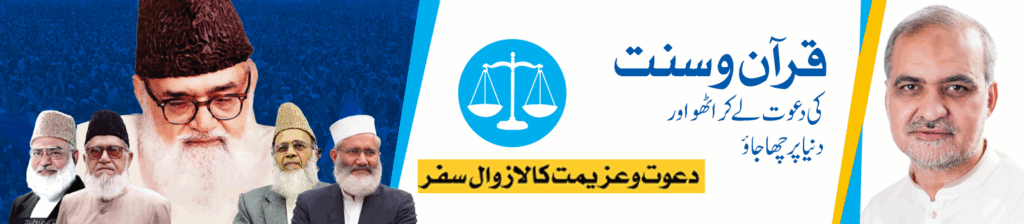
Lahore — Jamaat-e-Islami (JI) Emir, Hafiz Naeem ur Rehman, has announced plans for what he described as the “largest public gathering in Pakistan’s history,” set to take place at Minar-e-Pakistan from 21–23 November.
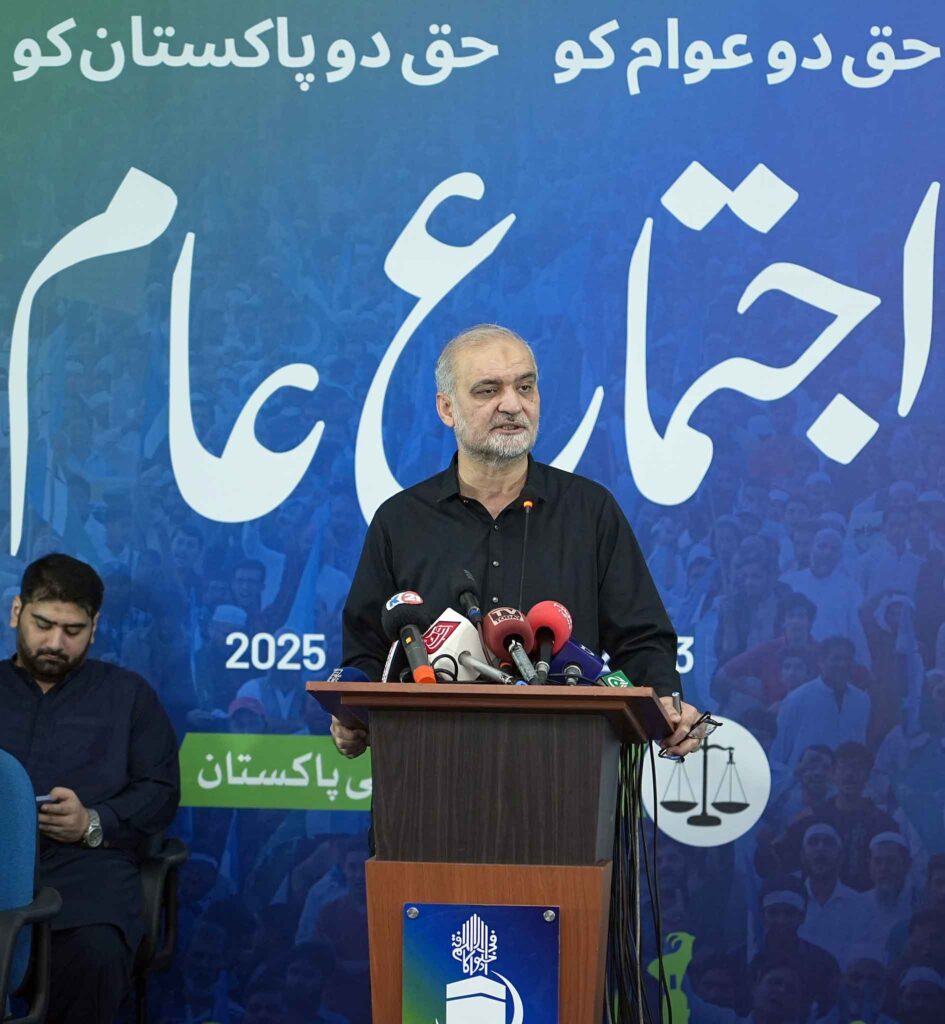
Speaking at a press conference at JI headquarters in Mansoora, Rehman warned Pakistan’s ruling elite to “return the people’s rights or face a peaceful yet powerful public movement.” He said leaders of global Islamic movements, pro-Palestinian representatives, and professionals from around the world would attend, alongside international-level conferences.
Nationwide Mobilisation Drive
To ensure large-scale participation, the party plans to form 30,000 public committees nationwide and launch a comprehensive mobilisation campaign. Joined by other Party leaders, Rehman criticised Pakistan’s governance, alleging that “mafias operate under state protection” and that political families own most sugar mills. He also condemned the 26th Constitutional Amendment, describing its architects as “criminals in the eyes of the people and history.”
Economic and Social Concerns
The JI leader attacked the country’s class-based education system, rising unemployment, and poor labour conditions, claiming that less than 10% of Pakistan’s 80 million workers enjoy basic rights. He said that social welfare programmes, such as the Benazir Income Support Programme, were being used for political gain.
Rehman pledged to raise the voices of “oppressed communities from Sindh, Balochistan, and Khyber Pakhtunkhwa,” and argued that “Islam’s system is not only for Muslims but for the benefit of all humanity.”
Background: Jamaat-e-Islami Pakistan
Jamaat-e-Islami (JI) is one of Pakistan’s oldest and most influential political and religious movements, founded in 1941 by Syed Abul A’la Maududi. Established with the vision of creating a just, ethical, and Islamic society, JI has consistently worked to promote moral governance, social justice, and the welfare of all citizens.
Ideological Foundation
The party’s core philosophy is rooted in the belief that Islam provides a complete code of life, encompassing spiritual, political, economic, and social systems. It advocates for governance based on the principles of justice, equality, and accountability, as outlined in the Qur’an and Sunnah.
Role in Pakistan’s History

JI played a significant role during the Pakistan Movement, supporting the idea of an independent Muslim state. Since its independence in 1947, it has been active in shaping national debates on education, constitutional development, and foreign policy.
Democratic Engagement
Committed to constitutional politics, Jamaat-e-Islami participates in elections and legislative processes at national, provincial, and local levels. The party has a reputation for organizational discipline and grassroots mobilisation, with a nationwide network of branches, youth wings, women’s divisions, and professional forums.
Social Welfare Initiatives
JI is known for its humanitarian and welfare activities through the Al-Khidmat Foundation, one of Pakistan’s largest non-governmental organizations. The foundation provides disaster relief, healthcare, education, clean water projects, orphan care, and microfinance services, benefitting millions across Pakistan.
International Solidarity
The party maintains close ties with global Islamic movements and actively supports oppressed communities worldwide, particularly in Palestine, Kashmir, and other regions facing conflict and injustice.
Focus on Youth and Education
JI runs student organizations such as Islami Jamiat Talaba, aiming to promote educational excellence, leadership skills, and moral character among Pakistan’s youth. It campaigns for reforms in the education system to ensure equal access and quality for all.
Reputation for Integrity
Even critics acknowledge JI’s track record for financial transparency and clean leadership. Party leaders are widely seen as personally honest and committed to public service, which has helped maintain the party’s credibility over decades.
ST