In the Ukraine war, plywood howitzers, inflatable soldiers, and imitation drones are forcing both sides to waste millions in ammunition.
In June 2023, a video went viral on pro-war Russian social media channels. It appeared to show a Ukrainian tank destroyed in a massive explosion by a drone strike.
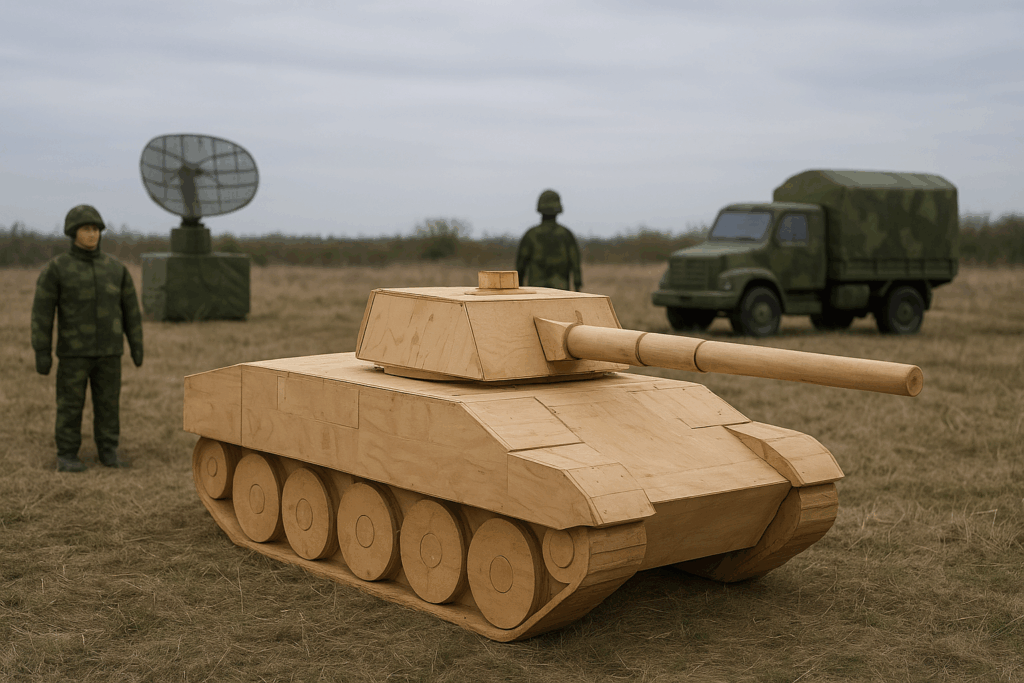
But not everything in the Russia-Ukraine war is what it seems. Soon after, Ukrainian forces released their own footage: a soldier laughing as he pointed at the wreckage and declared, “They’ve hit my wooden tank!”
The target was not a real tank but a plywood decoy, one of thousands of full-scale replicas deployed across the battlefield. From radars and grenade launchers to jeeps, trucks, tanks, and even soldiers, almost anything seen on the frontline may be fake.
A detailed report, published recently by the BBC, said these imitations come in many forms: flat-pack kits that can be assembled in minutes, inflatable structures, two-dimensional silhouettes, or radar reflectors that mimic the signature of a tank. In some weapon categories deployed in Ukraine, at least half are believed to be decoy versions.
Ukraine’s flat-pack artillery
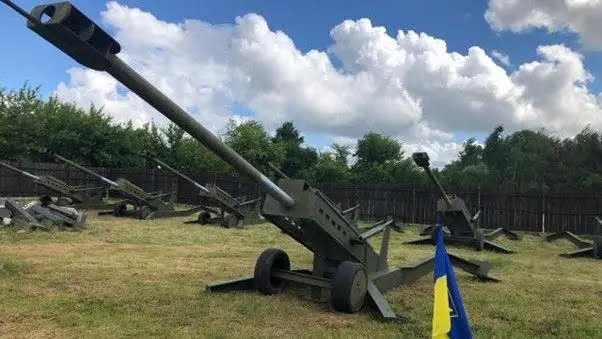
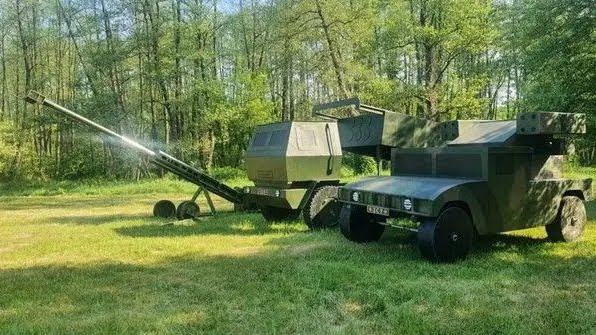
Among the most widely used decoys are replicas of the British-made M777 howitzer. Western allies have supplied Kyiv with over 150 of the highly manoeuvrable artillery pieces, nicknamed “Three Axes” by Ukrainian soldiers.
Volunteers have become essential in producing mock-ups. Ruslan Klimenko, head of the volunteer group Na Chasi, says his team alone has delivered around 160 M777 decoys to the Ukrainian army. “It takes just three minutes, two people, and no tools to assemble them on the frontline,” he told the BBC.
Another volunteer, Pavlo Narozhny from Reaktyvna Poshta, says 10–15 replicas are in production at any given time. Made of plywood and flat-packed for easy transport, each costs $500–$600. Yet Russia often strikes them with Lancet kamikaze drones worth about $35,000 each.
“You do the math,” Narozhny says. He claims one decoy, nicknamed Tolya, survived for more than a year on the frontline, absorbing at least 14 drone strikes. Soldiers simply patched it back together with tape and screws and redeployed it.
The art of deception
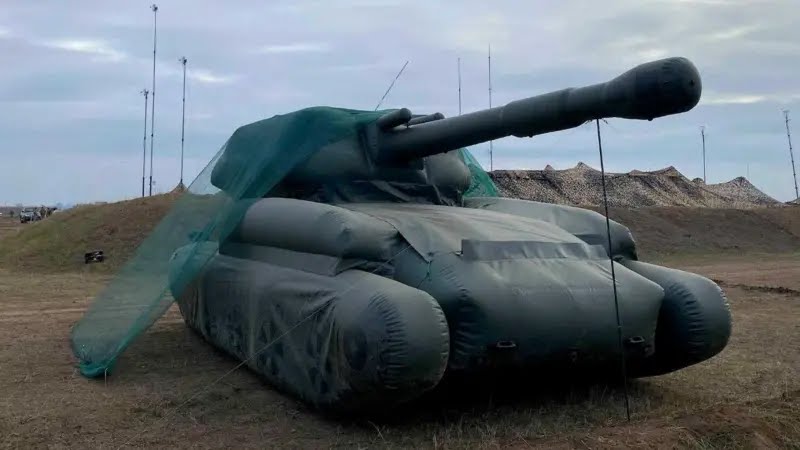
Deployment is as important as construction. Successful decoys mimic real positions, complete with wheel ruts, ammunition crates, and even field toilets.
Charisma, an officer with Ukraine’s 33rd Detached Mechanised Brigade, recalls how one visiting commander was fooled by a fake emplacement: “He asked, ‘Who gave the order to deploy artillery? Where did these M777s come from?”
Real mortars are sometimes fired and then quickly withdrawn, replaced by decoys to trick Russian forces into expending ammunition on empty ground. “They’re ideal for making the enemy waste resources,” Charisma says.
Russia’s fakes: drones, soldiers, and radar tricks
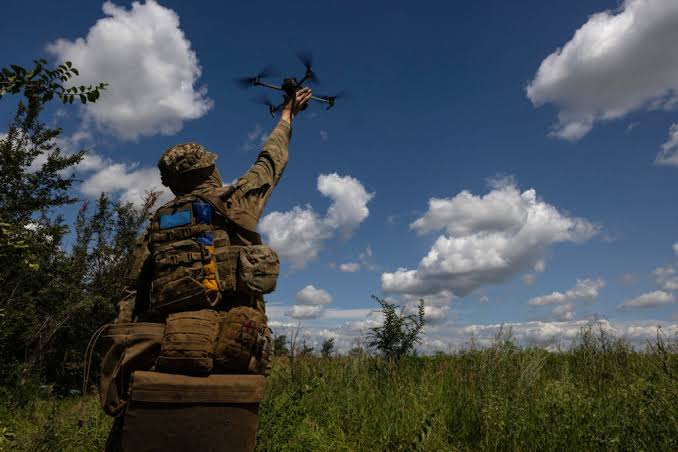
Moscow has also expanded its arsenal of deception. Ukrainian officials estimate that around half of the drones used in Russia’s recent aerial strikes are fake.
“It’s fifty-fifty these days,” says Ukrainian Air Force spokesperson Yuriy Ihnat. “Half are real Shahed drones, half are imitations. Their job is to overload our air defences and force us to fire expensive missiles at drones that cost peanuts. Sometimes it’s just a plywood thing that looks like schoolchildren built it.”
In the air, however, even these crude constructs appear identical to lethal Shahed drones on Ukrainian radar screens.
Russian firm Rusbal produces a wide range of imitations: two-dimensional silhouettes to mislead aerial surveillance, devices that mimic engine heat or radio traffic, and radar reflectors that distort enemy detection systems.
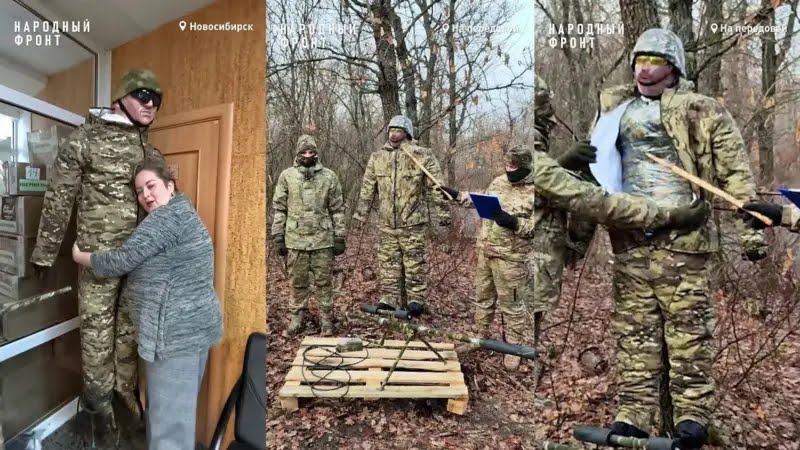
Volunteers from the Kremlin-backed People’s Front movement in Novosibirsk have even made dummy soldiers dressed in full military uniforms. Wrapped with heating wires under their jackets, these mannequins give off a thermal signature resembling a real human body, confusing Ukrainian sensors.
A timeless tactic in modern war
Decoys may seem like a modern innovation, but deception has always been part of war. During preparations for the D-Day landings in World War II, the Allies created an entire phantom army in Britain, equipped with inflatable tanks and dummy aircraft, to mislead Nazi Germany.
What has changed is the technology. Today, drones and precision-guided missiles dominate the battlefield, yet the logic of deception remains the same: to exhaust the enemy’s resources and mask real positions.
“Technology evolves, but trickery remains timeless,” says a Western defence analyst. “Whether it’s inflatable aircraft in 1944 or plywood tanks in Ukraine, deception ensures warfare is never just about firepower — it’s about illusion.”
The cost of illusion
The economic contrast is striking. A Ukrainian decoy may cost only a few hundred dollars, while the weapons Russia uses to destroy it can run into tens of thousands. Likewise, fake Shahed drones costing little more than wood and fabric can trigger the launch of Ukrainian missiles worth millions.
As both sides settle into a war of attrition, every wasted drone or missile matters. Deception is no longer a sideshow — it has become central to strategy.
On a battlefield dominated by high-tech weaponry, plywood and plastic have re-emerged as some of the most effective tools of survival.