From torching parliament to army intervention, Nepal’s youth-driven revolt has shaken the country’s political order and sidelined the old guard.
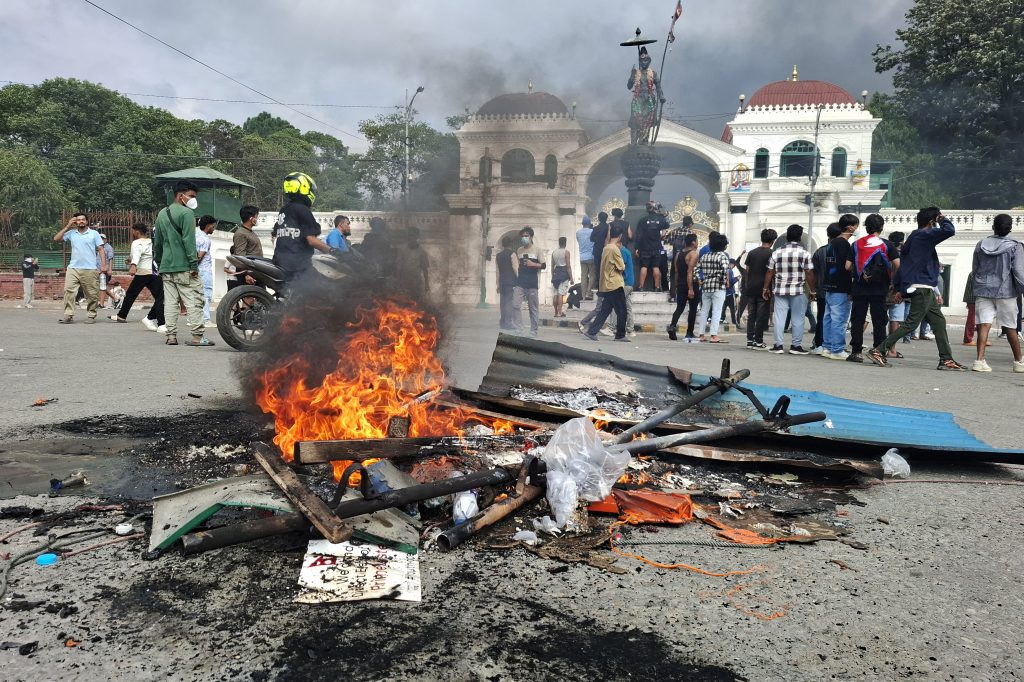
KATHMANDU/ISLAMABAD: Nepal has been thrust into one of the gravest political crises in its modern history after unprecedented youth-led protests against corruption and censorship escalated into violent clashes, forcing Prime Minister K.P. Sharma Oli to resign.
The turmoil, which erupted last week following a government ban on more than two dozen social media platforms, has left at least 19 people dead and over 400 injured, with many describing it as a generational revolt that could reshape the Himalayan nation’s political order.
What Sparked the Protests
The immediate trigger was the sudden blocking of Facebook, Instagram, WhatsApp, YouTube and X — platforms used daily by millions of Nepalis. Officials claimed the ban was meant to curb misinformation, but rights groups and citizens widely condemned it as a blatant act of censorship.
The move ignited frustration that had been building for years. Youth unemployment stood at 20.8 percent in 2024 (World Bank), and allegations of entrenched corruption and nepotism had already eroded public trust.
A viral online campaign against so-called “Nepo Kids” — privileged children of politicians flaunting luxury lifestyles on social media — struck a deep chord with young people struggling to find jobs and affordable housing.
Deadly Crackdown in Kathmandu
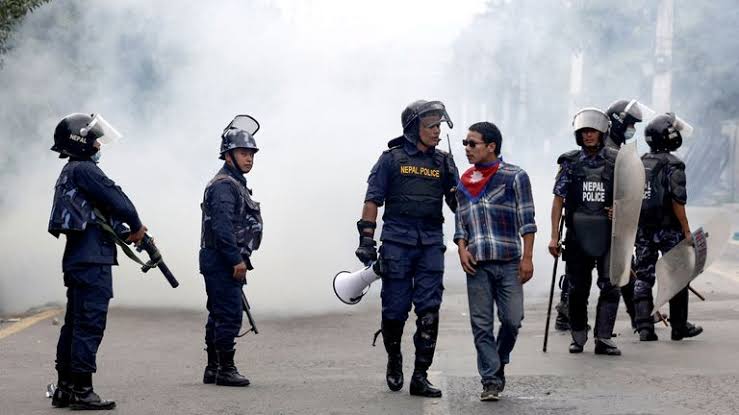
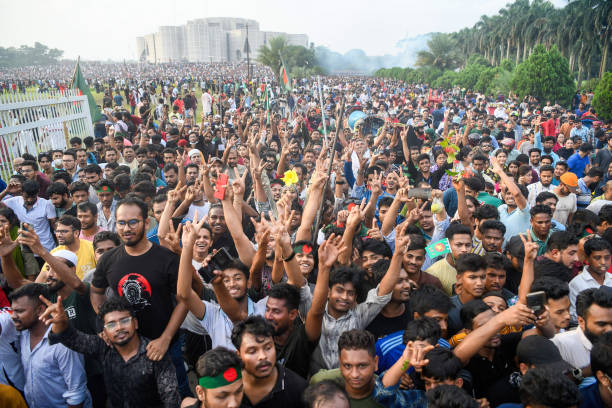
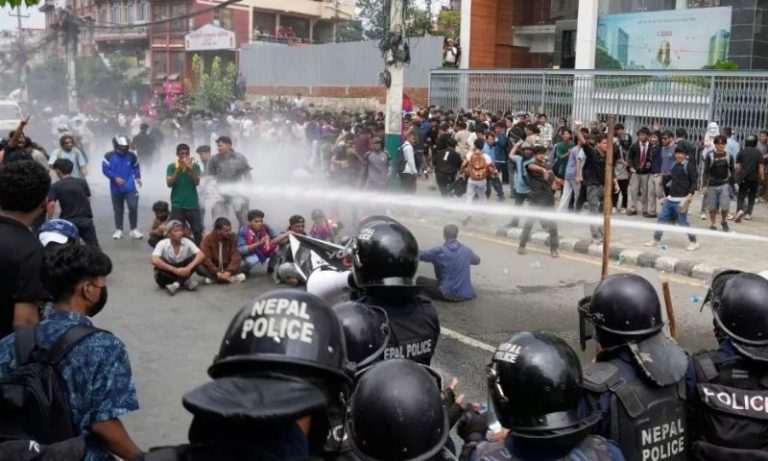
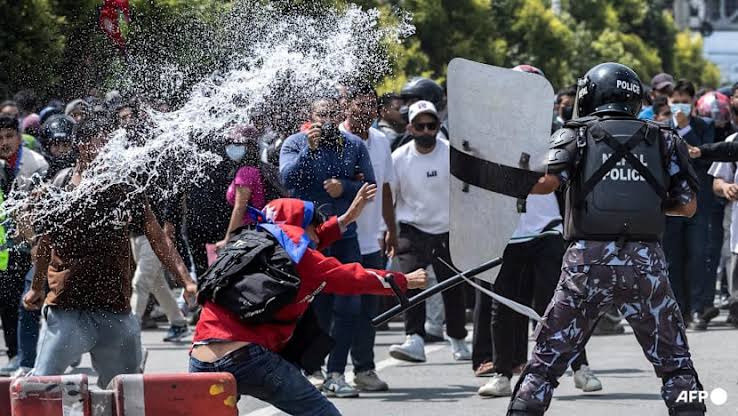
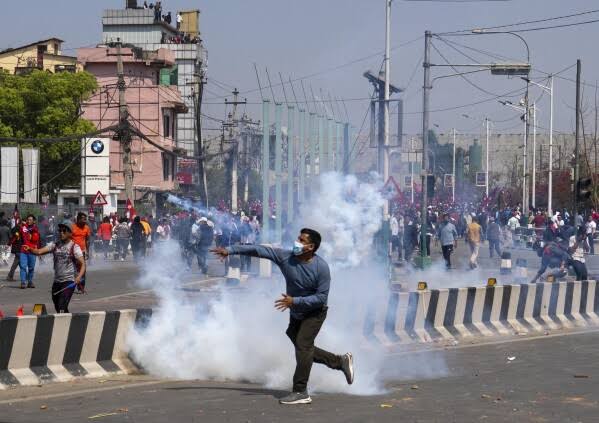
On September 8, thousands of students and young protesters gathered outside Nepal’s parliament complex. Tensions escalated quickly as riot police deployed tear gas, rubber bullets, and, according to witnesses, live ammunition.
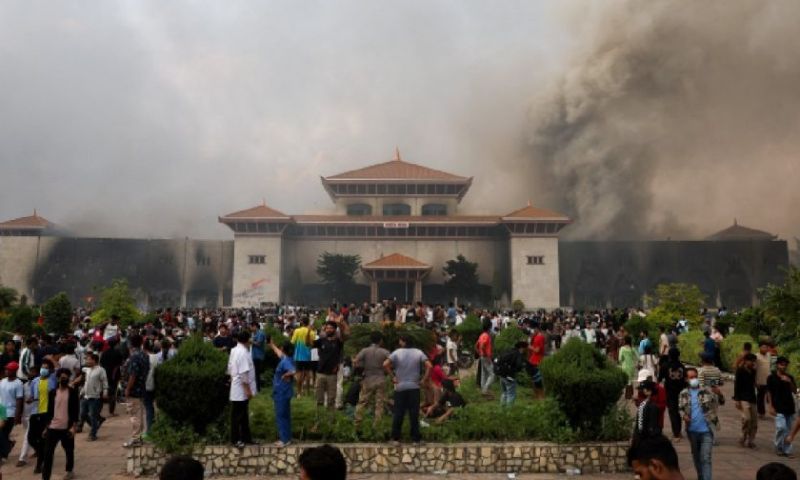
Protesters torched police vehicles, set fire to an ambulance, and stormed parts of the Federal Parliament complex. A booth near the Nepali Congress headquarters was also attacked, and Kathmandu’s international airport was briefly shut down as violence spread through the capital.
Hospital officials confirmed 17 deaths in Kathmandu and two in the eastern city of Itahari. The health ministry said more than 400 people were treated for injuries, including dozens of police officers.
International condemnation was swift. Amnesty International declared: “The use of lethal force against protesters not posing an imminent threat of death or serious injury is a grave violation of international law.”
Oli Resigns Amid Cabinet Exodus
The violent crackdown triggered a wave of resignations within Oli’s cabinet. Home Minister Ramesh Lekhak stepped down on September 9, followed by the ministers of agriculture, water, and health. Opposition parties and civil society leaders joined the chorus demanding accountability.
Under intense pressure, Oli announced his resignation on Tuesday, citing the “extraordinary situation” facing the country. In a letter shared by a close aide on social media, he expressed sorrow over the deaths but blamed the violence on “infiltration by vested interest groups” — a claim he offered without evidence.
Gagan Thapa, general secretary of the Nepali Congress, was blunt: “The cruel sight of innocent youth being killed unnecessarily is rolling before our eyes. Oli must take responsibility.” Nepal’s largest daily newspaper echoed that view, declaring that Oli “cannot sit in the PM’s chair for a minute longer.”
A Generational Revolt
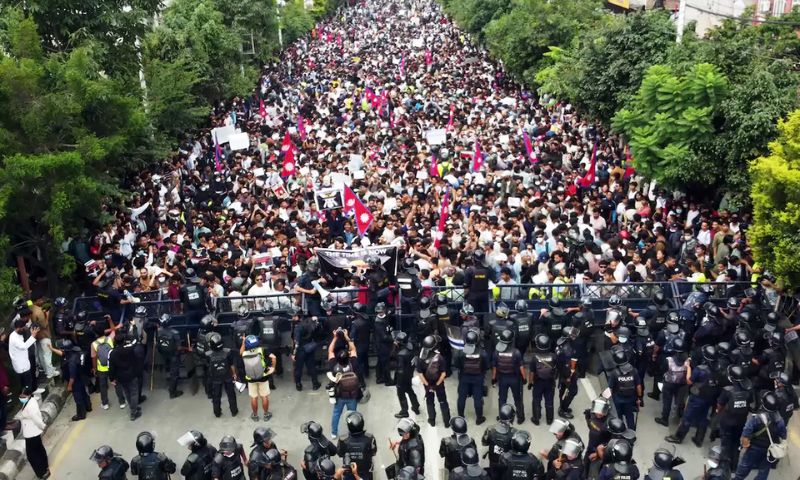
Analysts describe the uprising as Nepal’s first “Gen Z movement,” led largely by citizens aged 13 to 28 who see the entire political class as corrupt, nepotistic, and out of touch.
Their demands — dissolution of parliament, fresh elections, and accountability for those responsible for firing on protesters — go far beyond removing one prime minister. They represent, many argue, a decisive rejection of the patronage-driven politics that have dominated since the monarchy was abolished in 2008.
Journalist Pranaya Rana warned that the movement must “not allow itself to be hijacked by opportunists waiting in the shadows.”
With Oli gone and coalition ally Sher Bahadur Deuba also retreating from view, Nepal faces a leadership vacuum.
Who Leads Next?
Nepal’s former Chief Justice, Sushila Karki, has been appointed as the country’s interim prime minister following a week of deadly unrest that left at least 51 people dead, over 1,300 injured, and resulted in the escape of thousands of prisoners.
The appointment was announced on Friday by the office of President Ramchandra Paudel, marking a historic moment as Karki becomes Nepal’s first female head of government.
Aged 73, Karki is also the only woman to have ever served as Chief Justice of Nepal’s Supreme Court.
Sushila Karki, Nepal’s first female Supreme Court chief justice, is widely respected for her independence. Many protesters see her as a potential interim leader capable of restoring credibility.
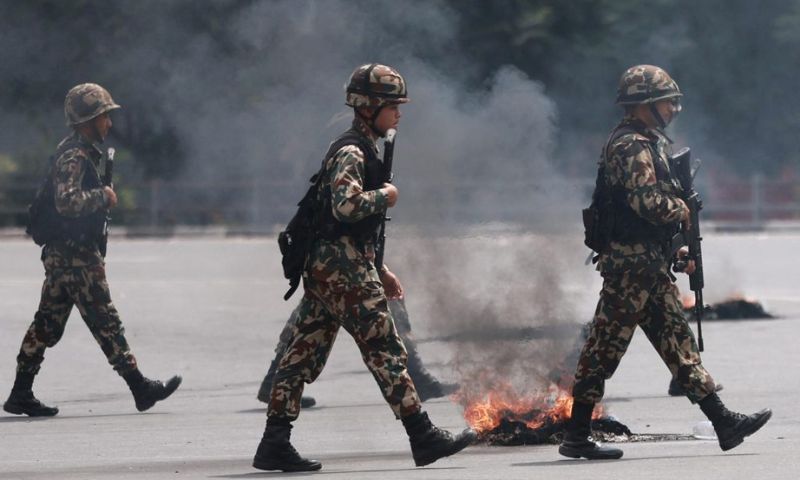
The army, under General Ashok Raj Sigdel, has moved to restore order and held consultations with protest representatives, though it has avoided any formal claim of taking charge.
Historical Context
Nepal, a nation of 30 million, became a federal republic in 2008 after a decade-long Maoist insurgency and the end of 239 years of monarchy under King Gyanendra Shah. The civil war killed more than 17,000 people and left deep scars on Nepali politics.
Since then, the country has cycled through more than a dozen governments, many toppled by infighting and corruption scandals. The 2022 general elections returned Oli and his communist coalition to power, but the new protests mark the sharpest rejection of the post-monarchy political order to date.
Some monarchists have seized on the chaos to argue for the king’s symbolic return. But the International Crisis Group has warned that any restoration of monarchy “would pose major risks of a return to autocratic rule.”
The Road Ahead
Nepal’s constitution requires President Ramchandra Paudel to invite the largest parliamentary party to form a government. But with protesters demanding an entirely new system, that mechanism may lack legitimacy.
For now, International organizations are urging investigations into the killings, while youth leaders vow to sustain the movement until meaningful reforms are promised.
Whether Nepal’s next chapter is led by a judicial figure like Karki, an outsider such as Shah, or a military-backed technocratic council, one fact is clear: Nepal’s Gen Z has permanently altered the country’s political landscape.
NOTE: This analysis is based on reports from foreign media, including CNN, BBC, and others, and does not necessarily reflect the policy of this website.