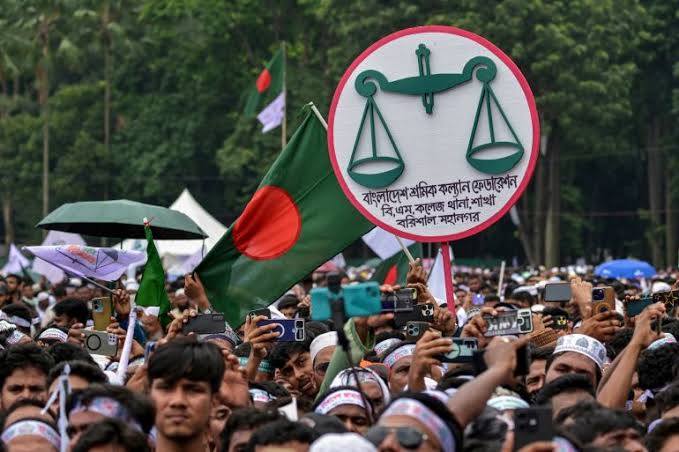
After consecutive wins at two universities, Islami Chhatra Shibir has re-emerged as a powerful campus force, underscoring Jamaat-e-Islami’s growing influence ahead of Bangladesh’s national polls.
Dhaka, Bangladesh: Bangladesh Islami Chhatra Shibir, the student wing of Bangladesh’s largest Islamic party, Jamaat-e-Islami, has achieved a historic double victory in the country’s leading universities. Following its landmark success at Dhaka University Central Students’ Union (DUCSU) polls, the group swept Jahangirnagar University’s Central Students’ Union (JUCSU) election this week, securing 20 out of 25 key posts.
Experts say this is the first time since Bangladesh’s independence in 1971 that an Islamic student organization has achieved such a major success.
Dr. Manjari Singh, an international affairs analyst, called the results “highly significant” for Jamaat-e-Islami. “Dhaka University is considered one of the most progressive universities in Bangladesh, and the student wing’s victory indicates that a “fundamentalist” organization has established a foothold in a traditionally liberal campus,” she said, noting that Jamaat-e-Islami is increasingly seen as a strong political force in Bangladesh.
Professor Harsh V. Pant, Vice President for Foreign Policy at Observer Research Foundation, said: “Looking at Jamaat-e-Islami’s role in society, it is now emerging as a strong political party, whereas previously only two major forces, the Awami League and the BNP, dominated the political landscape.”
He added, “The Awami League has lost much of its influence, and the BNP is facing a leadership crisis. In this context, it is natural that a fundamentalist Islamic party has been able to fill this vacuum, and we will see its impact on national politics.”
Observers note that this remarkable achievement comes despite the party’s decades-long marginalization in campus politics, highlighting a significant shift in Bangladesh’s political landscape.
Former Prime Minister Khaleda Zia’s BNP-backed student group, JCD, failed to secure seats, reflecting Islami Chhatra Shibir’s growing dominance among the country’s youth.
Jamaat-e-Islami’s Return to Mainstream Politics
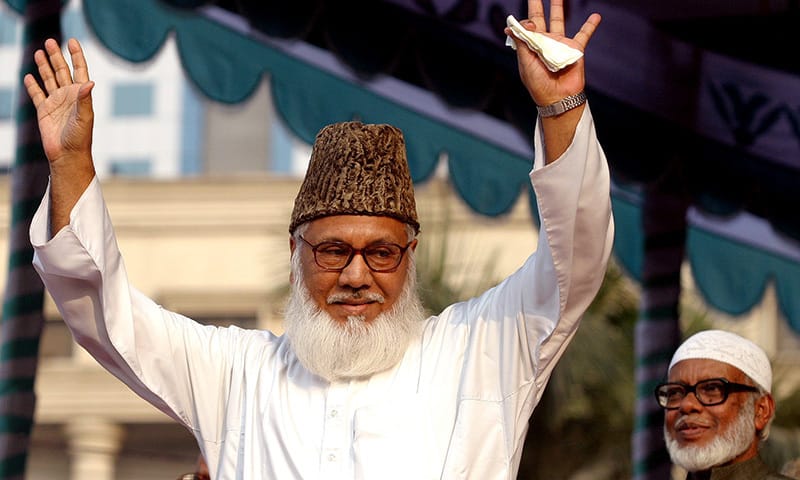
These were the first student union elections since the establishment of Bangladesh’s interim government, and students participated enthusiastically.
Observers further said the results demonstrate that Jamaat-e-Islami has established a significant presence among Bangladesh’s majority population.
At the same time, observers see the results as concerning for India: “The anti-India agenda pursued by Jamaat-e-Islami naturally raises concerns in New Delhi. Jamaat-e-Islami has support in Pakistan, and its student wing’s victory was welcomed there. It is likely to be viewed similarly in Pakistan. In such a scenario, any shift in Bangladesh’s foreign policy could affect Indo-Bangladesh relations,” one of the observers told BBC Urdu.
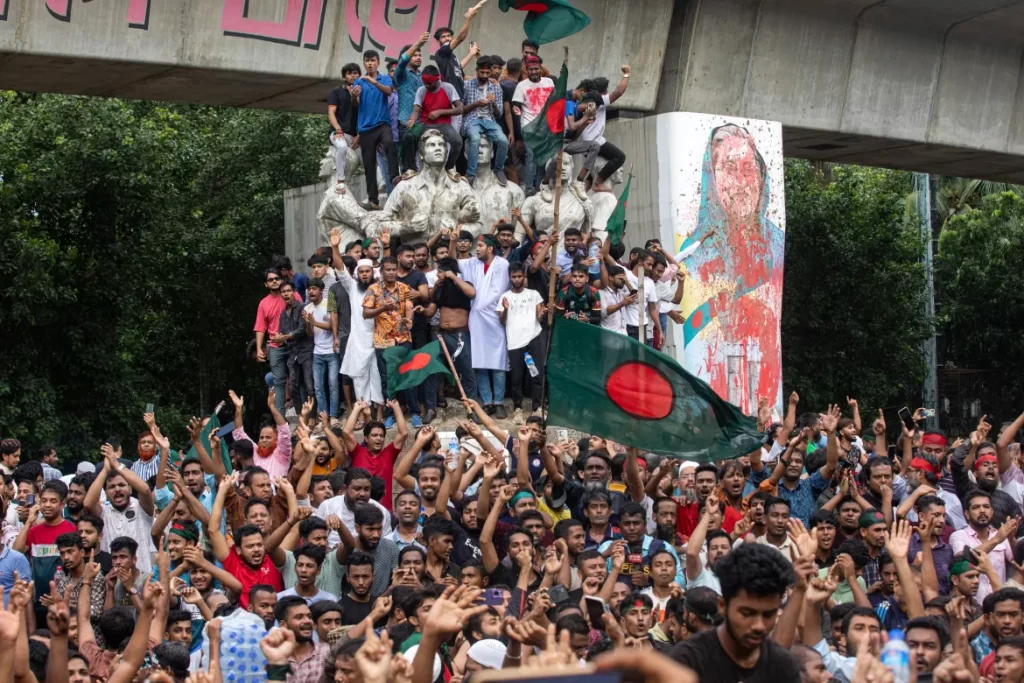
Jamaat-e-Islami, banned for over a decade and politically sidelined under the Awami League, has staged an extraordinary comeback. Following the July 2024 uprising, which erupted in response to soaring inflation, corruption scandals, and authoritarian governance, the interim government under Nobel laureate Muhammad Yunus legalized the party, restoring its political rights and acknowledging the popular demand for Islamic representation in national politics.
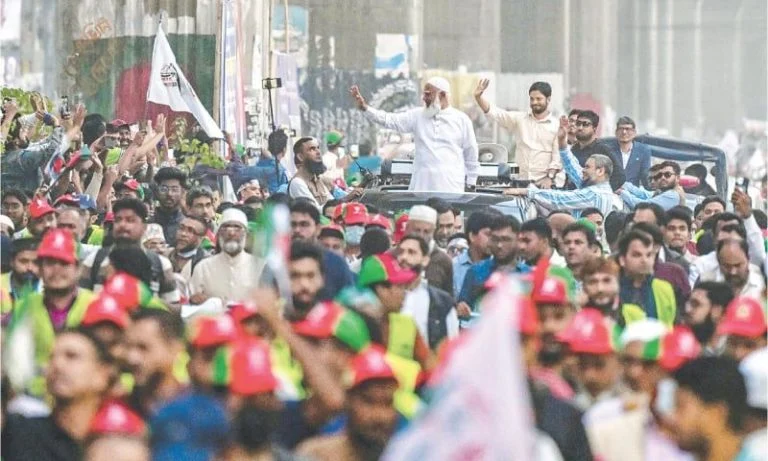
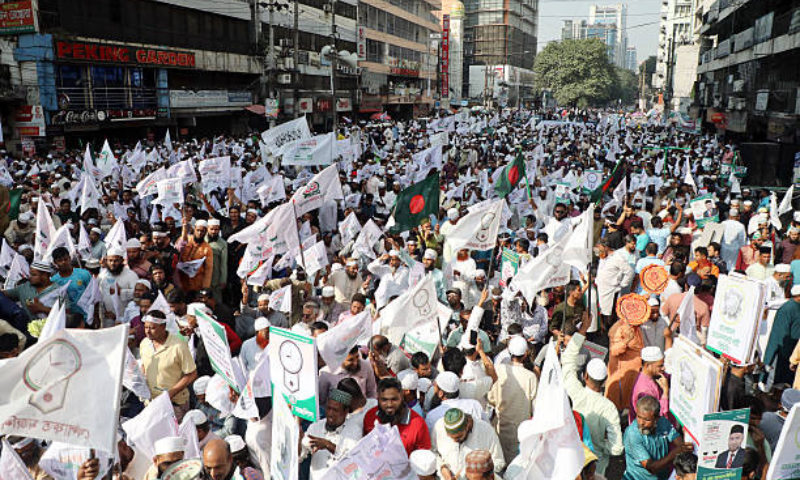
This July, Jamaat-e-Islami demonstrated its renewed strength by mobilizing tens of thousands of supporters at Dhaka’s historic Suhrawardy Udyan. The rally, widely regarded as a turning point, marked the party’s return to mainstream politics and reaffirmed its organizational capacity and popular appeal.
A Rising Political Trend Ahead of General Elections
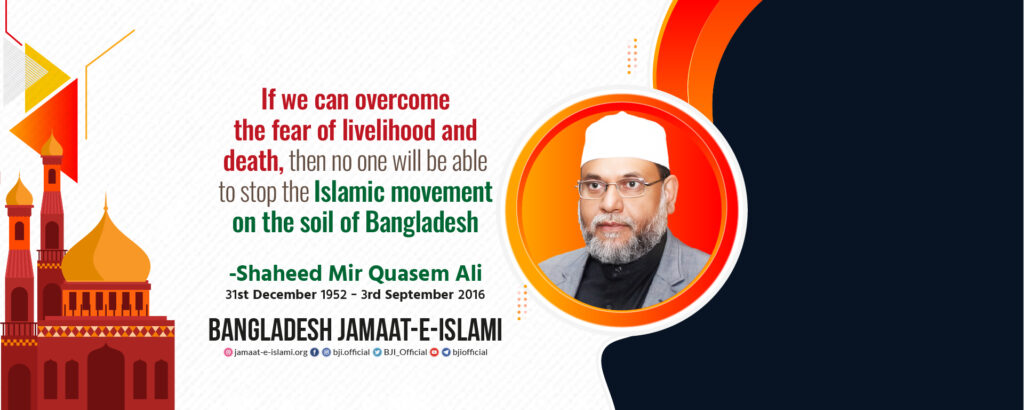
Political observers predict that the back-to-back victories of Islami Chhatra Shibir signal a broader national trend favoring Jamaat-e-Islami. The student wing’s success reflects a growing appetite among Bangladesh’s youth for Islamic values in governance, morality, and political accountability.
Reuters, the international news agency headquartered in London, reported that Jamaat-e-Islami, Bangladesh’s largest Islamic political party, has experienced a significant resurgence following its re-registration by the interim government in August 2024. The previous ban, imposed by former Prime Minister Sheikh Hasina’s administration, was lifted after the government found no concrete evidence linking the party to terrorist activities. This move has allowed Jamaat-e-Islami to re-enter the political arena, capitalizing on the shifting political landscape.
According to Reuters, the party’s revival coincided with widespread protests in 2024, initially sparked by opposition to public sector job quotas. The protests escalated into a broader movement against Hasina’s government, culminating in her resignation and departure to India in August 2024. The interim government has since pledged to hold free and fair elections, providing Jamaat-e-Islami with an opportunity to mobilize support and influence the nation’s political direction.
Analysts said that as the country approaches the 2026 general elections, Jamaat-e-Islami is well-positioned to translate its campus victories into nationwide political influence. For years vilified and marginalized, Jamaat-e-Islami’s resurgence—from student union triumphs to massive national rallies—underscores a dramatic shift in Bangladesh’s political culture, signaling the emergence of a powerful, values-driven Islamic alternative for the nation’s voters.