
From shared history and manpower links to formal military guarantees, the pact transforms a long-standing friendship into a binding commitment. It is both a deterrent signalling and a bid to reshape regional security architecture.

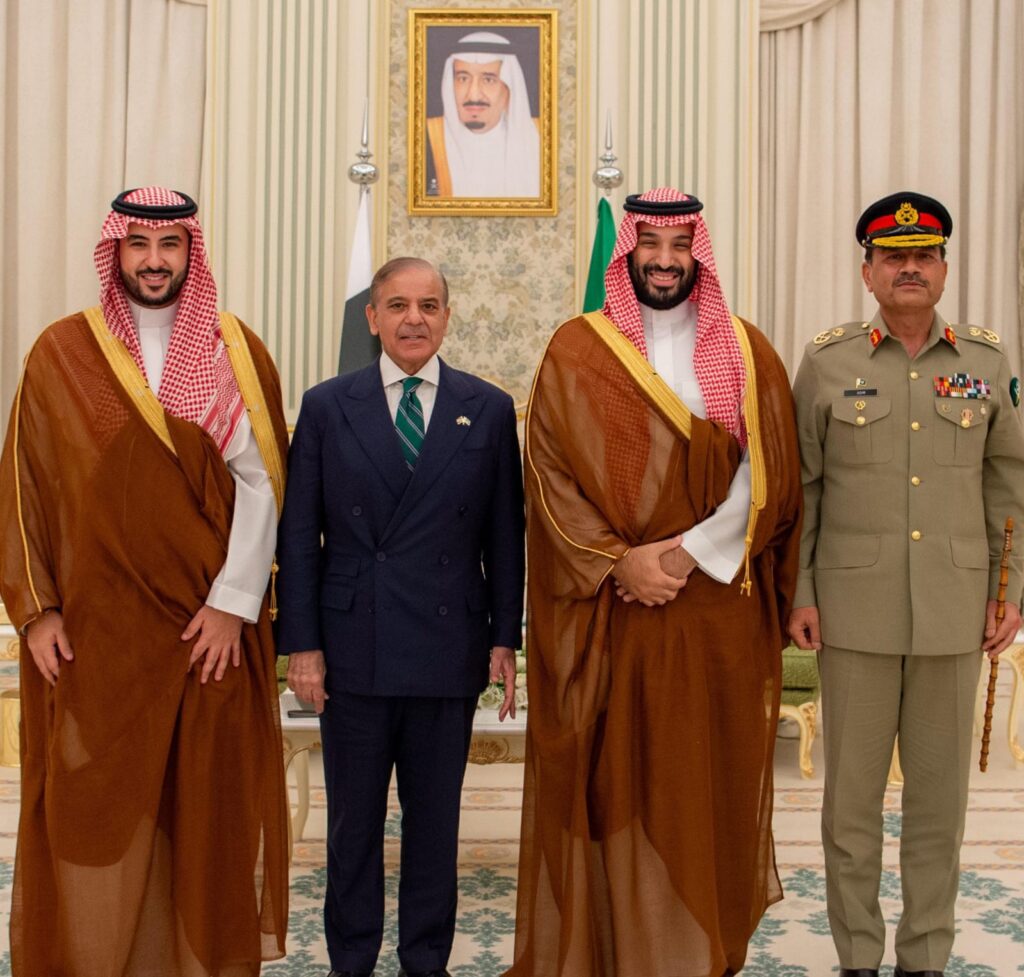
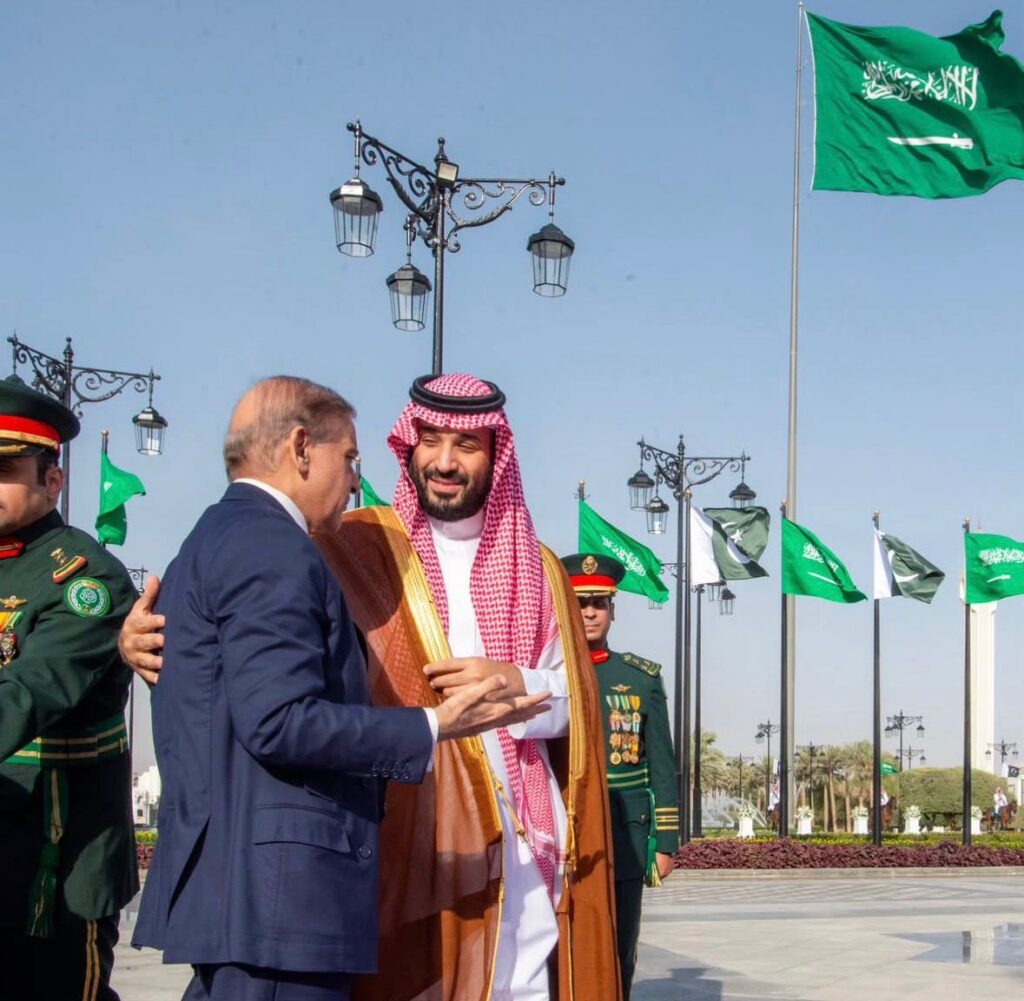
ISLAMABAD: For decades, Pakistan–Saudi relations carried the texture of donor and recipient, with Riyadh writing cheques and Islamabad providing manpower. Today, that dynamic has shifted into something closer to partnership. The change is visible not only in the text of the defence pact but in the body language of Saudi leadership — Crown Prince Mohammed bin Salman greeting Prime Minister Shehbaz Sharif with hugs and smiles, projecting warmth that signals strategic intent. The shift also comes in the wake of Pakistan’s military response to India earlier this year, when a swift counterstrike downed six Indian fighter jets and altered regional perceptions of Pakistan’s capabilities.
On 17 September 2025, Pakistan and Saudi Arabia signed the Strategic Mutual Defence Agreement in Riyadh, a pact whose clause clearly states that “any aggression against either country shall be considered an aggression against both.”
Signed just days after an unprecedented Israeli strike on Doha, which exposed gaps in Gulf air defences, the agreement is as much a signal to regional actors as it is a guarantee between Riyadh and Islamabad. While U.S. forces maintain a presence in the Gulf, the Saudi leadership has clearly sought an additional layer of assurance — one that relies on Pakistan’s proven military discipline and operational experience. In effect, the pact formalises a shared interest in deterring external threats and stabilising a region rattled by unexpected attacks.
Beyond ceremony and diplomacy, the defence agreement transforms decades of cooperation — training, arms transfers, secondment of Pakistani officers — into a codified commitment. It positions Pakistan as more than a traditional ally; it is now a strategic security partner capable of contributing directly to the defence of the Gulf.
The ceremony brought together Pakistani Prime Minister Shehbaz Sharif, Saudi Crown Prince Mohammed bin Salman, and senior military officials, and was presented by both governments as a formalisation of decades-long security ties. Reuters+1
What the text actually does:
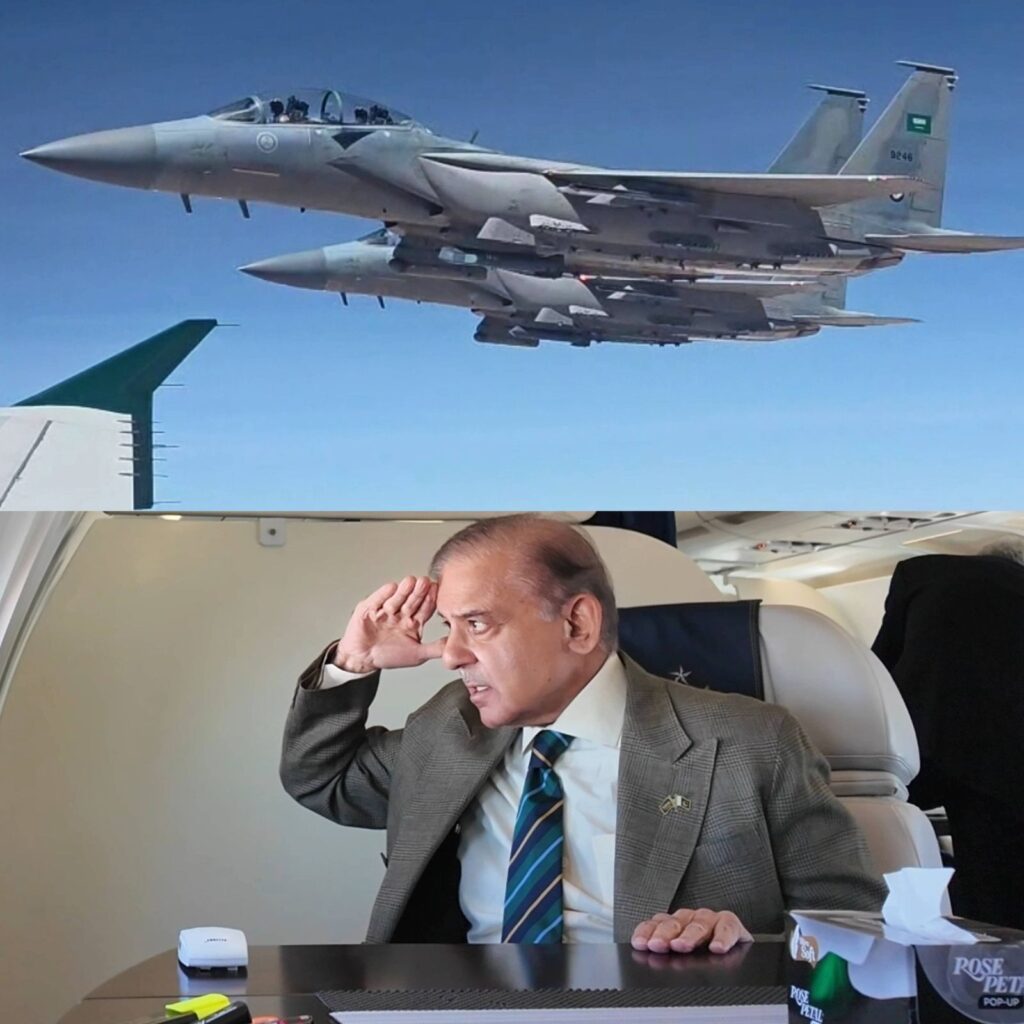
The agreement converts political solidarity into an explicit political-military pledge: it creates an expectation that a serious external attack on either capital would trigger reciprocal assistance — diplomatic backing, intelligence sharing, logistics and, potentially, military cooperation. But it is bilateral and political in form: it does not (at least publicly) create NATO-style permanent multinational command structures or an automatic mobilization mechanism—– So it is “mutual deterrent promise” rather than an integrated alliance headquarters. Financial Times+1
Why now:
Timing matters. Riyadh signed the pact in the aftermath of two shocks this year: an Iranian missile strike on the U.S. Al-Udeid base near Doha in June and, crucially, an unprecedented Israeli strike on a compound in Doha in early September that exposed new operational methods for long-range strikes. Those events punctured assumptions that Gulf airspace was sacrosanct and intensified anxiety in Gulf capitals about their exposure. Regional reporting and analysis link the pact to these security tremors and to a broader impulse in the Gulf to hedge and diversify security partners. AP News+2AP News+2
Why Saudi Arabia would do this despite U.S. forces in the Gulf:
Presence is not the same as assurance. The United States still maintains major capabilities in the region — and Washington moved quickly to deepen its defence cooperation with Qatar after the Doha attack — but Gulf governments now perceive limits to American protection for several reasons: the political costs in Washington of open confrontation, competing U.S. priorities, and the uncomfortable fact that some recent attacks either circumvented or tested regional defences. The Saudi-Pakistan pact is therefore best read as strategic hedging: maintaining U.S. ties while adding a bilateral, politically visible guarantee that directly involves a trusted partner with deep military links to Riyadh. Reuters+1
On the air-defence puzzle (Patriots, Iran, Israel): technical limits and operational choices:
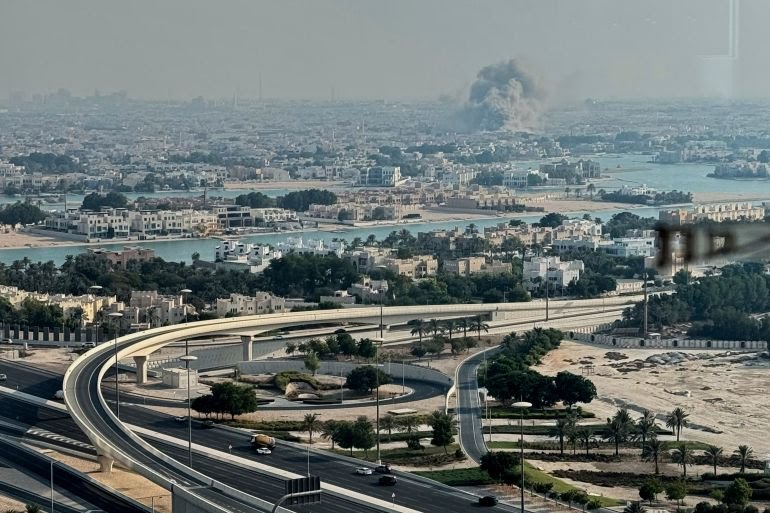
The June Iranian strike on Al-Udeid saw Qatar and U.S. systems intercept many incoming missiles — Qatar reported multiple interceptions though at least one munition struck the base. That episode demonstrated the utility of layered defences (radars, Patriots and allied interceptors) against some classes of threats. By contrast, reporting on the Doha strike in September indicates Israeli aircraft launched ballistic missiles from standoff positions over the Red Sea — a launch profile and missile class deliberately chosen to limit detection and to exploit gaps in certain regional sensor-interconnects. Patriot batteries are optimized for specific classes of missile threats and are not a universal answer to high-speed ballistic or over-the-horizon launches; interception success depends on sensor coverage, warning time and interceptor type. In short: different attacks, different technical envelopes — and different political calculations about whether to detect, engage, or allow an incident to play out without escalation. Defense News+2AP News+2
Does this signal “no confidence” in the U.S.?
Not a clean break, but a clear message. The pact signals Riyadh’s desire to reduce strategic dependence and to demonstrate autonomous deterrence options. It therefore represents a political nudge — an insurance policy — more than an outright renunciation of the U.S. security umbrella. Washington remains a central actor (and has moved to shore up relations with Gulf partners), but Gulf capitals are visibly broadening their portfolio of security partners to lower single-point-failure risks. Financial Times+1
What comes next:
Expect accelerated military cooperation: intelligence-sharing, joint exercises, logistics and contingency planning. The pact also raises diplomatic and strategic calculus across the region: it complicates India-Saudi and Saudi-U.S. diplomacy, changes deterrence calculus towards Iran and Israel, and injects another nuclear-armed actor (Pakistan) more visibly into Gulf security dynamics — a fact acknowledged, and deliberately left politically ambiguous, in public reporting. Over time the substance will matter more than the headline: whether the pact produces concrete operational ties, integrated planning, or merely symbolic signalling will determine its real effect on regional stability. Reuters+1
Bottom line.
The Riyadh-Islamabad pact is both a product and a symptom of a reshuffling Middle East: sudden, standoff strikes have exposed technical and political vulnerabilities; Gulf states are reacting by diversifying their security architecture; and Pakistan’s role is shifting from client to partner. Whether that shift enhances deterrence or deepens regional fault lines will depend on how quickly the promises are translated into verifiable capabilities — and on whether Washington, Riyadh, and other actors manage that transition without unintended escalation. Clingendael+1