Hundreds of thousands pack Minar-e-Pakistan as party chief Hafiz Naeem vows political, economic and moral transformation across Pakistan
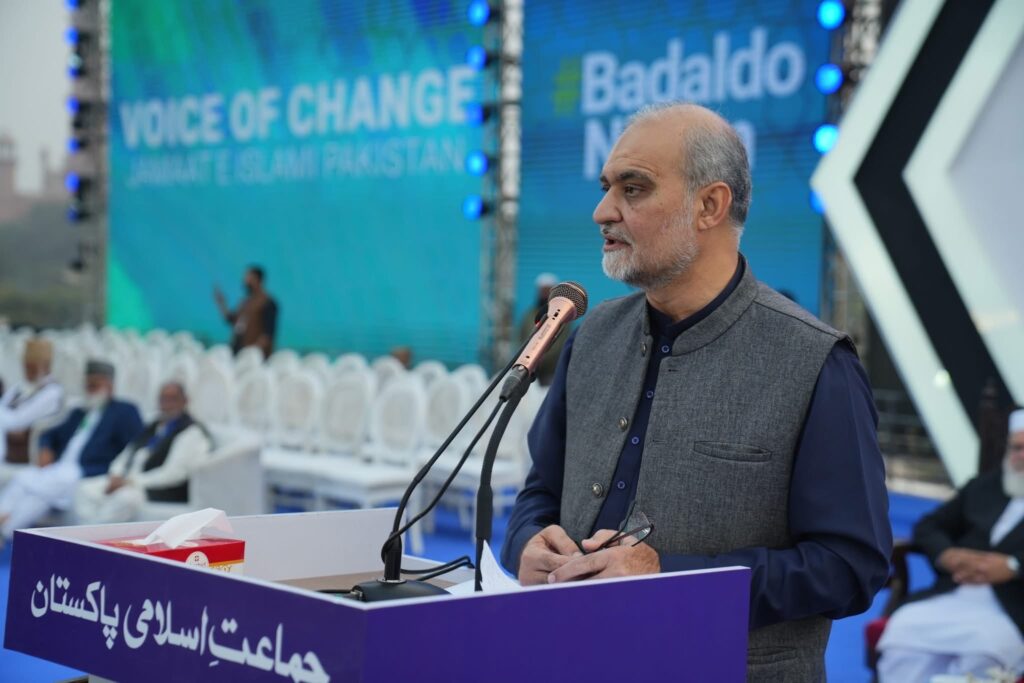
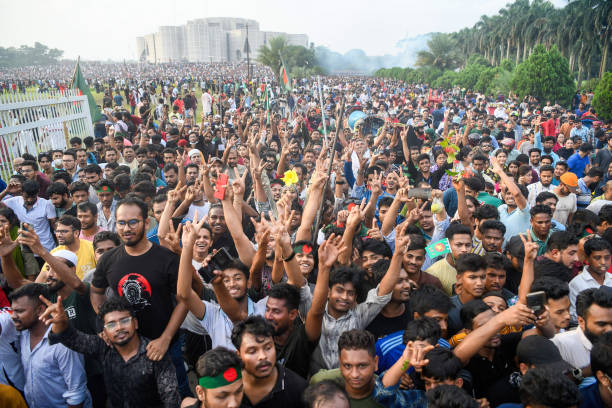
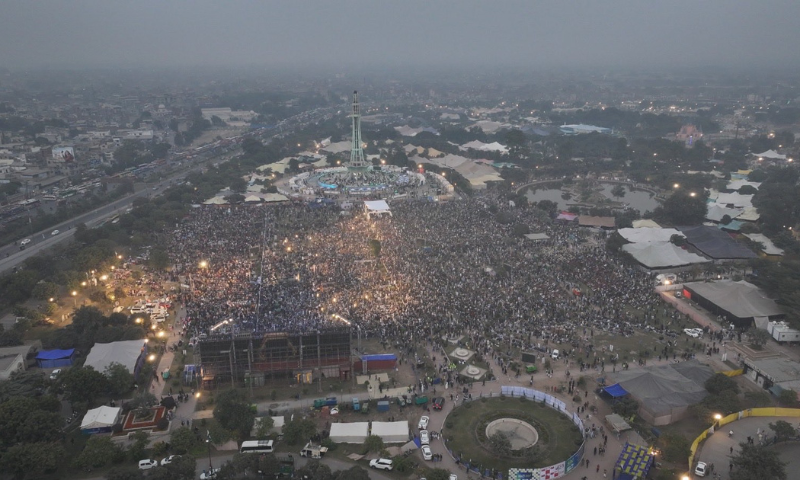
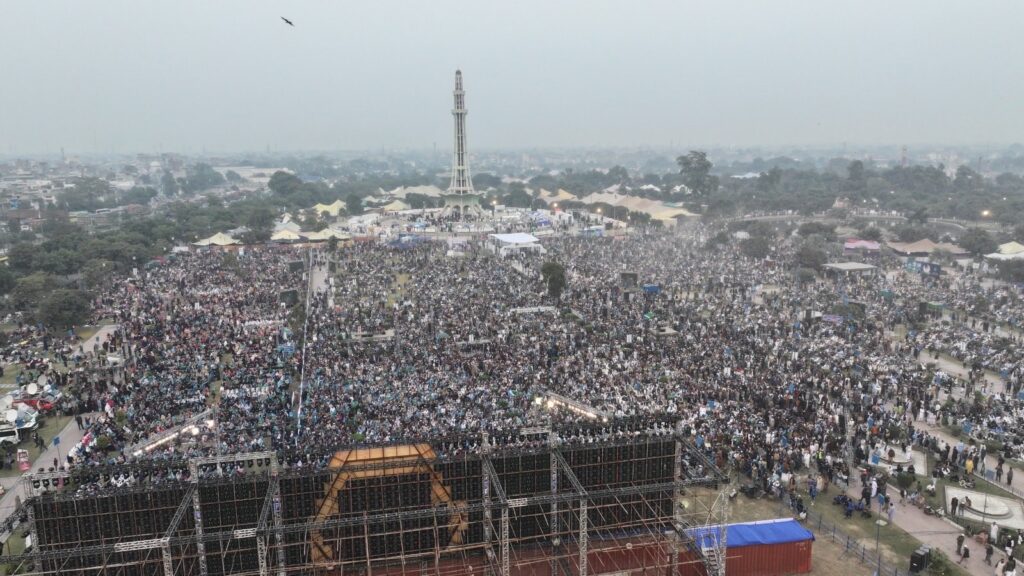
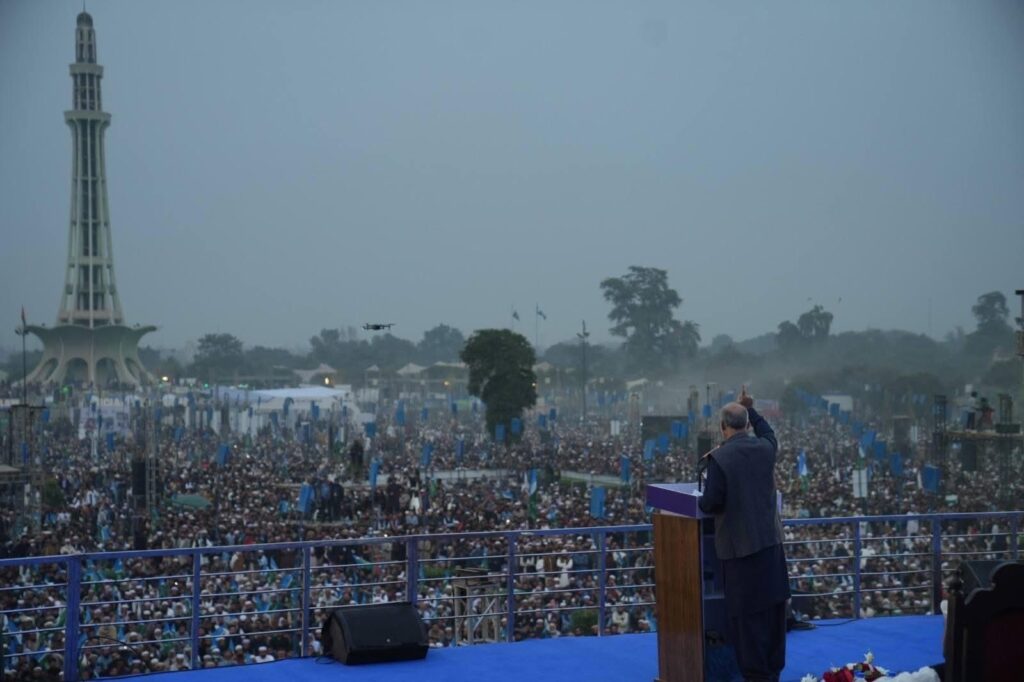
LAHORE: A sea of Jamaat-e-Islami Pakistan supporters packed Minar-e-Pakistan and the surrounding grounds on Friday as the party launched its nationwide Ijtima-e-Aam, attracting hundreds of thousands of men and women in one of its largest political gatherings in decades.
The three-day gathering, themed “Badal Do Nizam” (Change the System), overflowed beyond Minar-e-Pakistan into Iqbal Park and the vicinity of Badshahi Mosque, as participants — including large numbers of women — braved cold weather to attend the inauguration session. The event began with a recitation of the Qur’an and a naat, followed by the national anthem.
Delivering his opening address, JI chief Hafiz Naeem ur Rehman said the party’s campaign aimed at establishing a system “where sovereignty belongs only to Allah” and where Pakistan’s constitution and legislation remain aligned with Qur’an and Sunnah. He accused successive ruling elites of failing the country for 78 years and vowed that Jamaat-e-Islami “will not abandon the youth or leave the nation in despair.”
Rehman warned political leaders that no individual — “feudal lord, army chief or president” — enjoys divine immunity, and cautioned that Pakistan would face public backlash if it aligned with any version of the Abraham Accords involving Israel. He recalled that the original 1940 Lahore Resolution was accompanied by a resolution rejecting recognition of Israel, citing Muhammad Ali Jinnah’s statement that Israel was a “western-sponsored illegitimate creation.”
The JI chief linked Pakistan’s foreign policy failures to wider injustices, saying the U.S. — “a country born from the killing of Native Americans” — routinely vetoes resolutions in favour of oppressed people. He reiterated that Kashmir remains Pakistan’s “jugular vein,” rejecting any backchannel deals and accusing past Pakistani leaders of agreeing to a ceasefire under pressure from U.S. President Donald Trump.
The party announced that its final-day session will unveil a nationwide action plan aimed at challenging what it calls a “system of oppression” through peaceful mass mobilisation. On Saturday, JI will host an international session attended by more than 120 delegates from 45 countries.
Senior leaders, including Liaqat Baloch and Ameerul Azeem, also addressed the gathering.
Rehman said the crowd had effectively made the 329-acre venue “too small,” crediting thousands of workers for constructing parallel male and female arenas, with the women’s section organised under the leadership of Dr. Humaira Tariq. He claimed no other political party in Pakistan could organise an event of similar scale or discipline.

Tracing Jamaat-e-Islami’s origins, Rehman said the movement, founded 84 years ago by Maulana Maududi with only 74 members, had grown into a national force rooted in ideology rather than personality, tribalism, patronage, or establishment support. He said JI rejects sectarianism, aims to unite communities, and believes “a complete system exists only in Islam,” which guarantees equal rights to Jews, Christians and followers of all faiths.
Rehman criticised Pakistan’s bureaucracy as a relic of colonial rule, arguing that a small elite maintains control over the majority of the population. He accused political and economic actors of manipulating wheat and sugar imports to profit through corruption and described Pakistan’s governance system as one run by “puppets.”
He added that JI would present “the case for the rights of Balochistan” at Minar-e-Pakistan, urging unity between Baloch, Pashtuns and Sindhis and calling for an end to what he termed “U.S.-aligned policies.” He also highlighted lawlessness in rural Sindh and exploitation of farmers in Punjab.