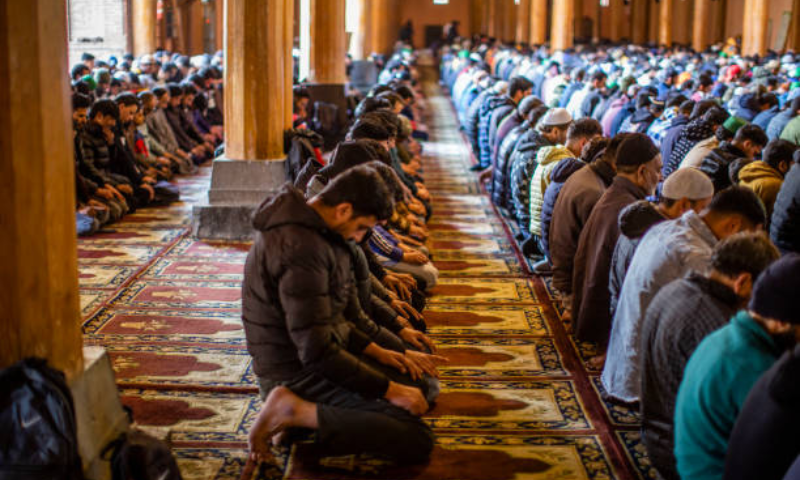

A major Pew survey shows Muslims worldwide strongly support sharia, value faith, favor democracy and religious freedom, and see Islam as compatible with modern life.

INTRODUCTION: A major international survey by the Pew Research Center shows that in many parts of the world, large majorities of Muslims want Islamic law (sharia) to have an official role in their countries.
For many, sharia is seen as a comprehensive system of justice and ethics that should guide personal life, family matters, and social order. At the same time, Muslims differ on how broadly sharia should apply and how it should be implemented within modern legal systems.
Many Muslims who support sharia say it should apply primarily to Muslims rather than to all citizens. Most are especially comfortable with its application in family and property matters, where religious guidance has long been central to marriage, divorce, inheritance, and contracts.
SUMMARY
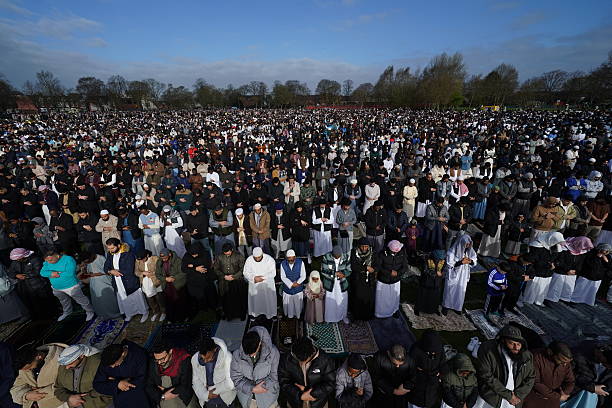
Across 39 countries and more than 38,000 face-to-face interviews, a Pew Research Center survey finds that large majorities of Muslims see sharia as an essential source of justice and moral guidance. In many regions — especially South Asia, Southeast Asia, the Middle East and North Africa, and parts of sub-Saharan Africa — most Muslims say sharia should have an official role in their country’s laws.
This support, however, is not uniform in form or intensity. In regions with strong secular traditions, such as Central Asia and Southern and Eastern Europe, fewer Muslims call for sharia as state law. These differences often reflect each country’s legal and political history: where constitutions already favor Islam, support for sharia is generally higher; where secularism has been embedded for decades, support is lower.

For most Muslims, sharia is much broader than a legal code. It is understood as a comprehensive way of life grounded in the Qur’an and the Sunnah of the Prophet Muhammad (ﷺ), guiding worship, family, economics, and public ethics. The detailed legal rulings that emerge from scholarly interpretation, known as fiqh, are constantly debated and refined as scholars connect timeless principles to contemporary realities.
Many Muslims who favor sharia say it should apply primarily to Muslims, not to all citizens. Support is especially strong for its application in family and inheritance matters, where religious courts and judges already play a central role in several countries. In other states, where secular courts handle family law, Muslims are more likely to accept that existing structure while still affirming the moral authority of sharia.
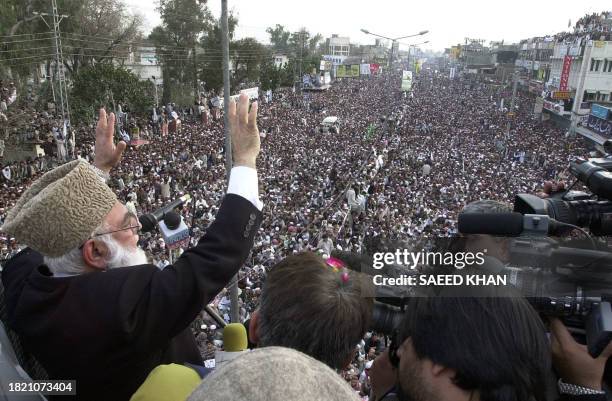
Religiosity clearly shapes these attitudes: Muslims who pray several times a day are more likely to want sharia as official law. Yet overall, support for sharia shows relatively small differences by age, gender, or education. In most countries, men and women, younger and older, highly educated and less educated Muslims are broadly aligned on the principle that Islamic guidance should inform public life.
Attitudes toward women’s rights are similarly nuanced. In most regions, majorities say a woman should be able to decide for herself whether to wear a veil in public. At the same time, many affirm traditional family roles, including the idea that a wife should obey her husband, while debates continue over women’s rights in divorce and inheritance. Support for equal inheritance and a wife’s right to initiate divorce tends to be strongest where national laws already permit these rights, showing how social and legal environments shape opinion.
The survey also finds that Muslims strongly reject religiously motivated violence. In most countries, large majorities say attacks on civilians in the name of religion are never justified, and many express concern about extremism and its impact on both security and the image of Islam. Importantly, there is no consistent evidence that those who support sharia as official law are more favorable to violence; in many cases, they are equally or more opposed.
On politics and modernity, Muslims combine attachment to faith with support for democratic values. Majorities in most regions prefer democracy to authoritarian rule and say it is a good thing when people of other religions are free to practice their faith. At the same time, many want religious scholars to have at least some influence on political matters, especially on moral and social questions.

Finally, most Muslims do not see an inherent conflict between being religiously devout and living in a modern, scientific age. Majorities in many countries say religion and science are compatible, and substantial numbers enjoy aspects of global culture, even as they voice concern that some imported entertainment can undermine public morality. Overall, the picture that emerges is of Muslim societies that are deeply committed to faith, broadly supportive of sharia, and actively engaging with the challenges and opportunities of contemporary life.
Disclaimer:
The above report is based on a Pew Research Center survey and does not necessarily reflect our website’s editorial policy. We are sharing it solely for the information of our readers. The full Pew report can be accessed here: LINK: https://www.pewresearch.org/religion/2013/04/30/the-worlds-muslims-religion-politics-society-overview/
Pew Research Center is based in Washington, D.C. The Center is a nonpartisan research organization known for its data-driven, “just-the-facts” approach to global attitudes, religion, politics, and social trends. Established in 1990 as the Times Mirror Center for the People & the Press and later reorganized under The Pew Charitable Trusts, the Center has grown to include major initiatives on journalism, the internet, demographics, and global public opinion. Its large-scale surveys and transparent methodologies make it a trusted source for academics, policymakers, and media worldwide, though—as with all research institutions—its findings represent data frameworks rather than ideological or religious positions.