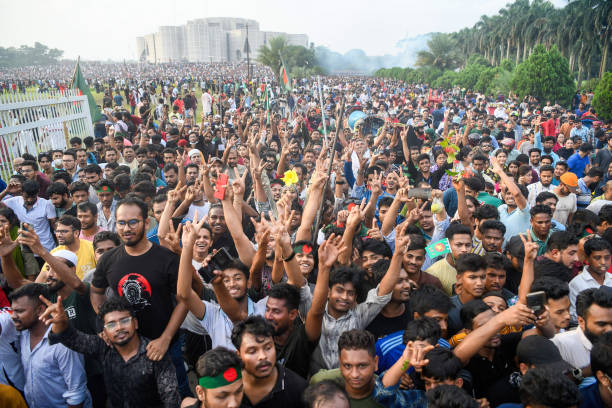
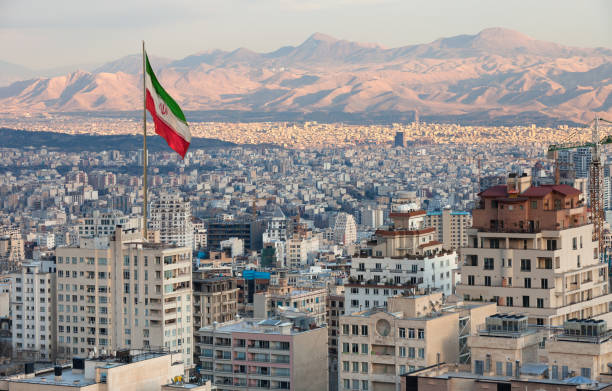
The wave of protests that erupted in Tehran in late December and rapidly spread across Iran represents more than another episode of economic unrest. Instead, it marks a distinct phase in Iran’s recurring cycle of social and political contestation, shaped by economic collapse, political frustration and the aftermath of recent regional conflict.
While the demonstrations were initially triggered by worsening economic conditions, they have evolved into a broader challenge to political legitimacy. This shift is unfolding in a post-war context marked by declining public patience, internal political strain and heightened sensitivity to external pressure.
A pattern of unrest, but changing dynamics
Iran has experienced several major protest movements over the past decade, each leaving a lasting impact on relations between the state and society.
The 2019–2020 protests, sparked by fuel price hikes, were rooted primarily in material grievances and met with heavy repression. The 2022–2023 unrest following the death of Mahsa Amini centred on questions of civil liberties, identity and social justice.
The current protests do not fit neatly into either category. They combine economic hardship with explicit political demands, reflecting a deeper erosion of confidence in the governing system.
Economic pressure as the trigger
The immediate causes were familiar. A sharp depreciation of the national currency, structural weaknesses in domestic markets and a prolonged cost-of-living crisis have placed growing pressure on households. Rising prices for food, fuel and basic goods have far outpaced wages, leaving many families struggling to cope.
What distinguishes this protest wave is the speed with which economic grievances merged with political slogans. The unrest moved beyond demands for economic relief to questions of governance and accountability.
The role of the Grand Bazaar
The initial epicentre was Tehran’s Grand Bazaar and its surrounding commercial networks, long regarded as a key node of Iran’s economic and political life. Historically, collective actions such as shop closures and strikes by bazaar merchants have signalled moments when confidence in the state’s economic management was weakening.
Merchants, small business owners and import-dependent traders were among the first to mobilise, as they were directly exposed to currency volatility. By December 29, protests spread from commercial spaces into major streets and symbolic public areas, marking a transition from sector-based protest to broader political mobilisation.
From local protests to nationwide unrest
By December 30, demonstrations had taken place in major cities including Shiraz, Isfahan, Mashhad, Tabriz, Ahvaz and Karaj. Universities and student groups joined the protests, broadening their social base and connecting economic grievances with demands for political representation.
Reports of security forces opening fire on protesters marked a critical turning point. With the loss of life, the protests shifted from low-intensity unrest into a more acute security challenge.
The most significant escalation occurred on the night of January 8, when demonstrations were reported in dozens of cities across multiple provinces. Slogans directly criticising Iran’s political leadership indicated a further radicalisation of the movement.
External reactions and foreign rhetoric
International reactions added another layer of complexity. Statements from Western leaders, alongside responses from Iran’s political and security establishment, increasingly framed the unrest in terms of internal stability versus external interference.
US President Donald Trump publicly warned that Washington would respond if Iranian authorities used lethal force against protesters. Such remarks were notable given the history of US–Iran hostility and revived memories within Iran of past foreign interventions in the region.
Human rights organisations and monitoring groups reported protests in more than 100 cities over the first twelve days, with dozens killed and thousands detained. Iranian authorities have disputed aspects of these claims.
Divisions within Iran’s leadership
Official responses within Iran have varied. Supreme Leader Ali Khamenei has framed the demonstrations primarily as economic protests by market actors, while drawing a sharp distinction between what he describes as legitimate protest and disorder.
The judiciary adopted a tougher stance, warning that detainees would face swift punishment. Officials cited foreign statements as evidence that unrest was being exploited from abroad.
President Masoud Pezeshkian, by contrast, has used more conciliatory language, urging restraint by security forces. However, Iran’s political structure limits the presidency’s authority over security institutions, which remain under the Supreme Leader’s control. As a result, softer rhetoric from the executive branch has rarely translated into operational restraint during crises.
The re-emergence of exile narratives
Another feature of the current discourse has been renewed attention given by some foreign media outlets to Reza Pahlavi, the son of Iran’s last monarch. Claims that the protests are unfolding under his leadership do not reflect realities on the ground.
Pahlavi lacks an organisational base inside Iran and does not command broad social support. Analysts view his prominence in external narratives as part of wider regime-change framing rather than a reflection of domestic political dynamics.
A post-war psychological shift
The protests are unfolding months after the brief Iran–Israel conflict in June. During that confrontation, calls for internal unrest failed to gain traction, reinforcing perceptions of national cohesion.
That unity proved temporary. Persistent economic pressure, unmet expectations for reform and anxiety about the future have resurfaced. Notably, warnings about social strain have come not only from opposition figures but also from former presidents and senior officials within the system.
What lies ahead
The current protests should not be seen as either a fleeting disturbance or an imminent existential threat to the Iranian state. Instead, they reflect a phase of heightened fragility marked by declining public patience, unresolved economic stress and deep uncertainty about political reform.
Whether the unrest subsides or escalates further will depend on how authorities address underlying grievances, manage security responses and navigate both internal divisions and external pressures. What is clear is that Iran has entered a period of sustained domestic turbulence, with implications that extend beyond the immediate protest cycle.
NOTE: “This article summarises recent developments in Iran and does not necessarily reflect the views or editorial policy of this website.”