From soaring food prices to a collapsing currency, daily life reveals how inflation is reshaping survival in Iran’s cities
WEBSITE REPORT

At a small bakery on a side street in southern Tehran, the price of bread is written in thick black marker on a cardboard sign taped to the wall.
The number has been crossed out and rewritten twice in the same week. A single loaf now costs 10,000 rials—an amount that would have bought several meals just a few years ago. Customers stare at the sign in silence before ordering, some turning away without saying a word.
This is what inflation looks like when it becomes part of daily life: not a headline, not a statistic, but a pause at a shop counter, a recalculation in the mind, a quiet decision to go without.
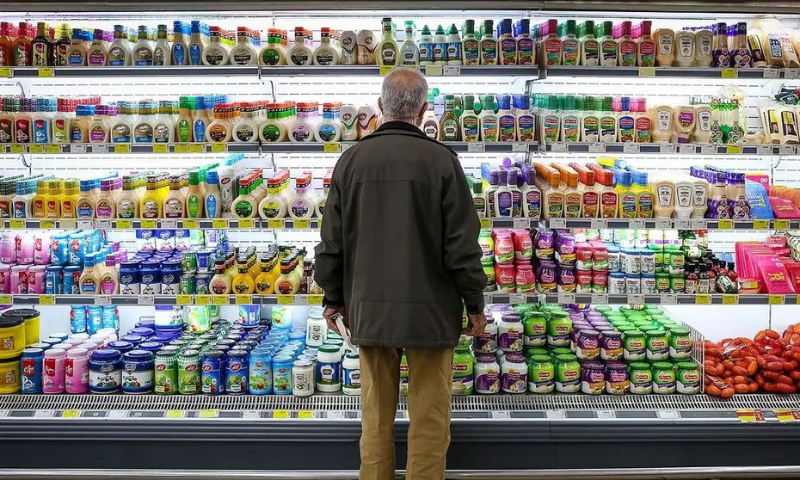
Across Iran’s cities—from Tehran and Isfahan to Mashhad, Shiraz and Ahvaz—the cost of basic survival has risen to levels that many describe as unimaginable. Milk, once a household staple, now sells for up to 650,000 rials per litre. A dozen eggs can cost 1.5 million rials. Chicken breast, a protein of last resort for working families, is priced above 2.2 million rials per kilogram. Rice, the backbone of Iranian meals, varies wildly in quality and price, with premium varieties reaching 4 million rials for a 10-kilogram bag.
These numbers mean little on their own. Their weight becomes clear only when set against incomes that have barely moved, against salaries paid in a currency losing value by the week, sometimes by the day.
The currency that keeps shrinking
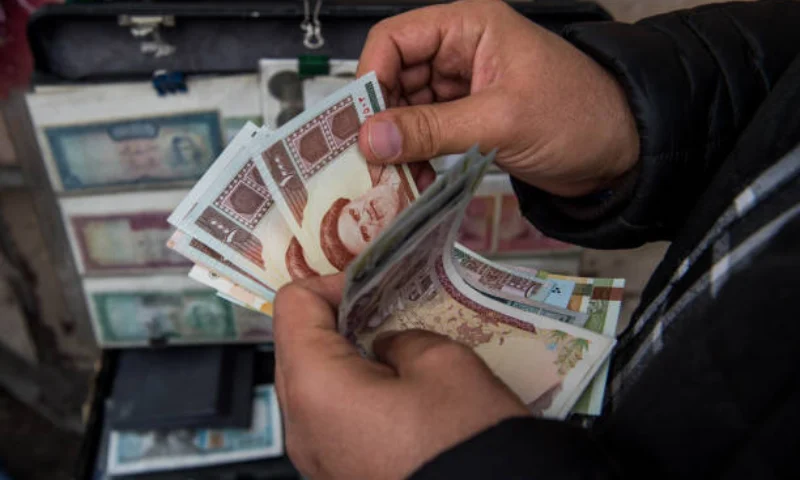
On Tuesday, the Iranian rial hit yet another record low on the unofficial market, with the U.S. dollar trading at around 1.1375 million rials. Currency dealers say the euro has climbed to roughly 1.72 million rials, and the British pound is approaching 1.99 million.
For ordinary Iranians, exchange rates are no longer abstract indicators discussed by economists. They are a daily obsession. Shopkeepers check them between customers. Taxi drivers recite them from memory. Housewives calculate grocery lists against them, knowing that tomorrow the same items may cost more.
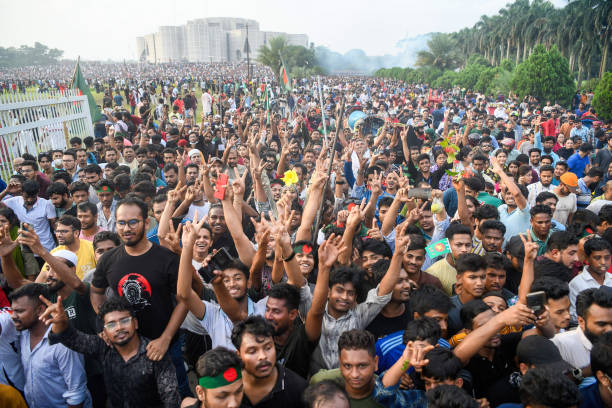
The rial’s collapse has accelerated since late December, when sharp depreciation coincided with the start of nationwide protests. What began as anger over prices has broadened into a deeper expression of economic despair and political frustration. In many neighborhoods, the talk is no longer about reform or recovery, but endurance.
Gold shops are crowded. Currency exchanges, where they operate openly, attract long queues. For those with even modest savings, the instinct is the same: flee the rial before it loses more value. For those without savings, there is no refuge at all.
Shopping under pressure
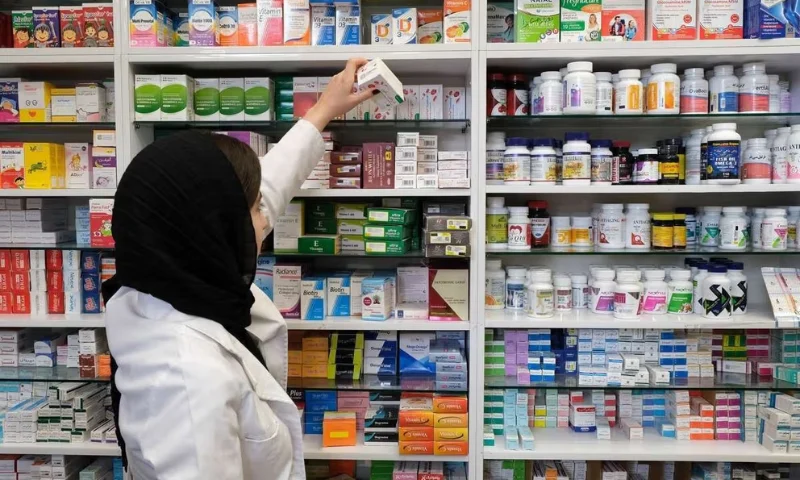
In a neighborhood grocery store in Karaj, shelves remain stocked, but customers buy less. A woman in her forties picks up a carton of milk, checks the price, and puts it back. She buys bread, a few apples, and nothing else.
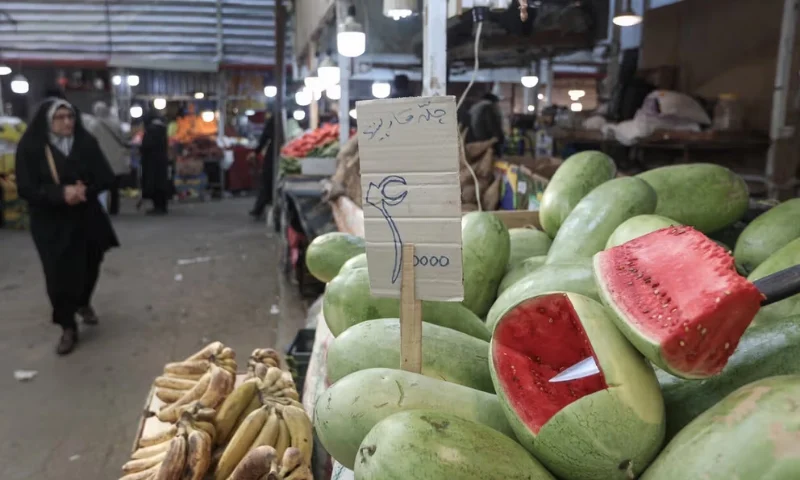
Fruit prices fluctuate wildly. Apples have sold for anywhere between 35,000 and 77,000 rials per kilogram in recent weeks, depending on location and quality. Even these variations create tension, as families search for the cheapest market stall, the least bruised produce, the vendor willing to sell on credit.
Shopkeepers say they are caught in the middle. Wholesale prices change faster than retail tags can be printed. Suppliers demand payment in cash. Credit has dried up. Profit margins shrink even as prices rise, fueling resentment from customers who assume merchants are exploiting the crisis.
“I change prices because I have to,” one shop owner says. “If I don’t, I can’t restock. If I do, people accuse me of theft.”
Subsidy reform and the shock to households
At the heart of the current crisis lies the government’s decision to roll back subsidized foreign exchange rates used to import essential goods. Officials argue the multi-rate system bred corruption, distorted markets and drained public finances. In theory, unifying exchange rates could bring transparency and stability.
In practice, the transition has delivered an immediate shock.
Government spokesperson Fatemeh Mohajerani has acknowledged that prices of basic goods are expected to rise by 20 to 30 percent in the coming weeks, with steeper increases likely for food staples such as chicken, eggs and cooking oil. For families already spending most of their income on food, even small increases are devastating.
President Masoud Pezeshkian’s administration has proposed targeted relief, including electronic credit or coupon systems for low-income households. Yet skepticism runs deep. Similar measures in the past were eroded by inflation, delayed by bureaucracy, or failed to match real market prices.
For many Iranians, subsidies are no longer seen as support, but as temporary patches on a tearing fabric.
Protests born of empty kitchens
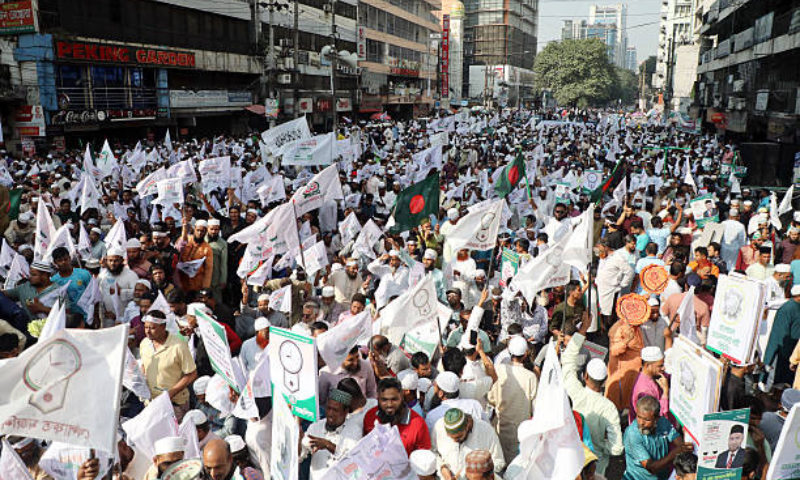
Economic stress has once again spilled into the streets. Merchant strikes have shut down bazaars in several cities. Protests, now entering a third week, continue despite heavy security presence.
Unlike earlier waves of unrest, these demonstrations are not driven by a single incident or slogan. They are fueled by cumulative exhaustion—by years of sanctions, mismanagement, declining living standards and broken promises.
In conversations overheard at bus stops and pharmacies, politics blends seamlessly into economics. People talk about food prices and governance in the same breath, as though they are no longer separable.
The draft budget for the next fiscal year, beginning March 22, has become a focal point of this anger.
A budget under scrutiny
The government projects oil export revenues of 1,850 trillion rials—about $2 billion at the official exchange rate. At least 16 percent of total budgetary resources are allocated to military and security institutions. Meanwhile, tax revenues are expected to rise by 63 percent.
For households struggling to afford bread and milk, these figures feel disconnected from lived reality. Critics question whether state revenues are being translated into economic stability or improved living standards, and whether security-heavy spending reflects fear of unrest rather than confidence in recovery.
Parliament approved the broad outlines of the amended budget this week after earlier rejecting it, adding higher public-sector pay rises, tax cuts and $8.8 billion in subsidized foreign exchange to contain food prices. Whether these concessions will calm the streets remains uncertain.
Rich in resources, poor in outcomes
Iran’s economic paradox is stark. Despite sanctions, oil exports over the past five years are estimated to have generated roughly $193.5 billion. Gross domestic product, however, has fallen sharply—from around $600 billion in 2010 to an estimated $356 billion in 2025.
According to the Central Bank, energy exports alone brought in $65.8 billion last year—more than total general government revenues projected in the new budget. Services account for over half of GDP, and non-oil exports remain substantial.
The problem, many economists argue, is not scarcity but structure: how resources are allocated, how policies are implemented, and how trust between state and society has eroded.
Living with uncertainty
Back at the bakery, the line has grown shorter. Some customers buy half loaves. Others leave empty-handed. The baker shrugs when asked about tomorrow’s prices. He does not know. No one does.
In Iran today, inflation is not just an economic condition; it is a psychological one. It reshapes habits, erodes dignity and narrows horizons. People plan less, save less, hope less. Life becomes transactional and immediate—what can be bought today before it costs more tomorrow.
As the rial continues to slide and protests persist, the decisive question is no longer whether reform is necessary. It is whether the current path can restore confidence before economic hardship hardens into a broader political rupture.
On the streets of Iran’s cities, where prices change faster than signs can be rewritten, the crisis is already deeply personal—and far from over.