By Dr Muhammad Osama Shafiq, a UK-based political communication scholar
It has now been 24 years since the so-called “War on Terror” was launched, originally proclaimed as a global effort to root out terrorism and dismantle terror networks.
Following the 9/11 attacks in 2001, the world was introduced to a redefined concept of “terrorism,” under which yesterday’s freedom fighters were recast as today’s terrorists. Figures once embraced by Western media and policymakers were suddenly criminalised.
Then-US President George W. Bush delivered a stark ultimatum: “You are either with us, or with the terrorists.” With that pronouncement, space for public discourse or debate about the definition of terrorism effectively vanished.
On 7 October 2001, the United States and its allies launched a military campaign in Afghanistan under the name Operation Enduring Freedom. Ironically, this war concluded two decades later with the same group, the Taliban, being handed back control in August 2021, the very force that the West had sought to remove in the name of freedom and democracy. The political, human, and moral toll of those two decades is a broader discussion, but one moment that struck at the heart of the UK was the 7 July 2005 London bombings.
That day, coordinated explosions on London’s public transport system claimed 52 lives and injured over 750. What shocked many was not only the brutality of the attack, but the fact that the perpetrators were not foreign agents. They were born and raised in the UK, educated in British institutions, and radicalised within its borders. These acts cannot be justified under any ethical or religious framework, especially not Islam, which explicitly prohibits violence against civilians or non-combatants.
This year marks two decades since the 7/7 attacks. In the aftermath, successive UK governments have introduced a series of counterterrorism measures aimed at making the country safer. However, during this same period, the UK actively participated in regime change efforts and wars in two Muslim-majority countries, Iraq and Afghanistan, based largely on the now-debunked claim that weapons of mass destruction (WMDs) existed in Iraq.
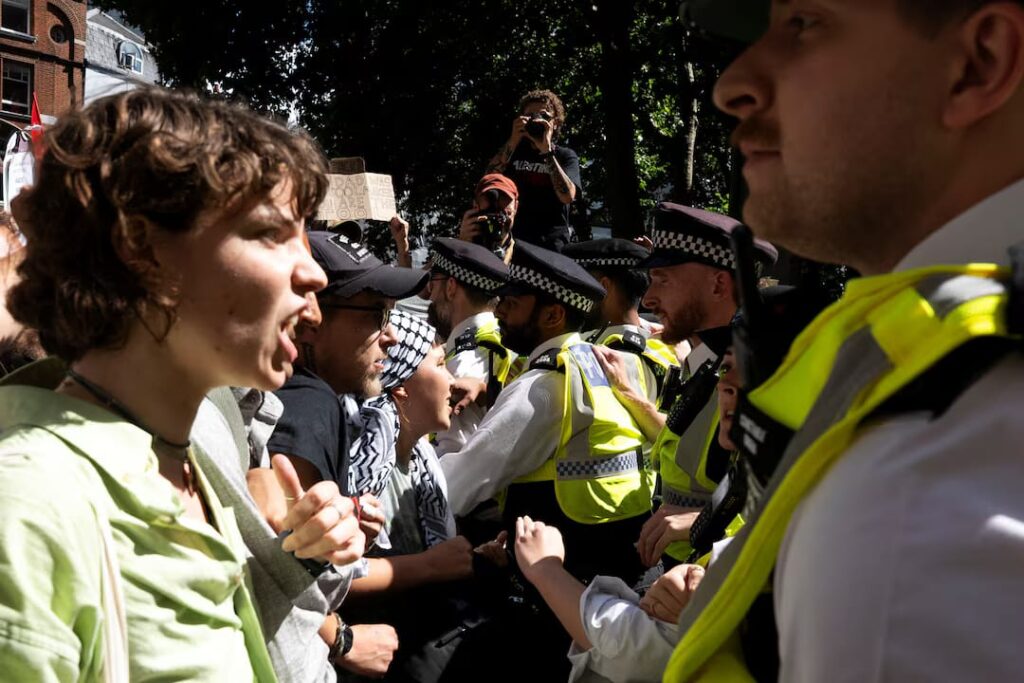
The failure to find any such weapons triggered widespread protests in the UK. It ultimately led to public scrutiny of then-Prime Minister Tony Blair, whose government dragged Britain into war. Though held accountable in a parliamentary inquiry, no legal consequences followed. By the time justice was considered, Iraq had already been devastated.
This historical context matters. The UK, which allied with the US to fight terrorism at its alleged source, is now increasingly labelling its citizens and domestic organisations as threats. The process mirrors the post-9/11 American strategy of declaring al-Qaeda a terrorist group and detaining its members at Guantanamo Bay.
Palestine Action and the Expanding Definition of Terrorism
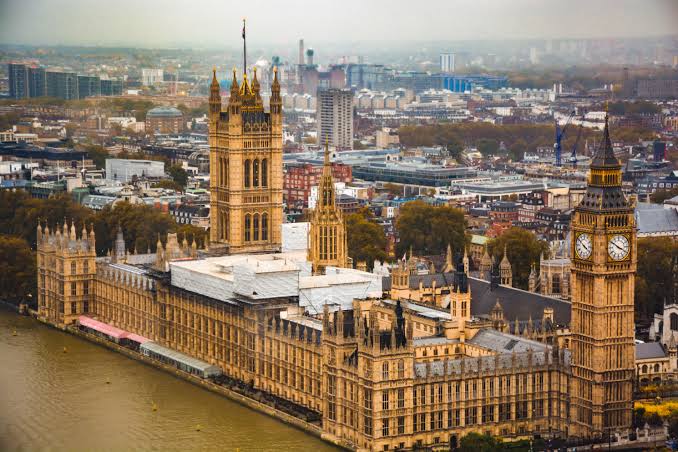
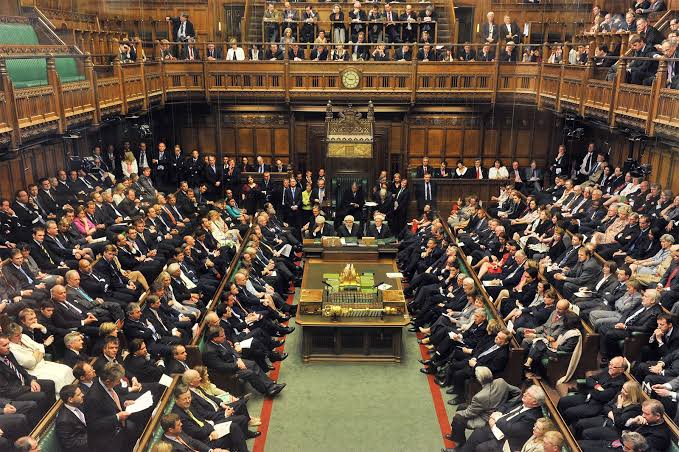
On 2 July 2025, the UK government officially banned the activist group Palestine Action under terrorism legislation. A vote in the House of Commons saw 385 MPs support the ban, with only 26 opposed. Legal challenges failed in both the High Court and the Court of Appeal. The ban came into effect on 5 July.
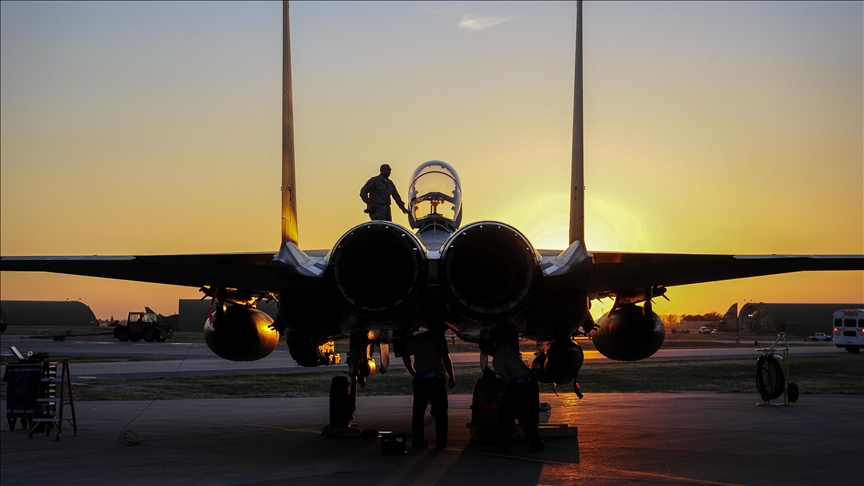
The group was accused of infiltrating Brize Norton Royal Air Force base in Oxfordshire on 20 June 2025 and splashing red paint on aircraft, allegedly causing £7 million in damage to government property. Palestine Action had also conducted targeted protests at the offices of Elbit Systems UK, a major British supplier of arms and technology to Israel. Demonstrators threw red paint on buildings and occupied rooftops, actions that led to arrests and charges under terrorism laws.
Definition of Terrorism under UK Law (Terrorism Act 2000)
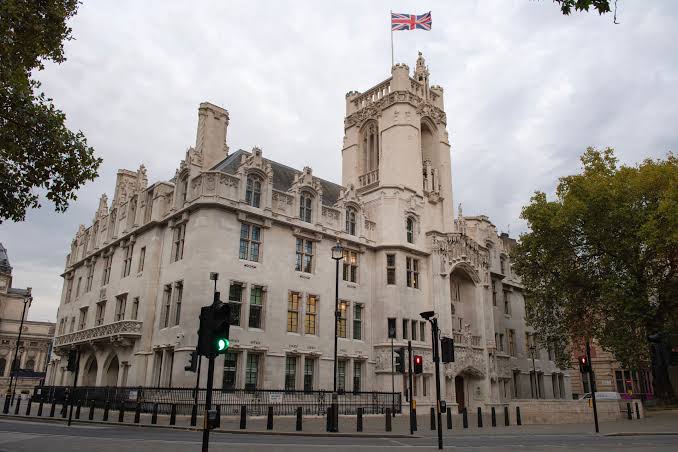
The Terrorism Act 2000 serves as the principal legislation defining terrorism within the United Kingdom. According to Section 1 of the Act, an act is considered terrorism when it involves the use or threat of action that meets three key criteria (Section 1(1)):
First, the act or threat must fall under one of the categories specified in subsection (2).
Second, it must be intended to influence the government, including international governmental organisations, or to intimidate the public or a section of the public (Section 1(1)(b)).
Third, the action must be carried out to advance a political, religious, racial, or ideological cause (Section 1(1)(c)). Subsection (2) outlines the types of actions that are covered under this definition, which include: serious violence against a person (1(2)(a)); serious damage to property (1(2)(b)); endangering a person’s life, other than the perpetrator’s own (1(2)(c));
creating a serious risk to the health or safety of the public or a section of the public (1(2)(d));
seriously interfering with or seriously disrupting an electronic system (1(2)(e)).
Section 1(3) clarifies that any use or threat involving firearms or explosives is classified as terrorism, even if it is not intended to influence the government or intimidate the public.
Section 1(4) extends the application of the Act to actions committed both within and outside the United Kingdom. It also provides that references to persons or property include those located anywhere in the world, and that the term “government” and “public” may refer to foreign governments or populations.
Finally, under Section 1(5), any action taken for the benefit of a proscribed organisation also falls within the legal scope of terrorism as defined in this Act.
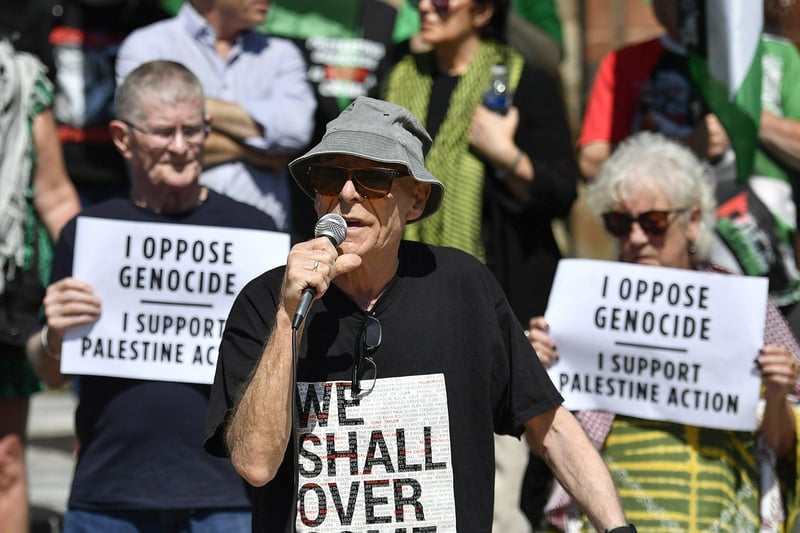
By these legal standards, one could argue—logically if not legally—that former Prime Minister Tony Blair and his administration might themselves meet the criteria for terrorist conduct, as they engaged in threats, use of force, destruction of property, and deployment of firearms. These are not just opinions but findings from the Chilcot Inquiry (2009–2016), which concluded that Blair misled the public and Parliament, launched a war without exhausting peaceful alternatives, and had no legal justification for military intervention in Iraq.
No criminal prosecution followed, but moral questions persist: Does this terrorism law apply only to activists and civilians, or should heads of state also be held accountable?
Voices of Resistance: Freedom of Expression Under Threat?
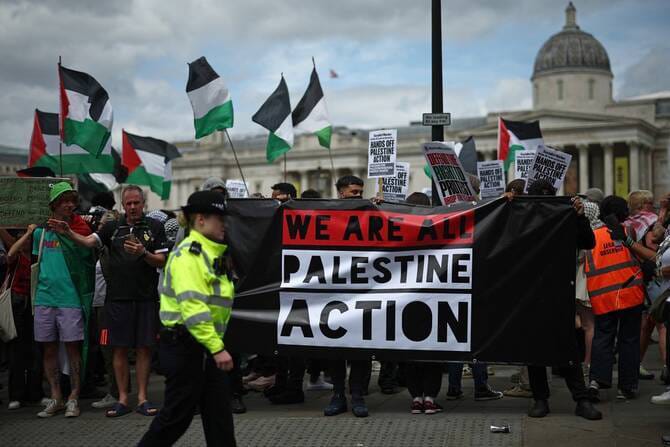
Family members of those arrested under the terrorism law argue that these measures are a violation of free speech. Clare Hinchcliffe, whose daughter was among 18 arrested individuals, released a video statement:
“My daughter and others have been arrested for allegedly entering a weapons factory and destroying drones used to kill civilians in Gaza. The state has branded this terrorism, yet this is political interference aimed at silencing dissent. These people were dragged from their homes, denied bail, and kept in prison for ten months. This isn’t about law and order. It’s about our government’s ties with Israel. Their treatment is a warning to anyone who stands for Palestinian rights. We will not accept this erosion of our rights to protest and express dissent.”
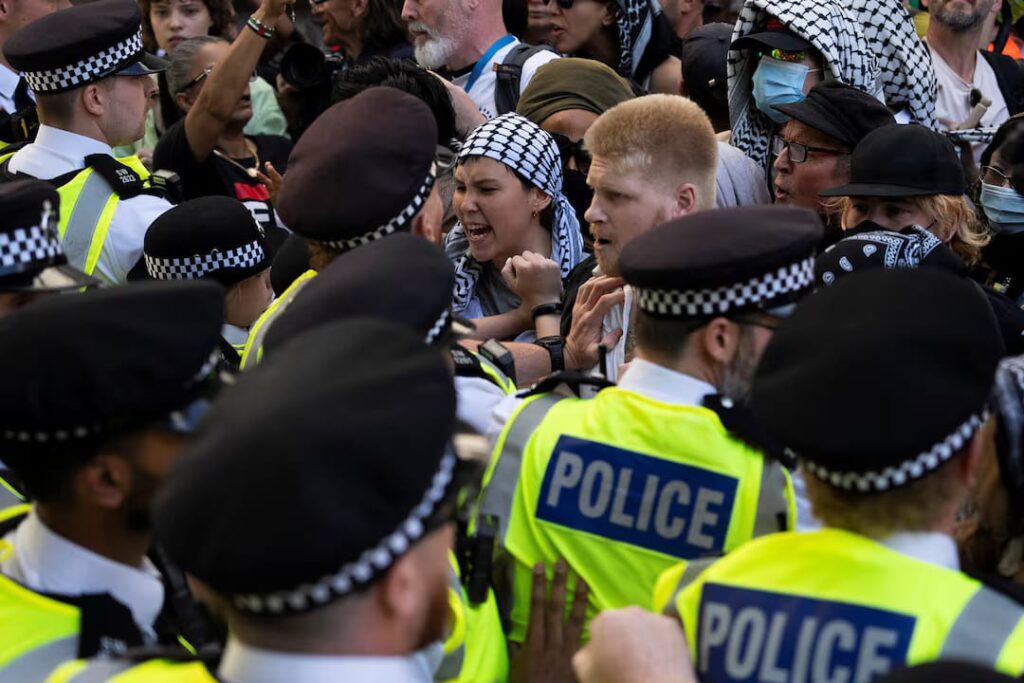
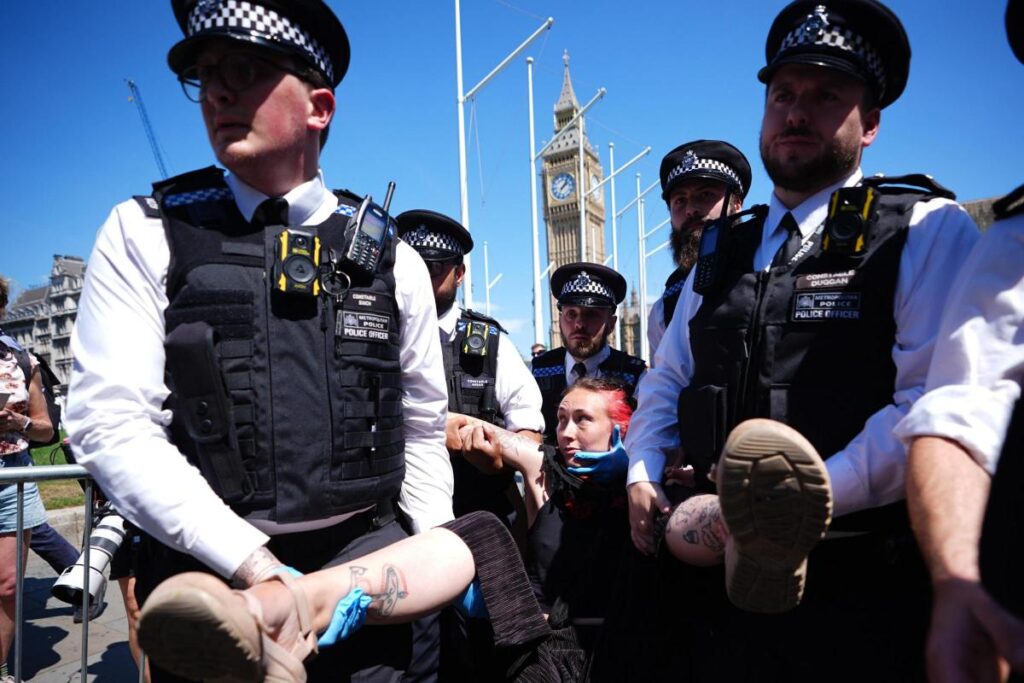
These arrests are not isolated. On 5 July 2025, just one day before the anniversary of the 7/7 attacks, Palestine Action members staged a protest outside Parliament. Police detained them as members of a “terrorist organisation.” Among those arrested was 83-year-old retired priest Sue Parfitt, who said:
“Banning this group is a dangerous step that must be challenged.” “We are being stripped of our civil liberties.”
From “Enduring Freedom” to Internal Suppression
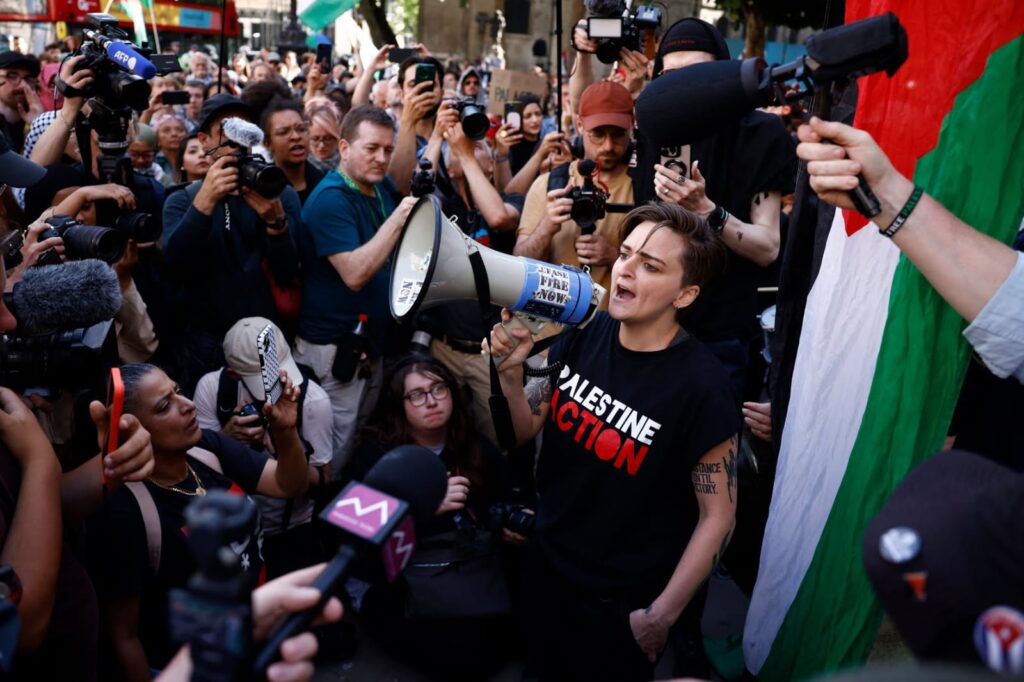
Ironically, the same Western governments that once bombed foreign lands in the name of “Enduring Freedom” now face rising domestic opposition. The campaign that began by labelling foreign organisations as terrorists has extended to Western protest movements themselves.
This trend signals a broader concern: Are freedom and civil liberties in the West only reserved for state-aligned ideologies? Or does the West still have room for dissenting voices, especially those critical of foreign policy or military-industrial alliances?
Today, Britain stands at a political crossroads. Far-right nationalism is gaining ground, while leftist and Muslim constituencies are seeking new alliances. The essential question remains: the liberty that Western powers once claimed to export through war, does it truly exist at home?
Only time will tell how this political contradiction resolves itself. But one thing is clear: suppressing protest through terrorism laws not only undermines democracy, it risks pushing Western societies further toward authoritarianism.
About The Author: Dr Muhammad Osama Shafiq is Director of the Institute for Media & Social Dynamics (UK) and Associate Professor of Mass Communication at the University of Karachi. A PhD specialist in networked political mobilization and an Oxford-certified digital ethnographer, he researches how digital platforms shape public discourse and power. He is also a media analyst with Islam Channel (UK), and regularly advises newsrooms and policymakers across borders.