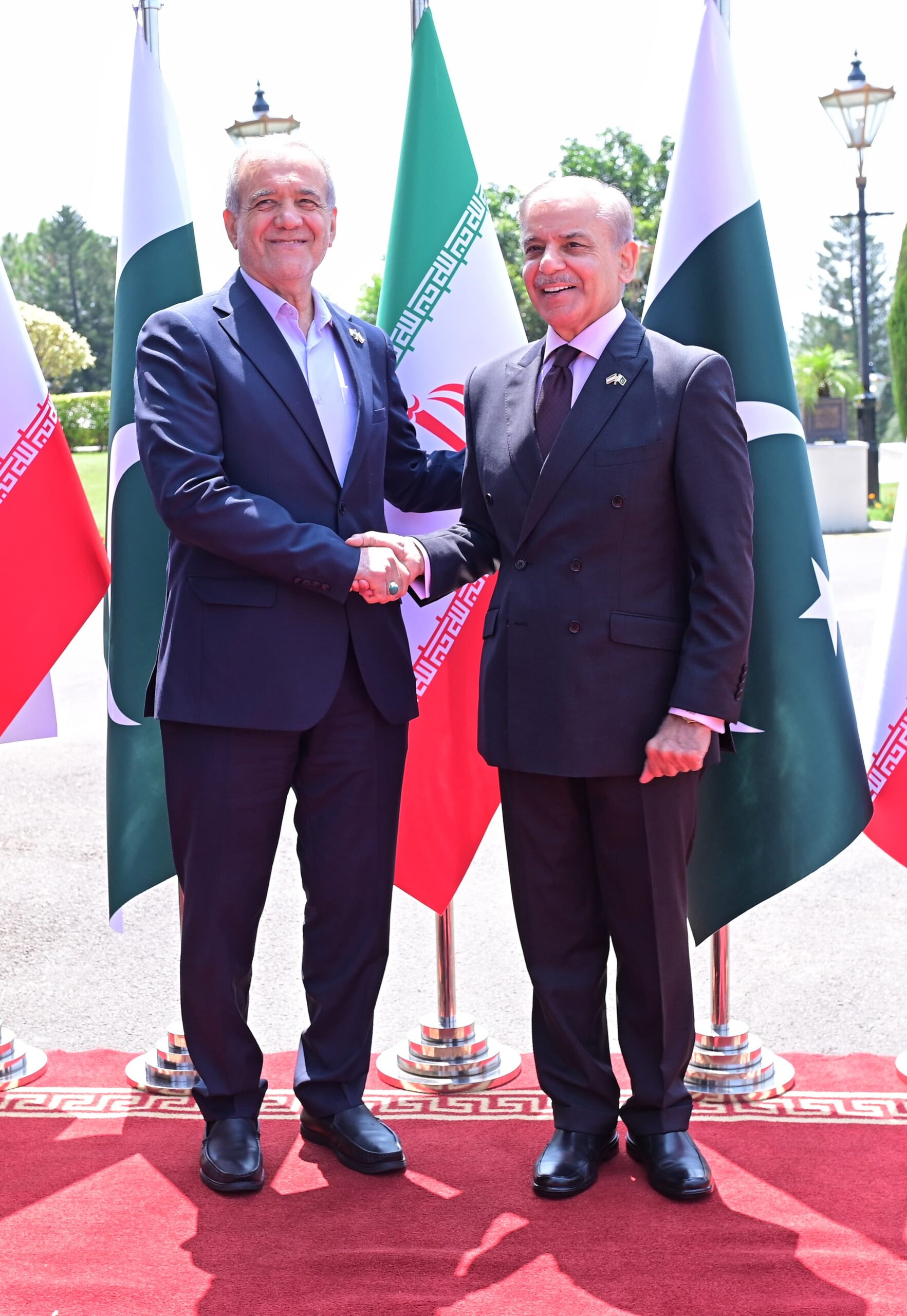
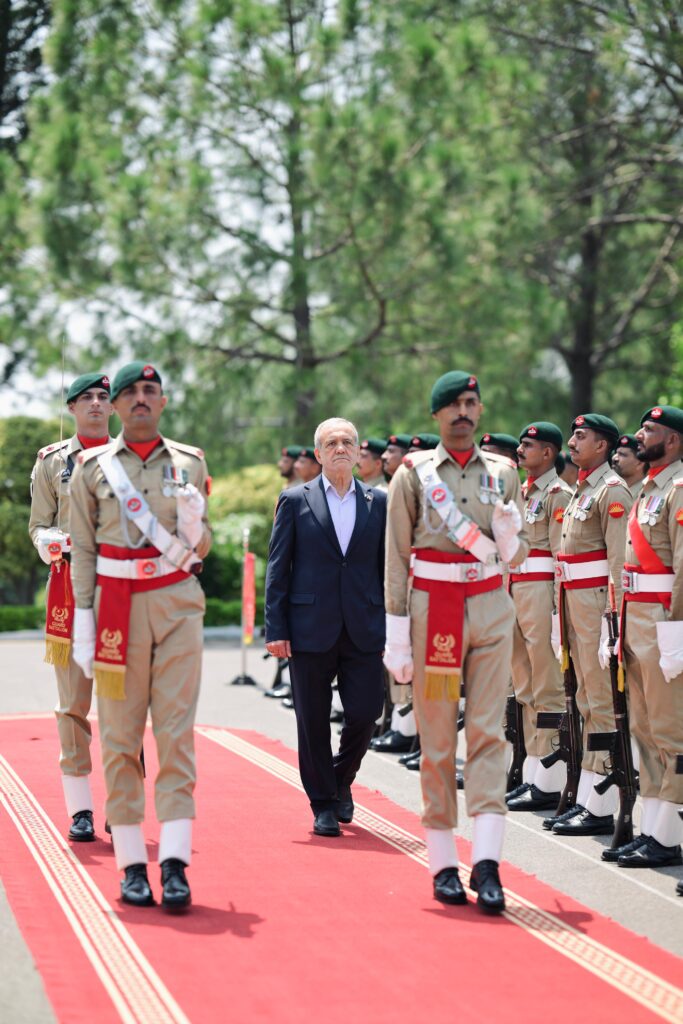
The visit of Iranian President Masoud Pezeshkian marks the most senior-level engagement between Iran and Pakistan since the 12-day Israel–Iran conflict earlier this year, underscoring a deepening strategic alignment between the two neighbours amid an increasingly polarised regional landscape.
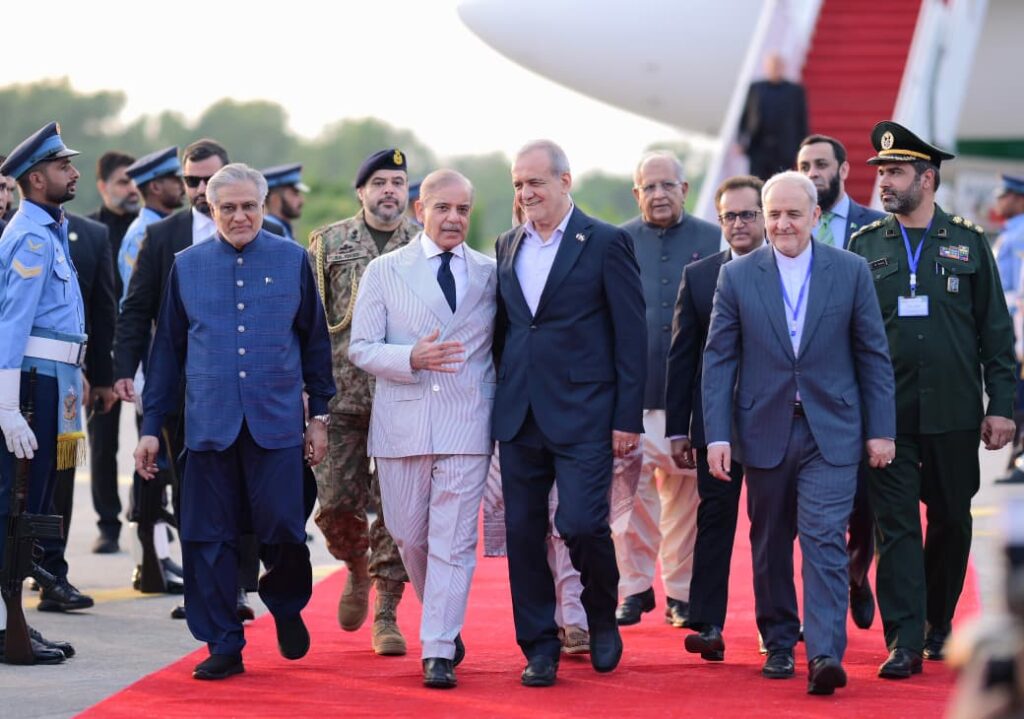
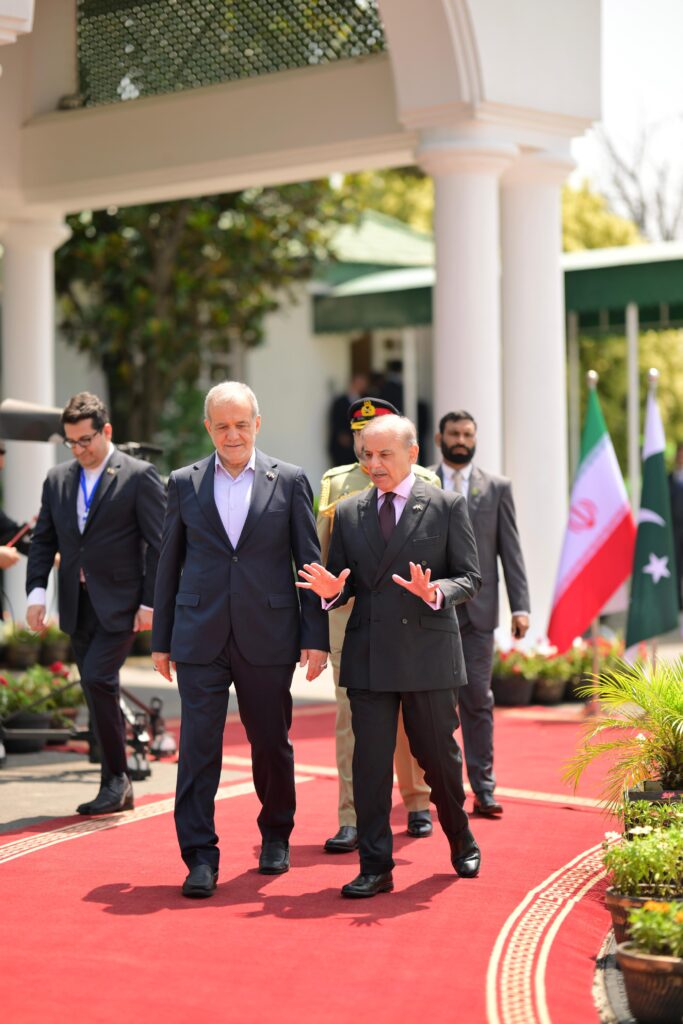
Pakistan and Iran have vowed to significantly deepen their economic and strategic partnership, with both sides committing to raising bilateral trade to $10 billion in the near future. The announcement came during the official visit of Iranian President Dr. Masoud Pezeshkian to Islamabad, where he held wide-ranging talks with Pakistani Prime Minister Muhammad Shehbaz Sharif.
The two leaders addressed a joint press conference following high-level meetings and the signing of a dozen agreements and memorandums of understanding (MoUs) covering sectors such as trade, technology, agriculture, transportation, culture, science, tourism, and media cooperation.
“Our two nations are bound by common faith, history, and geography,” said Prime Minister Sharif. “Today’s engagements mark a new chapter in our bilateral relationship, especially in enhancing trade volume, regional connectivity, and security cooperation.”
Among the key agreements were the operationalization of barter trade, the enhancement of border markets, and the establishment of new corridors to facilitate smoother transit via road, rail, and sea. The two leaders also endorsed the establishment of joint free economic zones and closer coordination on customs and product standards.
Iranian President Pezeshkian hailed Pakistan as a “brotherly nation and second home,” expressing Tehran’s resolve to expand economic ties despite geopolitical challenges. “With the political will and shared vision on both sides, increasing bilateral trade from the current $3 billion to $10 billion is not just a goal, it’s an achievable reality,” he said.
Shared Regional Vision
The summit also addressed pressing regional concerns, particularly the ongoing Israeli assault on Gaza and broader instability in the Middle East.
Prime Minister Sharif condemned the “brutal aggression” by Israeli forces in Gaza and lauded Iran’s “vocal and unwavering” stance in support of the Palestinian cause. He described the humanitarian catastrophe in the besieged enclave as “morally indefensible,” emphasizing that “entire neighborhoods are being starved, hospitals are under siege, and the world must not stay silent.”
“Pakistan supports the establishment of a free and independent Palestinian state as per UN resolutions,” Sharif said. “And we salute Iran’s steadfastness in standing with the oppressed.”
President Pezeshkian echoed the sentiments, calling on the international community to act decisively against what he termed as Israeli “genocidal actions” in Palestine. The two countries also discussed developments in Indian-administered Kashmir. Prime Minister Sharif thanked Tehran for its consistent support of the Kashmiri people.
Security and Sovereignty
On the issue of cross-border militancy and terrorism, both leaders underscored a shared stance of zero tolerance. With over 900 kilometers of shared border, Pakistan and Iran are committed to enhanced intelligence-sharing and joint efforts to eliminate safe havens for extremist groups operating along the frontier.
“Any form of terrorism is unacceptable,” said Sharif. “We are working to transform our border into a zone of commerce, connectivity, and cooperation, not conflict.”
Strategic Partnerships in Science and Technology
The summit also saw both countries signal intent to strengthen ties in high-tech sectors. Agreements were signed between Iran’s Pardis Technology Park and Pakistan’s Council for Scientific and Industrial Research, aiming to promote innovation and joint research in areas such as biotechnology, information systems, and space science.
Looking Ahead
Both sides expressed confidence that the agreements signed would move beyond paperwork and translate into actionable projects. The 22nd session of the Pakistan-Iran Joint Economic Commission is expected soon, aimed at resolving trade barriers and accelerating progress on infrastructure cooperation.
ST