Survivors trapped under rubble as Taliban appeals for aid after powerful tremor devastates remote eastern villages
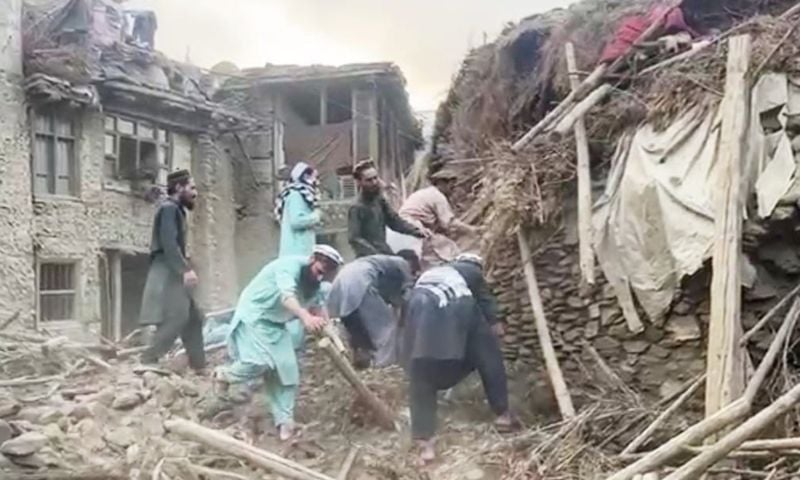
A powerful 6.0-magnitude earthquake struck eastern Afghanistan late Sunday, killing more than 800 people and injuring at least 2,500, according to Taliban officials. The epicentre was near Jalalabad in Nangarhar province, but the worst destruction was reported in neighbouring Kunar, where mud-brick homes collapsed, razing entire villages.
The quake, felt as far as Kabul and Islamabad, was followed by at least five aftershocks, including one of magnitude 5.2. Rescuers say road blockages have left several districts inaccessible.
Desperate rescue amid limited resources
Taliban spokesman Zabihullah Mujahid said most casualties were in Kunar, where villages such as Noor Gul, Watapur, and Chapa Dara were flattened. Afghanistan’s disaster management authority confirmed that three villages were destroyed.
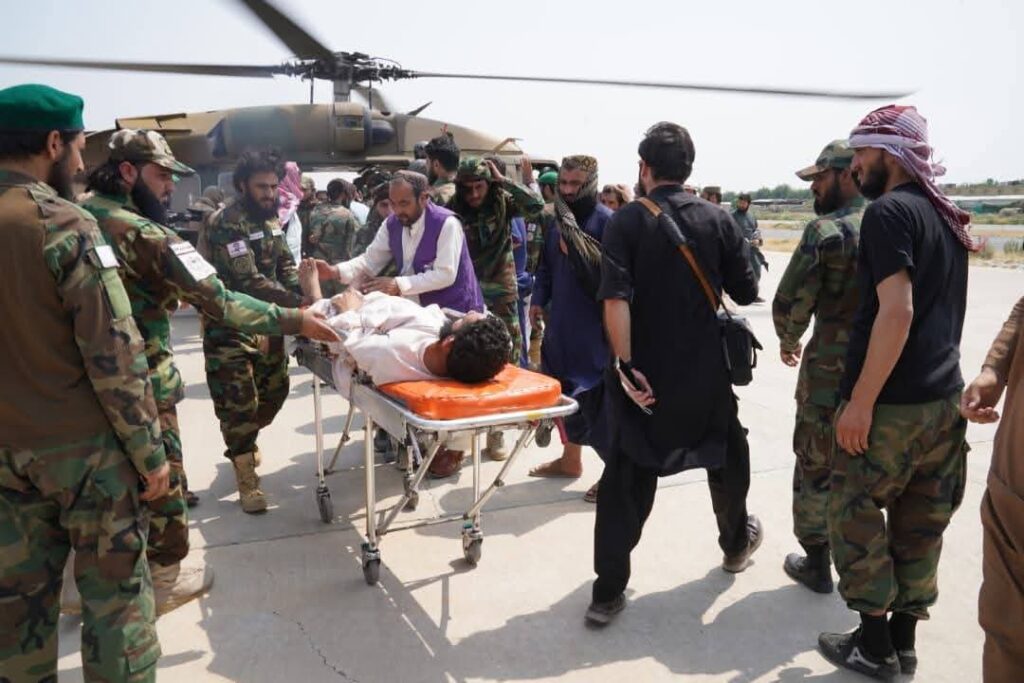
The defence ministry said military rescue teams have airlifted hundreds of the injured to hospitals, but officials acknowledged foreign governments have yet to offer assistance. The United Nations warned that humanitarian operations were already overstretched.
Tremors felt across the region
Strong tremors were felt across eastern Afghanistan, as well as parts of Pakistan and northern India. In Pakistan, the National Seismic Monitoring Centre (NSMC) recorded the quake at 12:18 am local time, with tremors felt in Islamabad, Peshawar, Rawalpindi, Murree, Lahore, and multiple towns in Punjab and Khyber Pakhtunkhwa provinces.
In India, residents of Delhi-NCR shared videos on social media of shaking furniture and ceiling fans. While no casualties were reported in Pakistan or India, authorities issued alerts for possible aftershocks and urged citizens to avoid unstable structures.
Pakistan and the global community react
Pakistan’s Prime Minister Shehbaz Sharif expressed solidarity, saying Islamabad stood ready to extend “all possible support”. Deputy Prime Minister Ishaq Dar echoed the sentiment.
UN Secretary-General Antonio Guterres and the European Union delegation in Kabul also conveyed condolences, with the EU noting its humanitarian partners were already providing emergency aid.
Seismically active and vulnerable
The Hindu Kush region, straddling Afghanistan, Pakistan, and Tajikistan, is one of Asia’s most earthquake-prone zones. Shallow earthquakes, like the one that struck on Sunday, often cause intense ground shaking and pose greater risks to vulnerable populations, especially in areas with poor infrastructure and limited medical access.
Afghanistan has faced several earthquakes in recent months, including a 5.5-magnitude tremor on August 2 and a 4.2-magnitude quake on August 6, underscoring the region’s persistent seismic threat. In October 2023, a 6.3-magnitude tremor in Herat killed more than 1,500 people, while a 2022 quake in Paktika left over 1,000 dead.
Four decades of war, coupled with the sharp decline in foreign aid since the Taliban takeover, have left the country dangerously unprepared for natural disasters.
ST