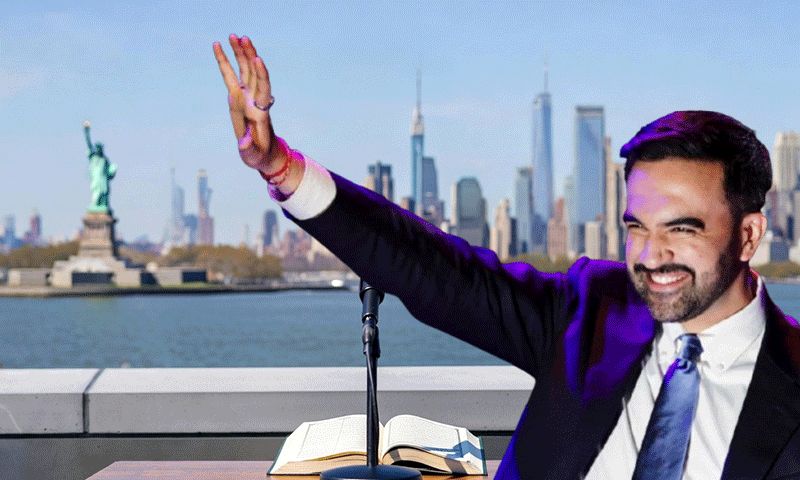
The 34-year-old Democratic socialist took office in a closed subway station beneath City Hall, marking a powerful moment in the political, cultural, and religious history of America’s largest city.
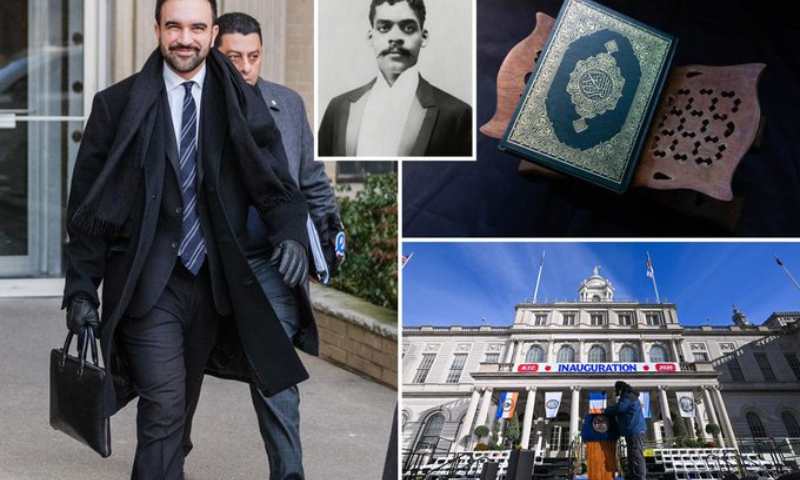
In a moment rich with symbolism, Zaharan Mamdani has taken office as New York City’s mayor after swearing an oath on the Qur’an, becoming the city’s first Muslim, first South Asian and first African-born mayor.
At 34, he is also among the youngest leaders to hold the office in the city’s modern history.
The oath-taking ceremony took place just after midnight in a long-closed subway station beneath City Hall — an unconventional setting that underscored Mamdani’s message of politics rooted in the everyday lives of ordinary New Yorkers. Placing his hand on Islam’s holy book, Mamdani broke with a long tradition in which most mayors have sworn in on the Bible, though the US Constitution does not mandate the use of any religious text.
The ceremony reflected New York’s evolving identity as a global, multi-faith metropolis. Mamdani used two copies of the Qur’an: one inherited from his grandfather, and another centuries-old, compact edition preserved at the Schomburg Center of the New York Public Library. Historians say the latter was produced for everyday use, symbolising accessibility and public life rather than ritual alone.
Born in Kampala, Uganda, and raised in New York, Mamdani embodies multiple worlds. His father, Mahmood Mamdani, is a renowned academic at Columbia University, while his mother, Mira Nair, is an internationally acclaimed filmmaker. These influences, Mamdani has often said, shaped his global outlook on justice, culture and power.
Before entering politics, Mamdani worked as a housing counsellor in New York, assisting tenants facing eviction — an experience that placed housing inequality at the centre of his political vision. In 2020, he was elected to the New York State Assembly from Queens, quickly gaining attention as a leading voice of the Democratic Socialist movement.
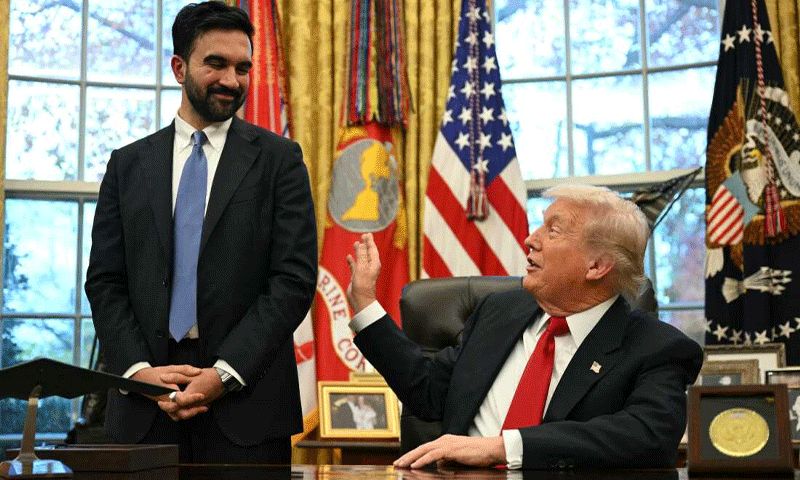
As mayor, Mamdani has pledged to prioritise affordable housing, rent control, and expanded public services, including free bus transport. His campaign focused on the cost-of-living crisis and urban inequality, while openly embracing his Muslim identity — a stance that mobilised young voters, immigrants and faith-based communities across the city.
That visibility has also drawn backlash. Conservative commentators criticised his decision to swear the oath on the Qur’an, reflecting broader currents of Islamophobia in American politics. Mamdani has dismissed such attacks, saying he would not compromise on either his faith or his public responsibilities.
Following the inauguration, the historic Qur’an used in the ceremony will be placed on public display at the New York Public Library, a move organisers hope will encourage deeper engagement with the city’s long and often overlooked Muslim history.
More than a political milestone, Mamdani’s ascent represents a broader shift in American urban leadership — one in which identity, faith and governance intersect openly. In a city built by migrants and defined by diversity, his story signals a reimagining of who gets to lead, and how power itself is represented.