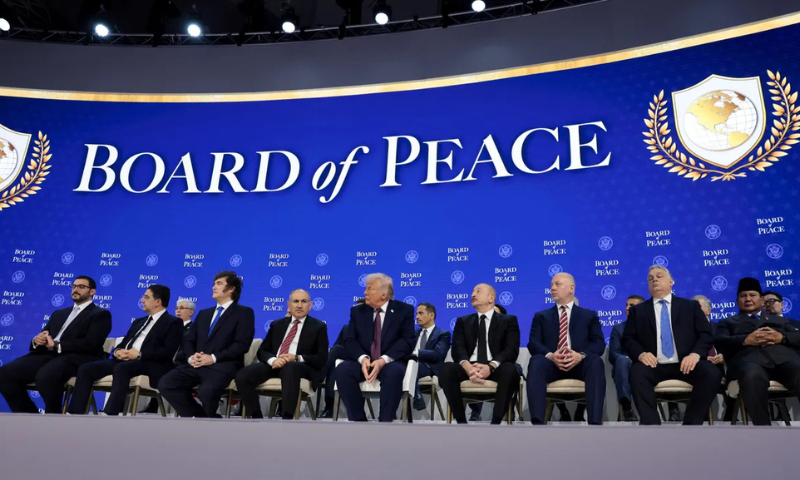

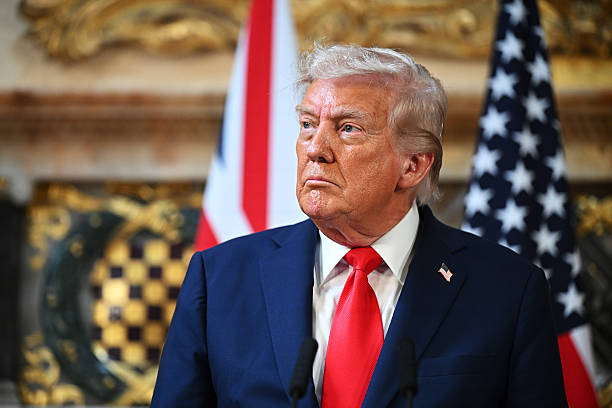
US President Donald Trump’s rhetoric on Iran has narrowed Washington’s options, exposing the limits of American air power and the risks of escalation in a region already on edge.
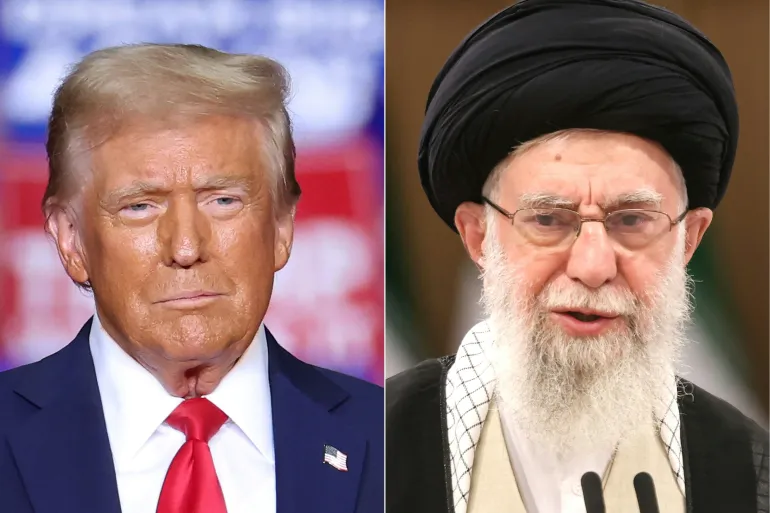
Beneath the language of threats and rescue lies a far more sobering assessment in Washington: Iran is not a weak or isolated state that can be shocked into submission. Any American military action would almost certainly trigger retaliation, harden Iran’s security apparatus, and risk dragging the United States into an open-ended regional confrontation with no clear exit.
For the moment, the prospect of a direct US military strike on Iran has been pushed back by coordinated Arab diplomacy. Qatar, Oman and Saudi Arabia—often divided in their regional priorities—have appeared unusually aligned in opposing escalation. This alignment has bought time, not closure. The intention to use force has not been decisively abandoned; it has merely been deferred. As the crisis evolves, its contours will shift and new layers will emerge. For now, the answer to whether war has been shelved remains a cautious no.
What Washington increasingly recognises, however, is that Iran is not Venezuela. It is not a state where pressure, symbolic force or elite defections can rapidly translate into regime collapse. Nor is it a system that can be shocked into submission through air power alone. Any US strike would almost certainly trigger retaliation, setting in motion a cycle of escalation with no clear endpoint.
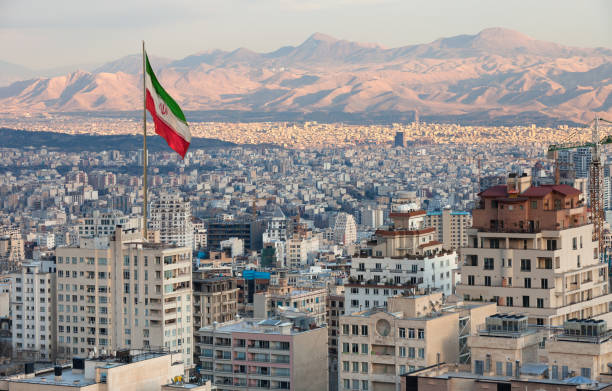
Regime change in Iran, in practical terms, is not achievable. Over the past forty-six years, the custodians of the Islamic Republic have systematically erased alternative centres of authority. The current order is protected by three interlocking fortresses: the political leadership, the Islamic Revolutionary Guard Corps, and a transnational ideological network embedded far beyond Iran’s borders. These layers are not incidental; they are the architecture of survival.
To dismantle this system and erect an alternative political order, the United States would have to do two things it is neither willing nor able to do. First, it would have to deploy ground forces, as it did in Afghanistan and Iraq. Second, it would have to dismantle all three fortifications simultaneously. Removing or replacing the leadership alone would not suffice; power would simply redistribute toward the most coercive elements of the state.
Yet Washington neither wants nor can afford another ground war. It does not want one because, after Afghanistan, any major intervention would unfold under the scrutiny—and likely obstruction—of China, Russia and Iran’s neighbours. It cannot mount one because such a campaign would require European and NATO backing, without which victory would be implausible. At a time when transatlantic relations are strained, that support cannot be taken for granted.
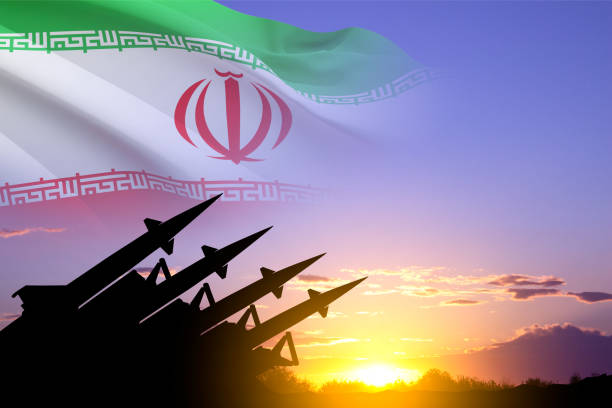
As a result, US strategy appears to be converging on a different objective: not regime change, but sustained instability. Rather than building an alternative order, Washington’s more realistic aim is to loosen the internal cohesion of the Iranian system and push it toward prolonged disorder. For this, shaking the foundations may be enough.
But instability, if it is to endure, requires instruments. Here, Iran’s periphery offers a grim abundance. Kurdish groups in the northwest with long-standing grievances against Tehran; non-state actors in Iraq and Syria that have previously suffered at Iran’s hands; Baloch militant groups; and secular or anti-clerical constituencies within Iran itself. These actors constitute the limited toolkit available to external powers seeking to inflame internal fractures without committing ground forces.
This approach, however, carries its own risks and constraints. Aside from the United Arab Emirates, no regional state has shown willingness to openly align with Washington in such an endeavour. The assumption that the regional field was already set against Iran has proven false. The ground would need to be prepared anew—and that preparation is proving difficult.
Recent events have fundamentally altered the regional landscape. The war in Gaza, Israeli strikes on Qatar, and direct Iran–Israel confrontation have reshaped Arab threat perceptions. For the first time, Saudi Arabia and other Arab states have been forced to confront the limits of their military autonomy. One consequence has been a Pakistan–Saudi defence agreement—an arrangement that signals a quiet search for alternatives to exclusive reliance on the United States.
Washington sought to reassure Saudi Crown Prince Mohammed bin Salman with renewed security assurances, assuming this would stabilise the equation. Instead, the interest shown by other regional states in associating themselves with the Pakistan–Saudi framework has deepened American unease. The more striking development, however, has been the collective Arab posture in recent days.
Saudi Arabia’s declaration that it would not allow its airspace to be used for an attack on Iran is extraordinary. At a moment when Israel has openly dared regional states to join a confrontation, Arab refusal represents one of the most consequential shifts in recent Middle Eastern history. It has punctured what remained of Washington’s assumption that escalation could be regionally managed.

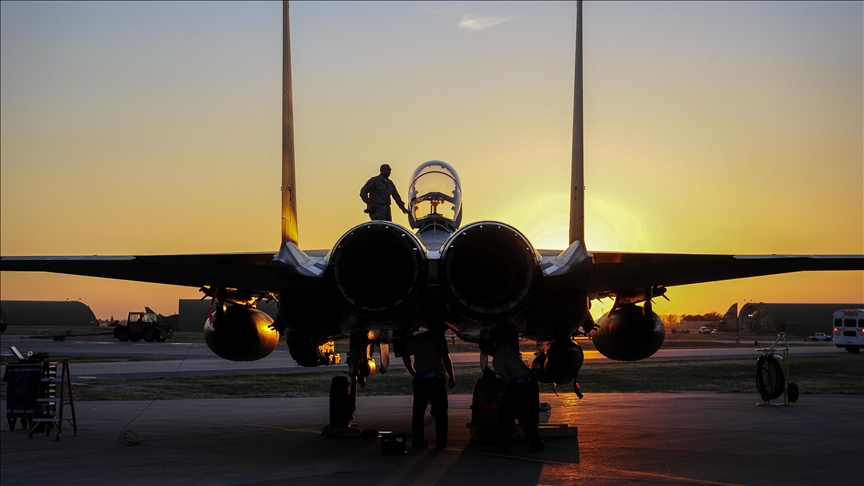
This reality exposes the limits of the “quick and clean” military option. Limited standoff strikes may satisfy domestic demands for resolve, but they would likely strengthen Iran’s hardliners, legitimise harsher repression and invite retaliation through proxies, shipping disruption or attacks on US bases. A sustained air campaign would contradict America First politics, stretch US logistics without regional basing, and risk an uncontrollable escalation.
More importantly, external pressure rarely produces the internal transformation Washington claims to seek. Severe shocks tend to harden authoritarian systems rather than fracture them. Durable change in Iran, if it comes at all, will emerge from internal elite splits or institutional fractures—not from external force.
At present, the United States finds itself unusually isolated. Europe is hesitant. Arab states are resistant. Washington’s strategic loneliness increasingly resembles India’s isolation in South Asia—an alignment gap rarely seen in modern US foreign policy.
In this context, the belief that Iran can be coerced into a clean, controllable outcome is not merely optimistic; it is dangerously misleading. The illusion of decisiveness masks a shrinking menu of viable options—and a widening gap between American rhetoric and reality.