From a solidarity call in 1990 by Qazi Hussain Ahmad to a state-backed observance, February 5 reflects Pakistan’s insistence that Kashmir remains an unresolved question of self-determination under international law.
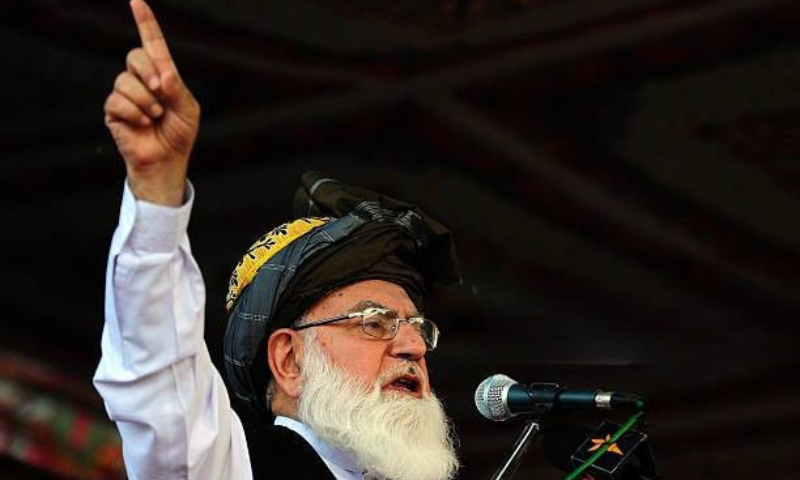
Every year, Pakistan and Kashmiris across the world observe February 5 as Kashmir Solidarity Day, officially known as Yaum-e-Yekjehti-e-Kashmir. For many in the younger generation, however, the origins and purpose of this day are often reduced to a public holiday or a ritualistic show of support, detached from the historical, legal, and political realities that gave rise to it.
At its core, Kashmir Solidarity Day exists to remind both Pakistan and the international community that the Kashmir dispute is neither settled nor obsolete—and that it predates many of the world’s current flashpoints.
Why February 5 became institutionalized
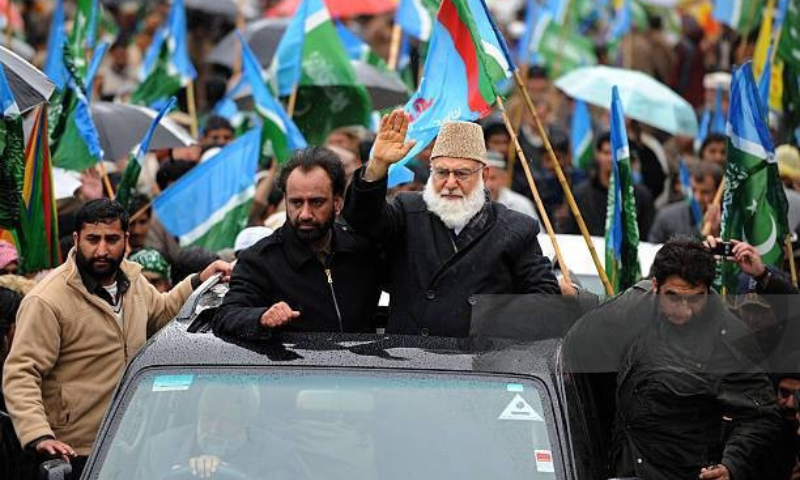
Kashmir Solidarity Day was first proposed in 1990 by Qazi Hussain Ahmad, then Ameer of Jamaat-e-Islami Pakistan. His call came at a time when mass protests and a heavy Indian security presence had once again brought Kashmir into international focus.
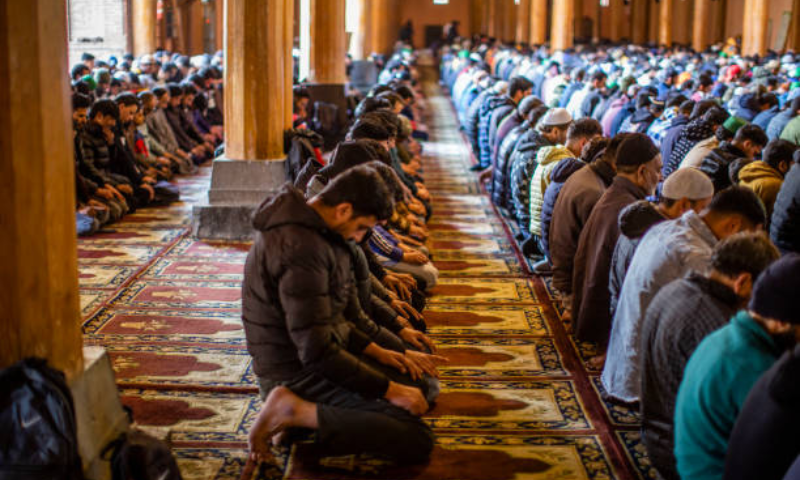
The idea was simple but strategic: Pakistan’s support for Kashmir should not be episodic or reactive, but institutionalized through a fixed annual observance. The proposal was taken up politically in the early 1990s and, after years of observance, formally declared a national holiday in 2004. Since then, February 5 has been marked by nationwide closures, official events, rallies, and diplomatic outreach.
What the day seeks to highlight
Today, seminars, conferences, rallies, and public events are organized across Pakistan to draw attention to what Islamabad describes as India’s occupation of roughly two-thirds of the former princely state, while the remaining portion administered by Pakistan, allowing Kashmiris a considerable degree of political autonomy.
For Pakistan, there is little doubt about the political aspirations of Kashmiris. For decades, they have protested Indian rule despite what human rights groups describe as a massive security footprint—estimated at close to one million Indian troops—alongside allegations of widespread abuses. It is within this context that Kashmir Solidarity Day derives its significance: not as a celebration, but as a reminder of a continuing human and political crisis.
Beyond Pakistan’s borders
Despite the emergence of multiple global crises—from the Middle East to Eastern Europe—Pakistan argues that Kashmir must not fade from international consciousness. In recent years, solidarity events have increasingly taken place beyond South Asia. Seminars and conferences, including online webinars, are held in Canada, the United States, and across Europe, reflecting the role of the Kashmiri and Pakistani diasporas in sustaining international awareness.
Why the day still matters
Critics often dismiss Kashmir Solidarity Day as symbolic. Yet symbolism, in long-running disputes, carries political weight. The observance functions as Pakistan’s annual assertion that Kashmir remains an unresolved issue of self-determination, not an internal matter settled by force, constitutional changes, or economic growth.
More than seven decades after 1947, and more than two decades after February 5 became a formal national observance, the logic behind the day remains unchanged: unresolved disputes do not disappear with time, and international commitments do not expire simply because global attention moves on.
More than seven decades after 1947, Kashmir remains one of the world’s longest-running unresolved disputes, not because of legal ambiguity but because of deliberate deferral. The deployment of Indian troops in October 1947 internationalized the issue from the outset, placing it under the authority of the United Nations and anchoring its resolution in the principle of self-determination. That process was never completed.
India’s gradual retreat from the UN framework—and its insistence that Kashmir is now an internal or bilateral matter—has not altered the dispute’s legal status in international law. In the absence of a plebiscite or any internationally recognized settlement, Kashmir’s final status remains undecided.
For Pakistan, this is why Kashmir Solidarity Day continues to matter: it is an annual assertion that unresolved commitments do not expire with time, and that disputes rooted in unfulfilled promises cannot be closed by unilateral action or narrative dominance.