Under tight Israeli military supervision, select journalists were taken through Gaza City’s ruins — where hospitals, schools, and entire neighbourhoods lie in rubble after nearly two years of relentless bombardment.
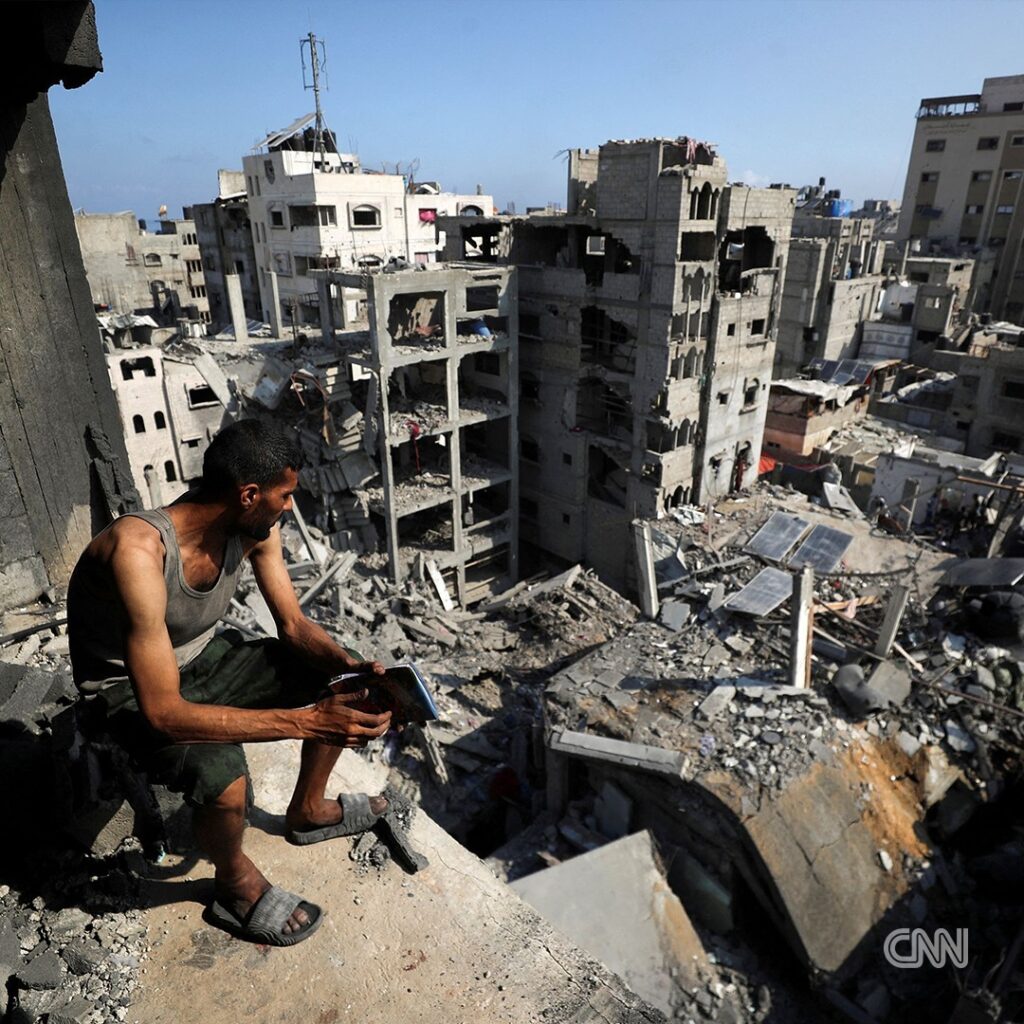
GAZA: In a rare and heavily supervised move, Israel recently allowed a small group of international journalists into Gaza City — but only under direct military escort — providing what observers described as a curated glimpse of the devastation left by almost two years of war.
The tour, arranged by the Israeli army, took journalists through destroyed neighbourhoods near the Jordanian Field Hospital.
The Israeli military claimed that a Hamas tunnel had been discovered adjacent to the site, yet a Jordanian official, speaking to the Associated Press on condition of anonymity, categorically denied the allegation, saying the hospital “was never used by Hamas.”
Independent verification of any Israeli claims remains impossible, as international media continue to be barred from Gaza unless embedded with Israeli forces.
Media rights organisations, including Reporters Without Borders, have repeatedly criticised the arrangement as censorship that prevents the world from seeing the full extent of civilian suffering in Gaza.
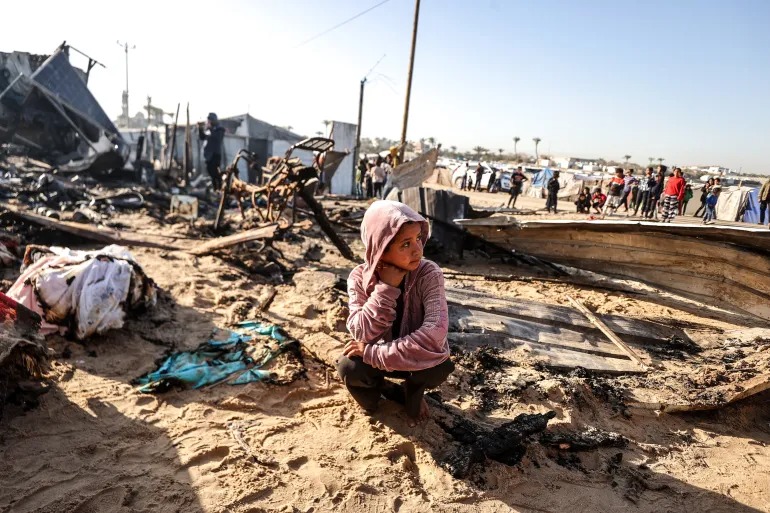
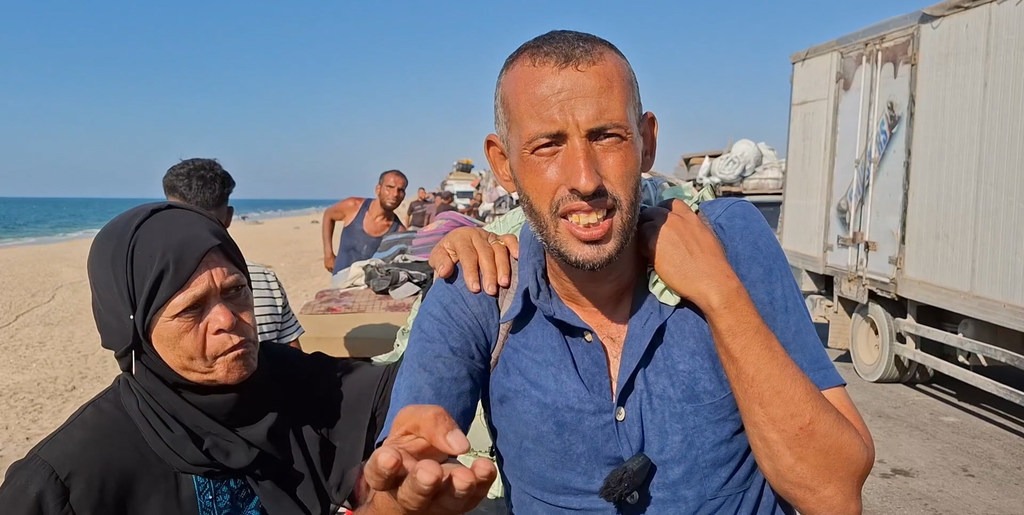
In August, international experts said the city was in a famine and warned that Israel’s offensive and mass displacement of people would exacerbate the humanitarian crisis.
The soldiers escorting the journalists through Gaza City portrayed their military operations as deliberate, to minimize harm to civilians, yet justified, to eliminate a militant group that has been severely weakened but remains dug in, capable of carrying out attacks and still in possession of 48 hostages.
Israel has, for two years, banned international journalists from entering Gaza, except for rare, brief visits supervised by the military, such as this one.
A city under siege
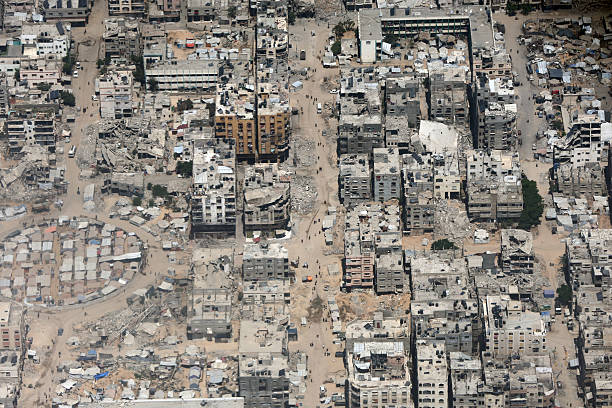
According to a reporter of Associated Press (AP), the drive into and out of Gaza City was through the Netzarim corridor, which separates northern and southern Gaza and is used as a military zone. The route was littered with destroyed buildings and mounds of concrete. Few signs of life were seen during the tour, which lasted several hours.
Once in Gaza City’s Sabra neighborhood, the army took journalists to a lookout point several hundred meters away from the deserted Jordanian hospital. The army said Hamas had been making weapons in a room beneath the hospital while the Jordanians were aboveground, in control of the health care facility — one of many struggling to operate in recent weeks as Israeli attacks intensified.
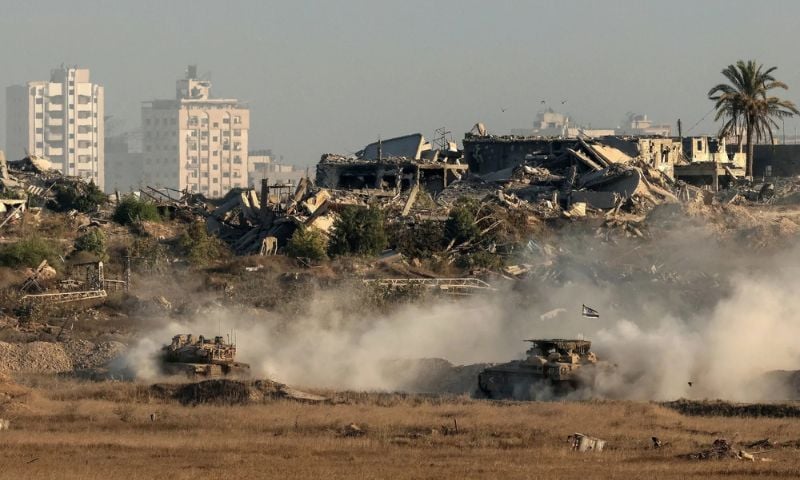
Surrounded by destruction and collapsed buildings, the hospital shut down about two weeks ago. What appeared to be a tube extended from one of its buildings into a mound of dirt in front of it, which soldiers said was where the tunnel was located. A few hundred feet away, excavators moved piles of sand, as the sound of gunfire and artillery reverberated in the background.
Of Gaza’s 36 hospitals, 22 are no longer operational, and the remaining 14 are only partially functional, according to the World Health Organization.
Israel accuses Hamas of using health facilities as command centers and for military purposes, putting civilians in harm’s way, though it has presented little evidence. A soldier showed journalists videos taken from a drone that flew through the 1.5 km (1 mile) long tunnel. The video showed narrow tunnels that led to rooms, one of which showed explosives lined against the wall.
A Jordanian official speaking on condition of anonymity due to the sensitivity of the matter denied that its hospital was being used by Hamas. The AP could not independently verify the Israeli army’s claims.
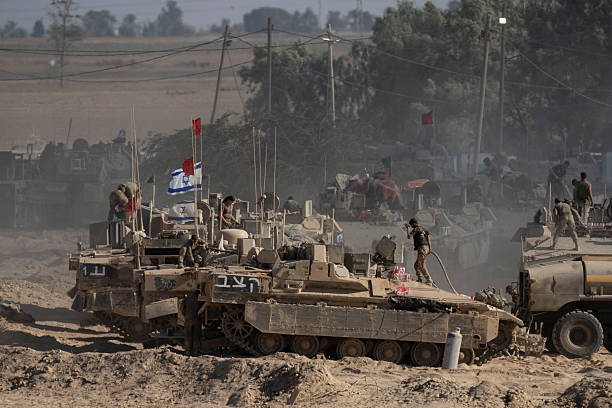
A few hundred meters from the Jordanian hospital, soldiers with the 36th division were positioned in a house they say had previously been used by Hamas. Shards of glass and concrete blanketed the floor, wires hung from the ceiling, and on the walls were handwritten instructions in Hebrew about being on duty.
Soldiers warned journalists not to stand too close to the windows because of snipers. A day earlier, the building beside the house was hit by sniper fire, one soldier said.
The fate of Gaza City
On the eve of the war, Gaza City was home to roughly 1 million people. Throughout the conflict, it has been the focus of regular Israeli bombardment and ground operations. Several neighborhoods have been almost completely destroyed. Hundreds of thousands fled under Israeli evacuation orders at the start of the war, but many returned during a ceasefire earlier this year.
Before their latest campaign in Gaza City began last month, Israel warned Palestinians to evacuate the south. Earlier this week, Israel’s Defense Minister, Israel Katz, said people had one last chance to go, and that anyone left behind would be considered a Hamas supporter.
The senior army official leading the journalists through Gaza City on Friday was more measured, however.
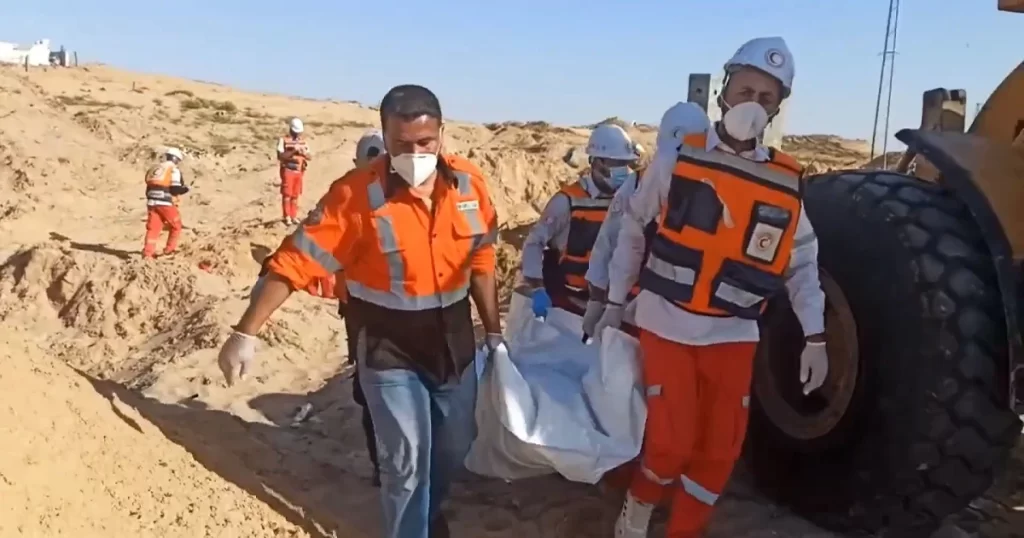
“We’re trying every day to explain how much safer it is to go down to the south,” the senior official said. “And when we get closer to areas with a lot of population, we stop and we try with other means to get them out of this area.”
While hundreds of thousands have left, many have remained, some unable to afford to move, others too weak to leave or not wanting to be displaced once again.
Trump’s proposed deal to end the war
After Hamas attacked Israel on Oct. 7, 2023, killing some 1,200 people and abducting 251, Israel launched a retaliatory offensive that has killed more than 67,000 Palestinians. That number is according to Gaza’s Health Ministry, which does not say how many were civilians or combatants. It says women and children make up around half of the dead.
The ministry is part of the Hamas-run government, and the U.N. and many independent experts consider its figures to be the most reliable estimate of wartime casualties.
Israel’s army said Saturday that it would make preparations for the first phase of U.S. President Donald Trump’s plan to end the war and return all the remaining hostages, after Hamas said it accepted parts of the deal and that others still needed to be negotiated.
The army will move to a defensive position rather than an offensive one, according to an official who spoke on condition of anonymity because they were not authorized to speak to the media on the record.
Still, it’s unclear how that will affect people in Gaza City. On Saturday, the army warned Palestinians in the rest of Gaza from returning there, calling it a dangerous combat zone.
Crisis beyond the battlefield
The visit also highlighted the deep humanitarian collapse. Electricity, clean water, and healthcare remain scarce, while large parts of the population are displaced.
Israel’s claim that Hamas used hospitals and civilian infrastructure as bases has not been independently substantiated; in many cases, those very sites have become graveyards.
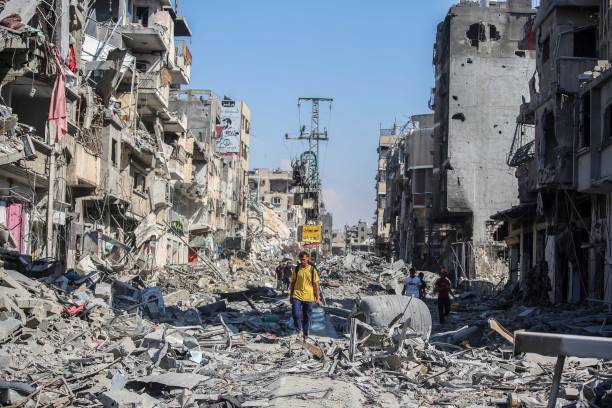
Journalists were driven through the Netzarim corridor — a militarised zone dividing northern and southern Gaza — and shown the flattened remnants of Gaza City’s once-bustling neighbourhoods. Entire city blocks have been levelled. Concrete mounds, collapsed walls, and the faint outlines of what were once schools and homes lined the route.
According to the World Health Organisation, of Gaza’s 36 hospitals, 22 are now non-functional, while the remaining 14 operate only partially due to fuel, medicine, and staff shortages.
Humanitarian agencies have declared the city in “famine conditions,” citing Israel’s siege and restrictions on aid delivery as the primary causes.