Staff Report
July 5, 2025
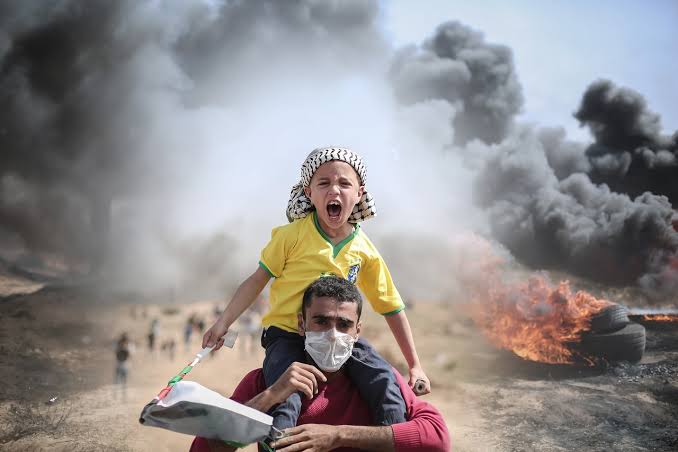
Israeli air strikes across Gaza have killed dozens of Palestinians in the past 24 hours, even as efforts to secure a 60-day ceasefire gained momentum, raising cautious hopes for a pause in fighting that has devastated the territory and triggered a deepening humanitarian catastrophe.
Israeli air raids across the Gaza Strip killed at least 56 Palestinians in the past 24 hours, according to medical sources in Gaza hospitals. Nine of the dead were near the Gaza Humanitarian Foundation (GHF) aid hub in northern Rafah, where families had gathered to collect food. Among the victims were three children.
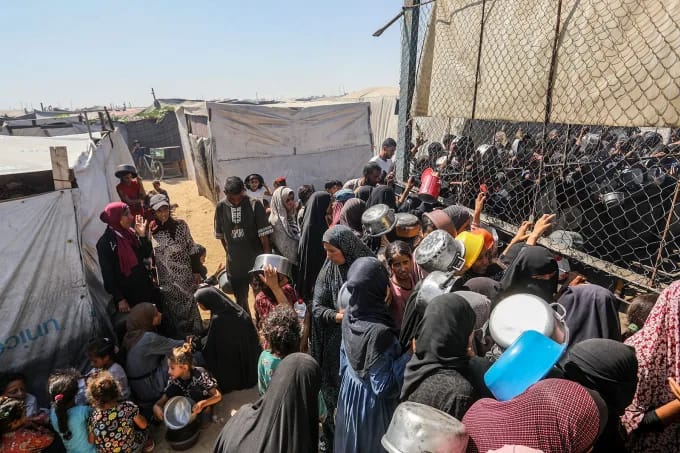
Since the start of the war, at least 743 Palestinians have died in Israeli attacks on or near GHF distribution points, where thousands queue daily despite the risks.
A local resident described a harrowing night of bombardment. “The sky was filled with Apache helicopters and drones. The area was bombed three times overnight. No one dares turn on a light,” she said. “People are moving as little as possible because the air strikes keep hitting residential buildings.”
Ceasefire Negotiations Gather Momentum
The escalation comes amid renewed efforts to secure a ceasefire. Hamas announced on Friday that it had submitted a “positive response” to mediators regarding a 60-day truce proposal, stating it was prepared to “immediately” begin negotiations on implementing the agreement.

The group’s statement followed consultations with other Palestinian factions. Islamic Jihad, a group allied with Hamas, said it supported the plan for talks but insisted on “clear guarantees” that any agreement would lead to a permanent end to hostilities.
The talks are expected to gain further urgency as Israeli Prime Minister Benjamin Netanyahu prepares to travel to Washington on Monday, where US President Donald Trump has been pressing both sides to end the conflict, now in its 21st month.
Mounting Casualties and Widespread Destruction
According to Gaza’s Health Ministry, Israel’s military campaign has so far killed at least 57,338 people and wounded nearly 136,000 since October 2023. In Israel, the October 7 attacks killed an estimated 1,139 people, with more than 200 taken captive to Gaza.

Israeli officials say their operations aim to dismantle Hamas’ military capabilities and secure the release of hostages. Critics, including humanitarian organisations, have accused the Israeli military of indiscriminate attacks on densely populated areas and aid convoys.
Hunger Crisis Deepens as Food Deliveries Fall Short
The humanitarian catastrophe in Gaza continues to worsen. The UN’s World Food Programme (WFP) says nearly one in three people in the enclave is not eating for days at a time.
Since limited border crossings reopened on May 21, WFP teams have dispatched dozens of aid convoys, but supplies remain far below what is needed. “The food delivered so far is a tiny fraction of what over two million people need to survive,” the agency said.
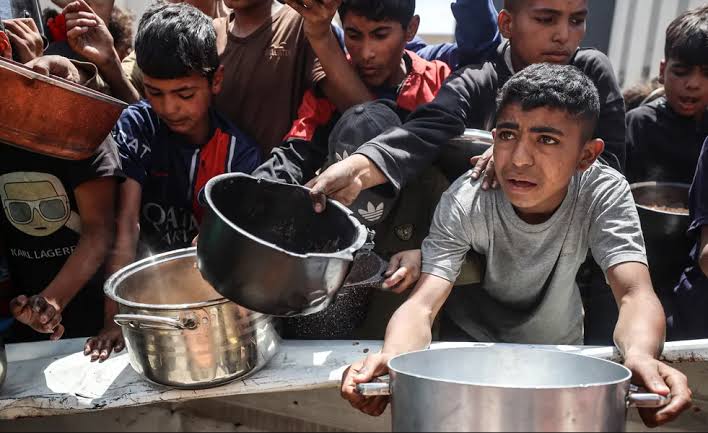
WFP estimates that 470,000 Palestinians could face catastrophic hunger between May and September. Prices for staples have soared: flour for bread is reported to be 3,000 times more expensive than before the war, while cooking oil has almost disappeared from markets.
The agency is calling on Israeli authorities to authorise at least 100 aid trucks daily through all crossing points.
Next Steps: Proximity Talks and US Guarantees
Under the proposed ceasefire framework, Hamas would release 10 Israeli hostages, eight living and two deceased, on the first day of the truce in exchange for Palestinian prisoners. Additional hostage releases would follow in stages.
Israel would begin withdrawing troops from parts of northern Gaza and commit to facilitating a surge in humanitarian aid through established channels.
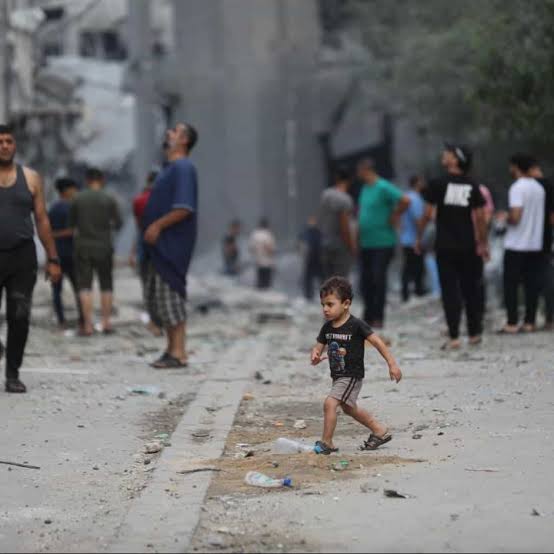
US officials have offered stronger assurances that negotiations will continue toward a permanent ceasefire beyond the 60-day window. Trump has warned Hamas not to reject the proposal, saying, “It will not get better, it will only get worse.”
Despite divisions within Israel’s government, centrist and opposition parties have signalled support for any agreement.
Outlook: Cautious Hope Amid Relentless Air Strikes
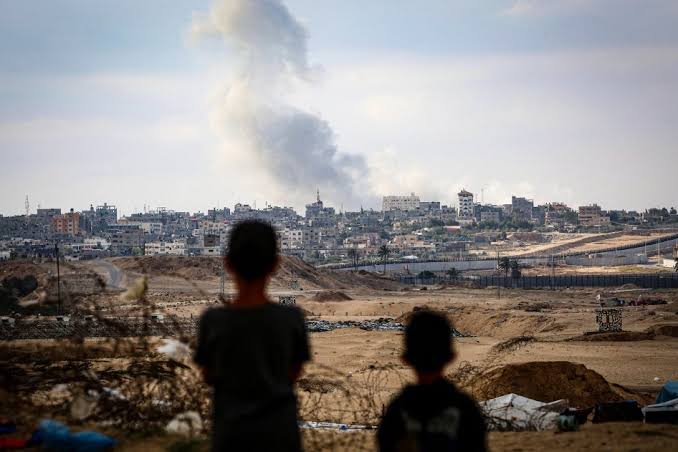
While the prospect of a ceasefire offers a measure of hope, many in Gaza remain sceptical that an agreement will hold or bring lasting relief.
For now, civilians are left to navigate the daily reality of bombardment, hunger, and displacement as diplomats attempt to broker what could become the longest pause in fighting since the conflict began.
As negotiations intensify in the coming days, the stakes are high, not only for securing a truce but for averting famine and stemming the loss of life in a war that has reshaped Gaza’s landscape and torn apart countless families. (ST)